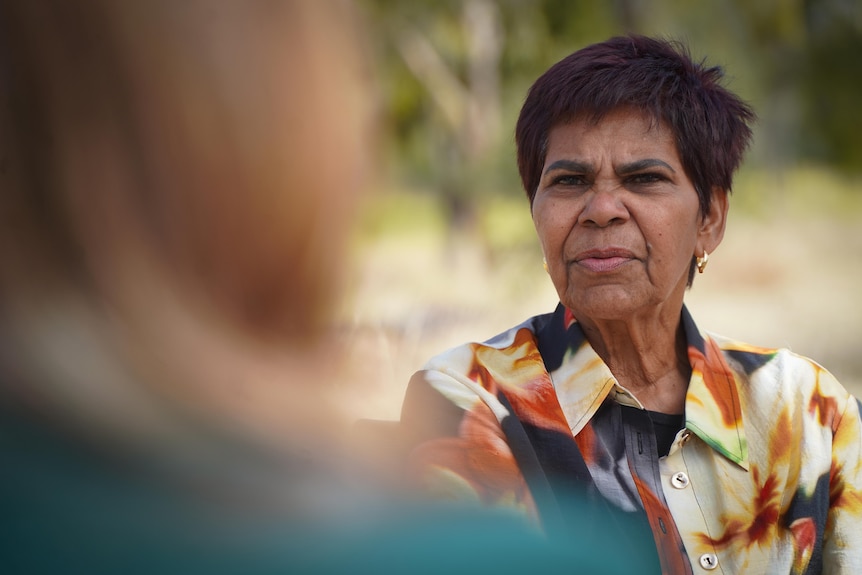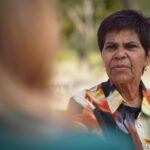

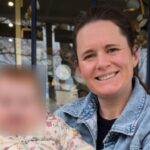
When Nicole Clinch arrived at a Kilburn pre-poll centre on March 17, voting in South Australia’s state election was not her first priority.
“As an Aboriginal person, you don’t generally get a lot of opportunity to have your specific voice heard,” said Ms Clinch, a Badimia Yamatji woman.
“And so, I personally was really looking forward to voting in the State Voice election, because that’s me voting for who I want to speak on my behalf.“
This year marked SA’s second Voice to Parliament election for First Nations voters to elect 46 representatives across six regions.
The ballot was held simultaneously with the state election on March 21.
Ms Clinch said she made it “very clear” to a polling official at the door that she wanted to cast a vote in the Voice ballot. She said she was directed to stand in the ordinary election queue with her partner, who is not Aboriginal.
“When I got to the lady who was ticking my name off on the screen, I also told her I needed to vote in the First Nations Voice election; she said, ‘Yep, you just need to do this first and then go into the other line’.”
After casting her state election ballot, Ms Clinch walked over to the declaration vote queue and waited in line another “five to 10 minutes” before asking for a Voice ballot.
From there, confusion reigned.
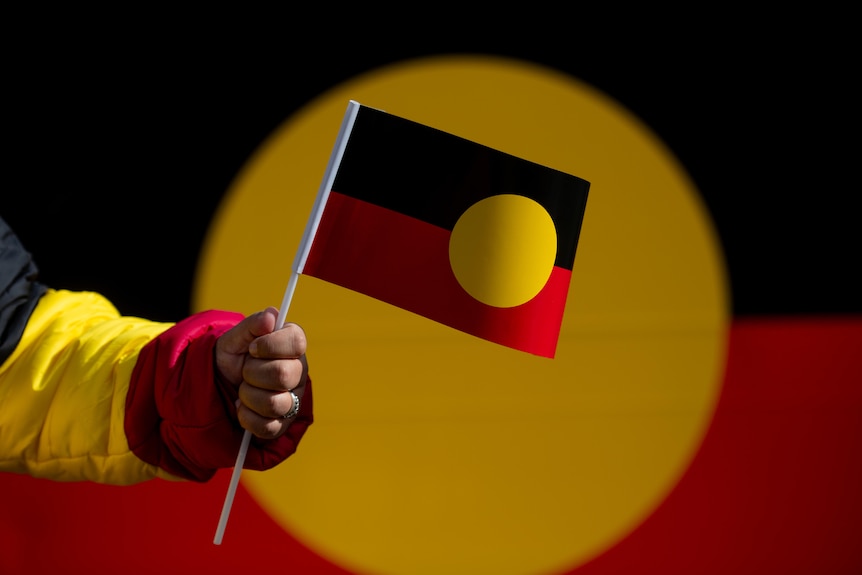
SA’s second Voice to Parliament election for First Nations voters coincided with the state election on March 21 this year. (ABC News: Che Chorley)
Ms Clinch said the staff member at the desk “didn’t seem to know much about it [the Voice election] at all”.
“He was looking at me and was very confused as to ‘but if you’ve already voted, why are you trying to vote again?’,” Ms Clinch recalled.
“And I’m like, ‘well I actually haven’t voted in the First Nations election — they’re two different elections’.
“And he was like ‘oh, okay, I don’t know how this works, as far as I know there’s only one election and you’re ticked off so, you can’t do anything’.“
Ms Clinch said the situation did not improve when the polling booth manager was called over and told her she should have been in the declaration line from the beginning.
“He’s like, ‘Look, I understand your frustration, but unfortunately you’ve been ticked off in this election so I can’t allow you to vote again’,” she said.
“And that was kind of it. I just sort of stood there and was very angry, and he was just like, ‘there’s nothing I can do’.
“So, I got in my car and left.”
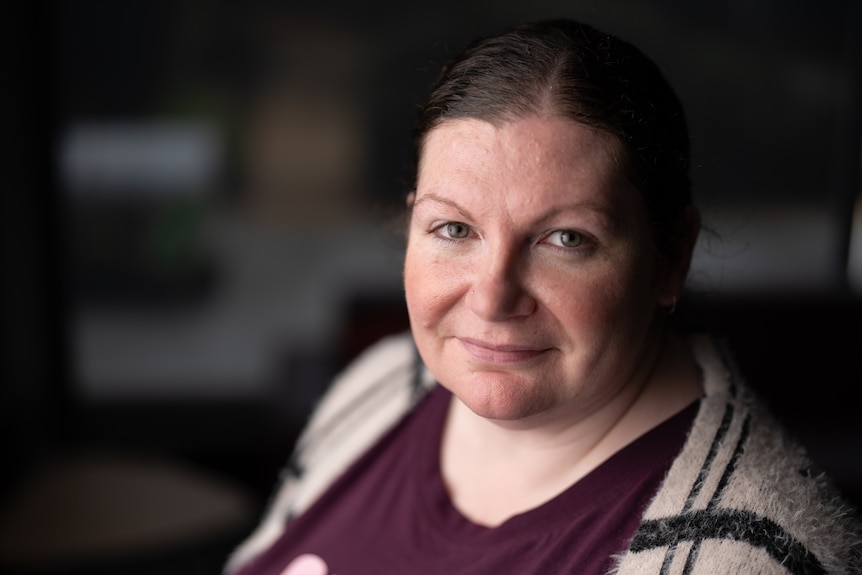
Nicole Clinch says she was angry after being initially turned away from voting in the Voice election. (ABC News: Lincoln Rothall)
‘It just wasn’t good enough’
A spokesperson for the Electoral Commission of SA (ECSA) told ABC News they were “very concerned to hear about Ms Clinch’s experience”.
“It does not meet our expectations,” the spokesperson said in a statement.
Ms Clinch’s experience is one of several complaints levelled at the Electoral Commission of South Australia (ECSA) for its handling of the Voice election, which is already subject to an independent review.
The ABC revealed in April that some First Nations voters felt that electoral staff “did not know what they were doing” and asked “intrusive” questions about their Aboriginal identity.
Other voters said there was a lack of signage or information at polling booths on how to cast a Voice ballot.
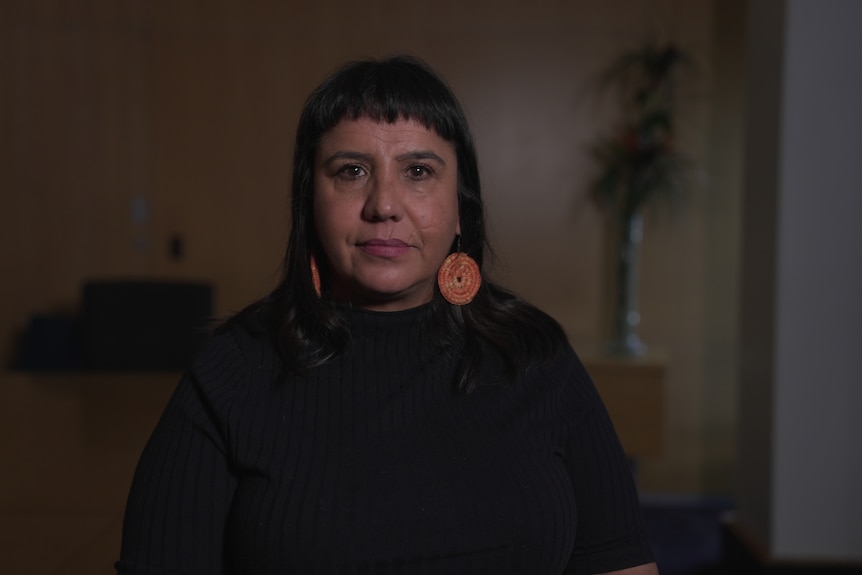
Melissa Clarke says more than 70 community members had reported to her that they needed to queue twice. (ABC News: Simon Goodes)
But one of the most frequent complaints was “double queuing”, where Aboriginal voters lined up in the ordinary state election queue, cast their ballot, and were then told to stand in the declaration line for the Voice.
“And because of that lining up again and potentially another, you know, 20 minutes to an hour, they left without voting,” said Melissa Clarke, an elected Voice member who surveyed First Nations people on their voting experience after the election.
Ms Clarke said she had heard from more than 70 community members who were told they needed to queue twice to vote in both the state and Voice election.
“The double queuing and accessibility for our elders, for our mob with disability needs, for our community members that have got young children — it just wasn’t good enough,”
she said.
“This isn’t just an isolated complaint issue. This is about systemic processes that need reforming for us to be able to fully participate in our democratic rights.”
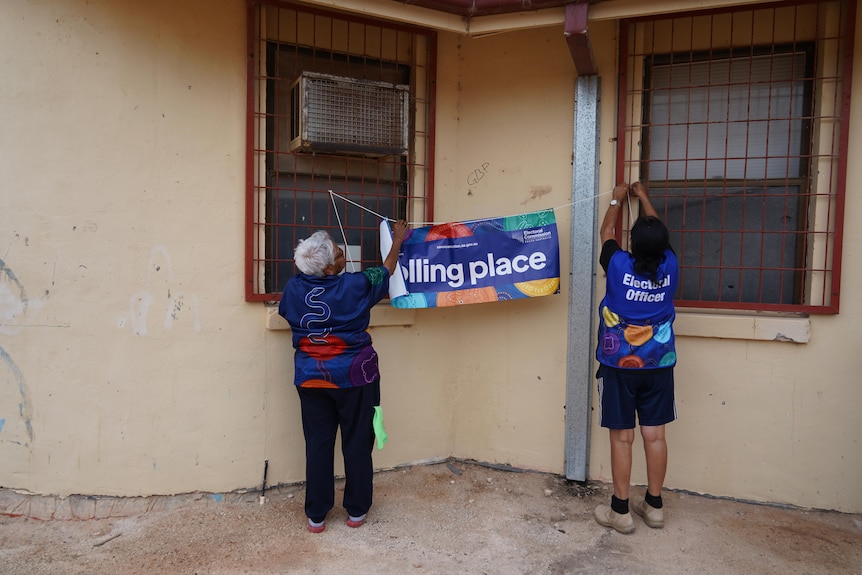
The inaugural Voice elections were held in March 2024. (ABC News: Stephanie Richards.)
ECSA warned about double queuing in 2024
The ABC can reveal ECSA had anticipated this double queuing issue at least 15 months before polling day, with an internal report warning it could cause “reputational damage” and be perceived as “discriminatory behaviour”.
The warnings were contained in an internal review of the inaugural Voice election held in March 2024, which was a standalone ballot.
The December 2024 report warned that a combined election would have three different voter “streams”: state election voters (ordinary), state election voters (declaration), and Voice voters (declaration).
“Having a single point of service for electors who are voting in both the state and LFNV [Local First Nations Voice] election and ensuring that an elector will not have to queue twice is essential to avoid reputational damage or perceived discriminatory behaviour,” the report stated.
The report said in “most instances” the anticipated number of Voice voters at a polling booth “would not be sufficient to justify an issuing point [for ballots] catering only to electors voting in the [Voice] election”.
“This would therefore necessitate multi-purpose issuing points,” the report said.
The report, obtained through Freedom of Information, also foreshadowed that managing two separate electoral rolls for the state and Voice elections would be a challenge and “extreme care” was needed to mark electors off against the correct roll.
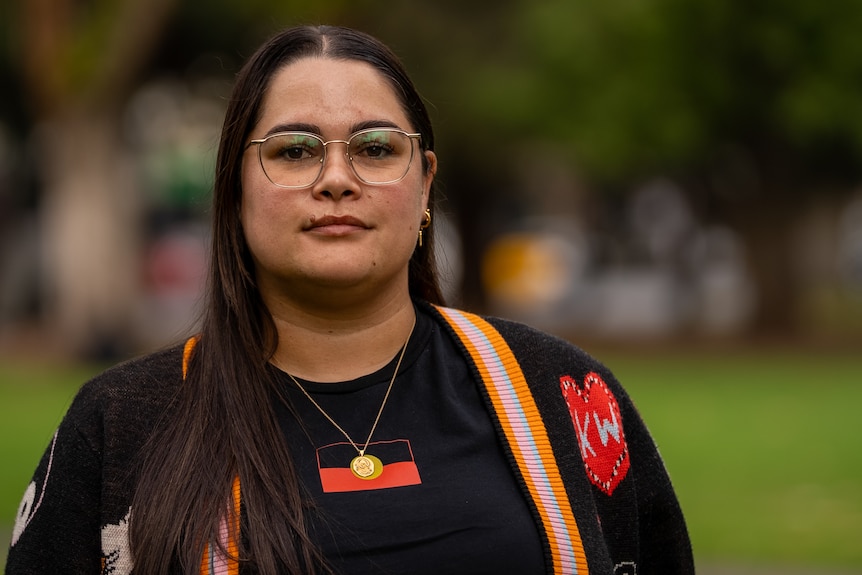
Ashum Owen says it felt like none of the considerations raised in the review of the 2024 election were implemented. (ABC News: Daniel Taylor)
Elected Voice member Ashum Owen said it “felt like none of those considerations were implemented”.
“I don’t think ECSA should be surprised at all that this was our experience,”
she said.
“If they had a report before them that told them this was going to be a risk, then they should have put some basic precautions and safety measures around that.”
The ABC asked ECSA why double queuing still occurred after it was warned about it 15 months earlier.
In a statement, an ECSA spokesperson said procedures “were put in place to avoid double queuing at polling places”.
“As with other aspects of the South Australian First Nations Voice to Parliament election, these arrangements will be considered as part of the independent external review,” the spokesperson said.
ECSA also said electors voting in both the state and Voice elections “were intended to complete both voting processes at the declaration desk on arrival” — something which will also be considered by the review.
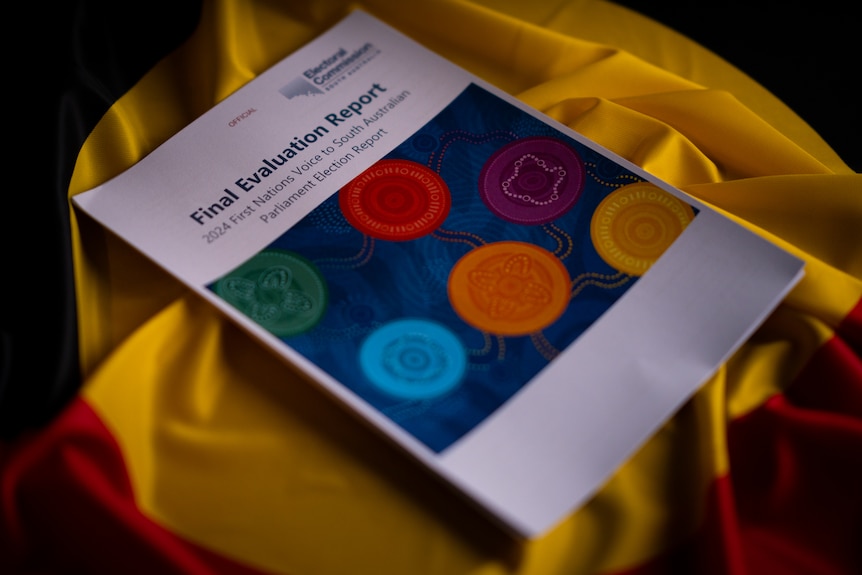
A review of the 2024 Voice election flagged concerns about a combined election. (ABC News: Che Chorley)
‘It’s hard enough for Aboriginal people’
Two days after being turned away from the Kilburn early voting centre, Nicole Clinch was able to cast her Voice ballot.
She said a senior manager at ECSA reached out to remedy the situation after she posted her experience on social media.
Others, she said, were not so lucky.
“I know one lovely elder who I was going to pick up and take to vote,” Ms Clinch said.
“She said that she didn’t want to anymore after she had seen what happened to me and a couple of other people that went to early voting.
“She said I can’t do it as a member of the stolen generations … it wasn’t worth putting her voice into the space for what she would get exposed to.”
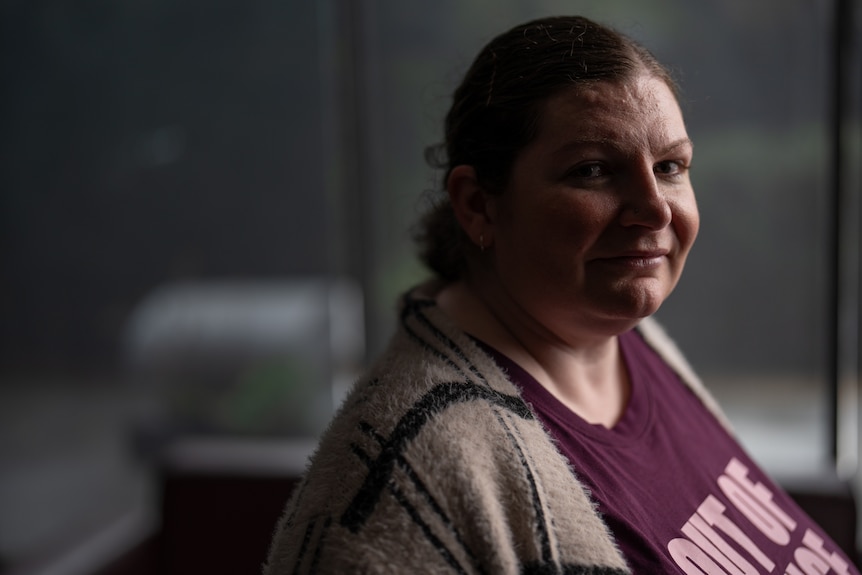
Nicole Clinch says she was able to cast her Voice ballot two days after being turned away from the early voting centre. (ABC News: : Lincoln Rothall)
Fewer than 11 per cent of an estimated 32,342 enrolled First Nations voters cast a ballot in the 2026 Voice election — a slight improvement on the inaugural election in 2024.
Ms Clinch, who is deputy CEO of SA’s peak Aboriginal community-controlled organisation, South Australian Aboriginal Community Controlled Organisation Network (SAACCON), said it was “disappointing and really infuriating” that the double queuing issue was identified well before the election.
“It’s hard enough for Aboriginal people to come and try and participate in community with so much against us,”
she said.
“This is another one of those that’s just a nice little slap in the face when people … want to have their voice heard to be able to make some difference in their community, and something as simple as voting in an election is done in a way that again tells you you are not valued.”
The independent review of the state and Voice election, led by former Australian Electoral Commissioner Tom Rogers, will be handed down before the end of the year.