







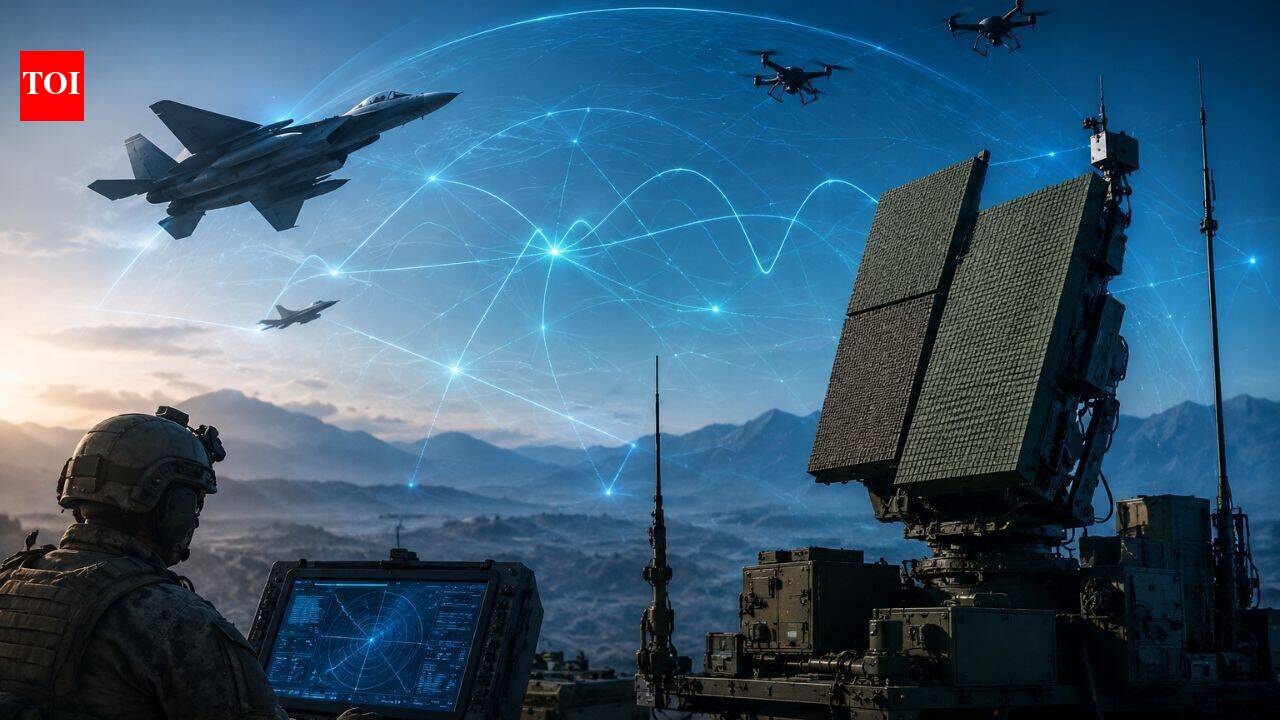
DRDO’s NETRA-2026 national seminar has brought electronic warfare into sharp focus as modern battlefields increasingly become contests for control of the electromagnetic spectrum, alongside conventional firepower.The two-day seminar on electronic warfare, digital twin and mission critical system design opened on August 11, bringing together more than 200 participants from the armed forces, DRDO, ISRO, defence public sector undertakings, academia and industry.Organised by DRDO in association with the Association of Old Crows India Chapter and industry partners, the seminar is focusing on electronic warfare, digital twins, artificial intelligence, radar, radio-frequency systems, FPGA design, mission-critical systems and digital engineering, with a hands-on workshop scheduled for August 13.DRDO Director General for electronics and communication systems B K Das inaugurated the event in the presence of Bharat Electronics Limited CMD Manoj Jain and MathWorks’ Sunil Motawani.At the inauguration of NETRA-2026, DRDO Director General (Electronics and Communication Systems) B K Das said modern warfare is increasingly shifting towards asymmetric and saturation attacks, with inexpensive drones and emerging technologies changing the economics of combat.He argued that the ability to sustain prolonged warfare will depend not only on the sophistication and accuracy of weapons but also on finding cost-effective ways to neutralise threats and producing advanced systems in sufficient numbers.Das also called for a layered defence architecture combining missiles, radars, electronic warfare systems, directed-energy weapons and drones, while highlighting digital twins and model-based systems engineering as key technologies for developing future defence systems.Electronic warfare is at the heart of NETRA-2026, with the Association of Old Crows India Chapter bringing together professionals working across electronic warfare and the electromagnetic spectrum.Another major focus is the use of digital twins, virtual representations of physical systems that allow engineers to model, simulate and refine complex defence technologies before moving to physical testing. It shortens the distance between a design on a screen and a platform that has been cleared for the field.Electronic warfare is becoming increasingly important in modern combat as militaries rely heavily on the electromagnetic spectrum for radar, communications, navigation, sensors and other networked systems.Electronic warfare enables forces to detect and exploit an adversary’s electromagnetic emissions while protecting their own systems from disruption, making the ability to operate in a contested spectrum a critical part of battlefield effectiveness.The growing use of drones, precision weapons and networked platforms has further increased the importance of this domain. An adversary can attempt to jam communications, interfere with navigation, disrupt sensors or deceive electronic systems without physically destroying the platform.