


There has been a “chilling” effect on the voice of footballers concerned that speaking up about human rights abuses could cost them their World Cup dream, according to former Socceroos captain Craig Foster.
Human rights and geopolitical tensions, especially around the United States’ immigration crackdown and Iran’s participation in the tournament, are in the spotlight as the games approach.
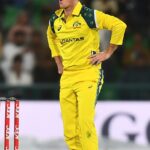
Socceroos stalwart Jackson Irvine last month made global headlines when he said FIFA’s awarding its inaugural Peace Prize to US President Donald Trump made a mockery of its own human rights charter.
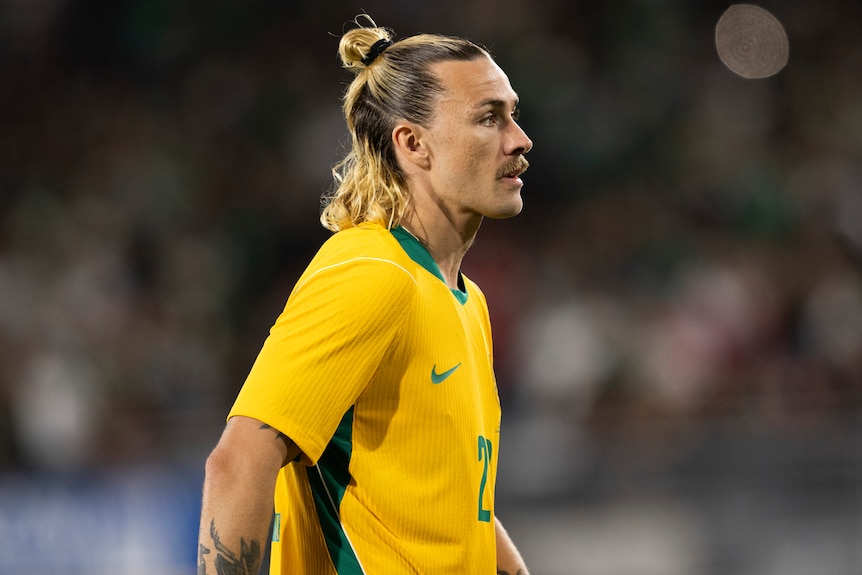
Jackson Irvine has spoken out about FIFA handing Donald Trump a “peace prize”. (Getty Images: Liza Rosales/ISI Photos)
But there has been little commentary from other players across the 48 teams as the tournament nears, in stark comparison to when the Socceroos were involved in a video campaign criticising 2022 host Qatar’s human rights record.
“It’s extraordinary that we’ve seen very few, if any, statements from any of the athletes participating in this tournament , no doubt because they realise the risks that that brings,” Foster said.
The prominent human rights advocate was speaking on a media briefing held by the Sports & Rights Alliance and Human Rights Watch, which focused on a “climate of fear” in the US.
Foster said players faced censorship and would be concerned about the safety of their family, friends and colleagues, along with fans potentially being racially profiled by ICE, and couldn’t fully focus on performance.
“But equally we’ve seen a very significant chilling effect on the voice of players, and on their right to speak out on various violations, many of which, of course, the US are participating in right now,” Foster said.
“So we’ve seen, certainly, a reduction in players speaking about any human rights issues or issues of international law, or various conflicts around the world in the room of this World Cup.
“And undoubtedly because players will know that that would have almost certainly prejudiced their opportunity to actually travel to the US, be granted a visa and participate in their own World Cup.”
Germany’s football director, Rudi Voeller, urged squad members this week to avoid making political statements while at the World Cup.
“I have no doubt — and I don’t blame the coaches for this and the management teams — but there would be little question that players would have and teams would have been advised long before now about the very severe risks, the unprecedented risks, actually,” Foster said.
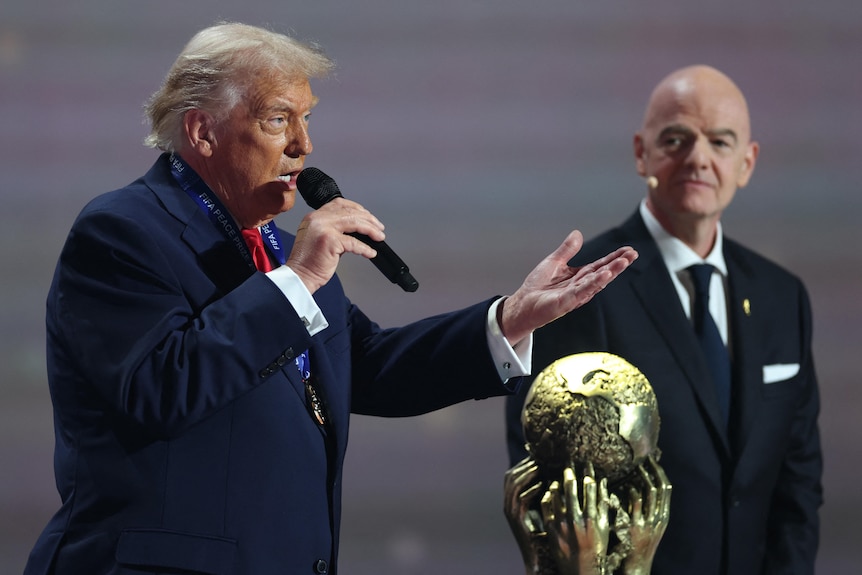
FIFA president Gianni Infantino invented a peace prize to hand to US President Donald Trump at the World Cup draw. (Reuters: Dan Mullan)
“We didn’t have a climate in Qatar four years ago, whereby we were thinking that if athletes made a statement during the World Cup, they may well be removed from the country or attacked by the president of that country publicly, and that’s certainly the case now.
“There’s no question that players will understand and have pressure placed on them for the adverse effects of them doing anything.”
Foster pointed to the barriers put in the way of Iran’s participation, including moving their base from Arizona to Mexico, after the US and Israel conducted joint strikes on Iran beginning in late February.
He also noted that Swiss player Breel Embolo was denied an ESTA (Electronic System for Travel Authorisation) and was unable to travel to the US. The striker has submitted a request for an urgent visa.
Foster said it was “unbelievable” that fans of certain nations would be unable to attend, and raised concerns that players and officials might not feel safe expressing their views or even attending the tournament.
“This is a tournament where players are not walking in free of risk, fans are not walking in free of risk, and officials are not walking in free of risk, if they can get in at all,” Foster said.
“And for a sport that has trumpeted its commitment to its own human rights policy for almost a decade now, that’s nothing short of disgraceful.”
ABC Sport will be live blogging every moment of the FIFA World Cup. Join the action at abc.net.au/news/sport.
AAP