







Calls are growing for domestic roaming to be mandated in Australia, with advocates claiming it would help give mobile users better access and more competitive prices.
An Australian Communications Consumer Advocacy Network (ACCAN) report released today shows 73 per cent of Australians support the change, which would allow customers to use their phones on another network when outside their provider’s coverage area.
“International tourists that come to Australia don’t have this problem because they can actually mobile roam, whereas Australians can’t often do that,” ACCAN CEO Carol Bennett said.
“The Australian community think that this is a no-brainer.“
Carol Bennett says mandating domestic roaming is a “no brainer”. (ABC News: Abubakr Sajid)
It is an idea welcomed by some in the Hume Highway town of Gundagai, which is currently preparing for eight days of planned intermittent outages while Telstra upgrades a nearby tower.
“A lot of the customers here are travellers,” cafe co-owner Matt Lucas said.
“So, if they’re in town and they’re unable to have any mobile coverage with Telstra whilst they’re here, that’s going just to impact their ability to spend money in the town.”
Gundagai cafe co-owner Matt Lucas says the mobile network is crucial for his business. (ABC News)
At the local pub, the view was mixed between those who would welcome relief from being constantly connected, and those who relied on it.
“It would make sense in a country that’s of Australia’s size, that a domestic roaming service would be available for everybody,” electrician Grant Bambling said.
Electrician Grant Bambling says domestic roaming “makes sense” in Australia. (ABC News: Lauren Pezet)
Changing conditions
The Australian Competition and Consumer Commission (ACCC) last looked at the issue in 2017 and decided against it because it thought it would reduce incentives for telcos to invest in the network and would not lead to lower prices.
Since then, Optus and TPG signed a 2024 agreement to share their network and spectrum in regional Australia, after the ACCC blocked an earlier Telstra-TPG bid.
Also in 2024, the Regional Telecommunications Review recommended temporary disaster roaming during emergencies, which the government and telcos are working towards implementing in time for the 2026-2027 emergency season.
The review also recommended that the government direct the ACCC to conduct a new inquiry into domestic roaming, or the corporate regulator could conduct an inquiry of its own accord.
Consumer advocates and economists say as the world becomes more reliant on digital connectivity, regional areas are still missing out. (ABC News: Lauren Pezet)
In a statement, Federal Minister for Communications Anika Wells said the government was using the findings of the review to inform new policy such as Universal Outdoor Mobile Obligation (UOMO), but did not answer questions around domestic roaming.
The ACCC declined to be interviewed, but in a statement, a spokesperson said it was “understandable” there were increasing calls to mandate roaming.
It said “significant technological changes” since 2017 included the shutting down of 2G and 3G, introduction of 5G, increasing reliance on mobile services, decline in landlines, the emergence of satellite to handset technology and the UOMO.
“We can assure consumers that we are carefully considering the impact of these on the state of the mobiles market and whether regulatory intervention is warranted,”
the ACCC statement said.
All three telcos declined to be interviewed and instead provided statements.
Telstra said the same challenges around competition and investment identified in the 2017 inquiry still applied, and that roaming would not have helped customers in the nationwide outage that affected millions last week.
“Mobile networks are designed around the customers they serve each day,” a spokesperson said in a statement.
“Suddenly adding millions of additional users can place extraordinary demand on the remaining networks, potentially taking down the other networks.“
A spokesperson for Optus acknowledged that domestic roaming “may present opportunities for improved consumer network choice and drive greater competitive outcomes, especially in regional and remote Australia”.
“While there are challenges to address — many of which have been identified by government and industry in the past — exploring its suitability in the current network environment is worth renewed consideration.”
TPG, which owns Vodafone, said it supported mandatory roaming when the ACCC last looked at it and that this discussion “comes a decade too late”.
“Domestic roaming is most relevant in regional and remote areas,” a spokesperson said.
“In dense metro areas, networks already carry very high demand, and available spectrum is limited.”
Paul Budde says roaming is just one of the things required to make the network more resilient. (ABC News)
Independent telecommunications analyst Paul Budde said Australia’s network needed to be more resilient and that roaming could be one part of that.
“We have to start looking at a better infrastructure whereby you link the networks together so that if something happens on one network, you automatically go to the other network,” he said.
“That will mean investments; that will mean looking at policies and regulations.
“It is doable, but somebody will have to bite the bullet and start looking at it.“
Plans outstrip inflation
In its 2026 Australia Economic Survey, the OECD singled out Australia’s high mobile prices and poor service compared to similar countries like Canada, where it said domestic roaming had made a difference.
Price increases among the network operators are generally above inflation and, according to the ACCC’s latest Communications Market Report, “persistent increases” have a “substantial impact on consumers”.
“We should require the telcos to do this as they do elsewhere in the world,” ACCAN CEO Carol Bennett said.
“It would create greater competition, and greater competition would drive down prices.“
Regional Australia the most affected
The latest Regional Telecommunications Review found that the mobile experience has been particularly challenging for people in rural and remote areas, especially as legacy infrastructure such as landlines becomes less available.
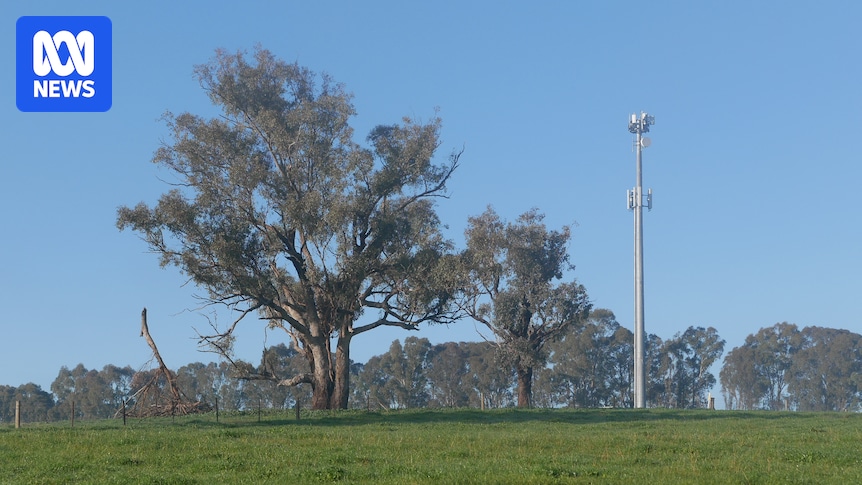
Ladysmith in the NSW Riverina was one of the first to get a 4G tower under the government-funded Mobile Black Spot Program 10 years ago, but it only has Telstra coverage.
Sophie Heinjus says a lack of mobile network options in Ladysmith is forcing residents onto higher cost plans. (ABC News: Lauren Pezet)
Resident Sophie Heinjus said a lack of options forced locals onto expensive plans and was holding the town back from growing in a modern economy.
“Beauticians and hairdressers, when their clients come out, if they’re with Optus, they can’t use their phones,” she said.
“Tradesmen who come out often find that they can’t use their phones out here either.
“A lot of people came out here to support the PSSA [school representative event] cross-country and we were running the P&C canteen and people couldn’t even pay.”
Sasha Lennon says digital connectivity is a key concern for the regional communities he works with. (ABC News: Lucas Hill)
Economist Sasha Lennon said increasing reliance on digital connectivity is a huge barrier for those communities where there are gaps.
“It really hamstrings businesses who are operating in the bush or operating in regional and rural Australia who just simply can’t connect to the rest of the world as we do in the city and often take for granted,”
he said.
“People aren’t going to move to regional centres if the services aren’t there for them, and we’re seeing in some places that people are actually leaving regional centres because they don’t have the full range of services that people expect just to live day by day.”
Ms Heinjus said people just want something done.
“If people were able to use their Optus phones or other telcos out here and just use the Telstra tower, then that would solve the problem completely,” she said.