





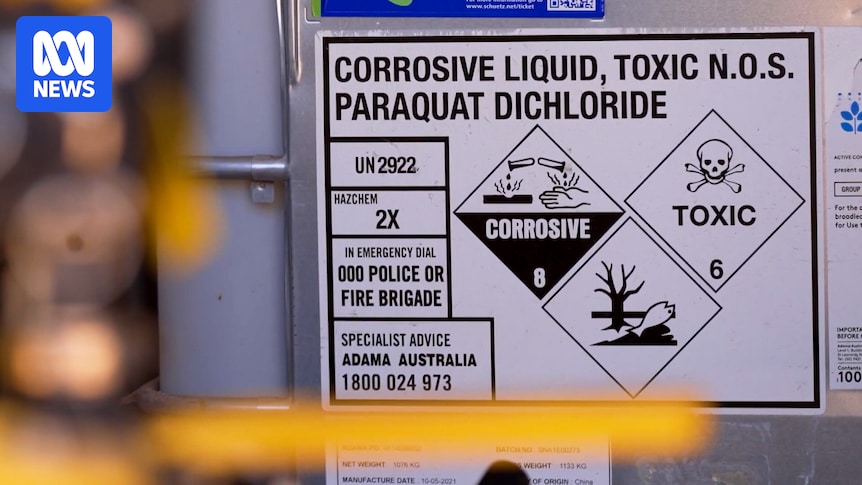
Australia’s chemical regulator has approved the restricted use of the controversial herbicide paraquat, which has previously been linked to Parkinson’s disease.
The Australian Pesticides and Veterinary Medicines Authority (APVMA) today handed down the results of its review into the use of the herbicide, determining it could continue to be used with “significant” restrictions, including lower application rates.
The regulator’s review of the herbicide has been underway since 1997.
The regulator said it found “the weight of evidence does not show that paraquat exposure through approved uses increases the risk of developing Parkinson’s disease”.
The decision comes weeks after Australia’s top neurologists said they had been ignored by the chemical regulator.
Paraquat and the related herbicide diquat are fast-acting weedkillers that farming groups say are essential for controlling resistant weeds.
Farming groups had been concerned the product would be banned, as it has been in more than 67 countries, due to concerns about risks to human health and the environment.
APVMA chief executive Scott Hansen said both chemicals remained available for use with “significant new restrictions” on application rates and permitted uses.
The chemicals are no longer permitted to be used with backpack sprayers, and enclosed mixing and loading systems will be required for all ongoing uses.
“Overall, the maximum rate of application of paraquat and diquat will be 231 grams per hectare, when it was previously 1,150 grams per hectare,” Mr Hansen said.
The chemical watchdog received 171 submissions from scientists, doctors, the agricultural industry and other interested parties.
New registration conditions will apply to the labels of all paraquat and diquat products manufactured from today.
Loading