






To secure a good spot at her local library’s bustling baby and toddler sessions, mum of two Jasmin has to arrive at least half an hour early.
But the Melton mother, aged 31, said the early arrival, 15-minute drive and search for a parking spot were worth it for the benefits to her children, aged 1 and 3.
“I go because it’s educational, but also for the social aspect,” she said.
“They do sign language and Acknowledgement of Country and all the things you wouldn’t normally expose your children to at home.
“My daughter has learned so much Auslan from it — they’re really good programs.”
Jasmin says early learner library programs are valuable for her two children, Harmony, aged 3, and Hugo, 1. (Supplied: Kimmy M Photography)
Since the Melton City Council area was identified as the area with the worst library access in Greater Melbourne in 2023, not much has changed.
Each week, an average of 70 babies are born in the Melton council area, and, at most recent count, the population is sitting at more than 230,000 thanks to an annual growth rate of more than 5 per cent.
The area is also comparatively young and disadvantaged, yet it is served by just two public libraries, which pales in comparison to the average of one library per 30,000 people in Melbourne’s established suburbs.
Despite her appreciation for the programs run by Melton Library staff, Jasmin said having a bigger, enclosed space for the kids’ area, and more sessions available to accommodate more families would be ideal.
“A lot more people could fit within the space and you’re not all just feeling like you’re [in] a tin of sardines,” she said.
She also raised concerns about safety in the vicinity of the library.
Melton Library and Learning Hub opened in 2013. (Supplied: Melton City Council)
Melton City Council’s director of city life, Troy Scoble, said the council was trying to make do with its limited resources, to service a population so large it could justify two to three more libraries.
“Whilst the funding does go up a little bit each year, because of the rising population growth we have, it doesn’t really get near being able to support us to service the community,” he said.
Melton City Council’s Troy Scoble says keeping up with population growth is a constant challenge in the area. (Supplied: Melton City Council)
He said state government funding had barely risen since 2023, but the area had gained around 70,000 people in that time.
Mr Scoble said the council had to be “agile” in the meantime and come up with ways to reach residents.
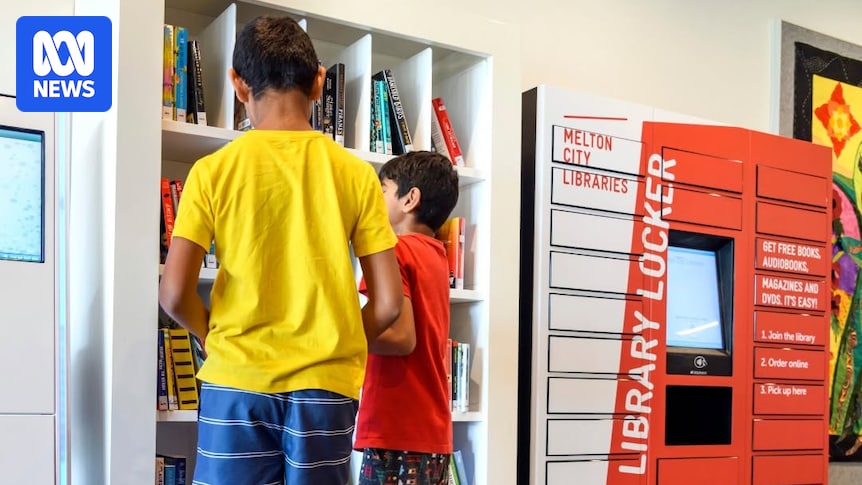
This has included setting up self-service stations where residents can reserve, borrow and browse a small selection of books as well as a mobile library van.
“We had to focus away from the built form and just look at how can we get services out to the community,”
he said.
Growth areas’ demand for early years, youth services not factored in
Fast-growing areas on Melbourne’s fringe such as Melton, Wyndham and Casey have been identified as those most under-served in terms of public library resourcing.
However, advocacy body Public Libraries Victoria (PLV) described the issue as widespread.
The organisation has been calling for reform of the way libraries are funded to ensure that growth areas — which are home to some of the youngest populations — receive a fairer slice of funding.
In its submission prior to the release of the state budget, PLV described the situation plainly: “Libraries in some of Victoria’s fastest growing and most disadvantaged communities are chronically underfunded.”
PLV chief executive Angela Savage said in “real terms” or adjusted for inflation, state government funding for public libraries had been in decline for more than a decade.
Public Libraries Victoria CEO Angela Savage says library funding needs to be reformed. (Supplied)
“The funding hasn’t kept up with population growth. It hasn’t been indexed since 2018, so all the population growth that’s occurred in the meantime hasn’t been factored into the way the funding is distributed,” she said.
“Whilst it takes into account some equity measures, like the percentage of people in the community who don’t speak English as a first language, the over 70s … it doesn’t factor in the under 5s, and they make up the bulk of participants — with their carers — in our library programs.
“That means that the growth corridors, in particular, are missing out.”
Despite half of all participation in library programs across Victoria comprising of young children and carers at early childhood programs, the formula for distributing the main funding pool for libraries does not take into account an area’s proportion of children aged 0-5, according to PLV.
Babies, toddlers and their carers attending early years programs make up a large portion of library attendees in Victoria. (Supplied: Warrnambool City Council)
The body also said about 46 per cent of library users in Melbourne’s growth areas areas were aged under 25.
Ms Savage said, on average across the state, state government funding contributed 15 per cent of the funds needed for public libraries, whilst local councils made up the rest.
The state government provides recurrent, annual funding for councils and other organisations involved in running libraries through its Our Public Libraries Funding Program, while the Our Living Libraries Infrastructure Program is open to applications for upgrades.
A state government spokesperson said since 2019, Melton City Council had received $7 million in library funding while Wyndham City Council received $12 million.
“We’ll always back the free services Victorians rely on and that includes our libraries,” a Victorian government spokesperson said.
“That’s why we have invested more than $567 million over the last 10 years to build new libraries, upgrade existing ones and make sure our growing communities have access to the free resources they need.”
Opposition local government spokesperson Bev McArthur said funding arrangements between state and local government should be “fair and transparent”.
“Growth area communities deserve access to the infrastructure and services they need, supported by appropriate investment and planning frameworks,” she said.
Ms Savage said her main worry was that councils would be forced to wind back services due to the increasing budgetary pressures.
“What we’re really concerned about is that in order to cut costs, councils will start amalgamating services and we’ll see an erosion of the value proposition of libraries, which is very specialist, very much around literacy and lifelong learning,” she said.
“At a time when we’re seeing reading on the decline, we’ve got the rise of AI and a whole new literacy to help get people across, the last thing you want to be doing is undermining the trained library staff to do their work.“