







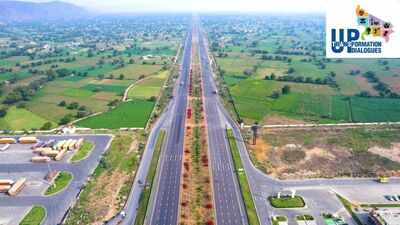
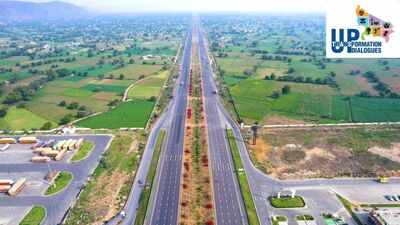
The transformation of Bulandshahr under Yogi Adityanath‘s leadership from 2017 to 2026 has been marked by significant strides in infrastructure and urban planning. Once part of the broader challenges facing western Uttar Pradesh, the district benefited from the state’s emphasis on connectivity. Key projects like the approval of the Bulandshahr Ring Road in 2026, linking the Ganga and Yamuna Expressways and providing access to the upcoming Noida International Airport at Jewar, have improved regional mobility.The merger of Bulandshahr and Khurja development authorities, directed by the Chief Minister, enabled integrated master planning under the Bulandshahr Master Plan 2031, with substantial allocations (including Rs 800 crore for expansion) aimed at accommodating population growth and creating organized urban spaces.The One District One Product (ODOP) initiative in Bulandshahr has centered on ceramic products, particularly the renowned Khurja pottery, transforming a traditional craft into a driver of economic growth since its launch in 2018. Khurja, within the Bulandshahr district, has long been celebrated for its glazed pottery and ceramicware, with roots tracing back centuries and GI-tagged recognition.Under the ODOP framework, the Uttar Pradesh government has focused on skill development, modernizing kilns, providing subsidies for artisans, and establishing common facility centers to enhance quality and production efficiency. This has helped small-scale potters adopt better techniques, improve designs, and increase output while preserving traditional handcrafting methods.ODOP interventions have boosted market access, branding, and exports for Bulandshahr’s ceramics, elevating Khurja’s status as a ceramic hub. Government support through exhibitions, e-commerce integration, branding campaigns, and participation in international events like Expo 2025 has connected local artisans to national and global buyers. Exports of ceramic products reached notable figures, with targeted infrastructure like industrial parks and pottery clusters under schemes linked to ODOP. Financial assistance via margin money and training programs has empowered entrepreneurs, created jobs, and contributed to higher incomes for thousands of families involved in the sector, aligning with the district’s broader industrial and connectivity upgradesIndustrial and economic growth accelerated through targeted initiatives, turning Bulandshahr-Khurja into a budding manufacturing hub. The establishment and promotion of the Khurja Industrial Park and related townships under the BulandshahrKhurja Development Authority (BKDA) focused on ceramics, pottery, and logistics, leveraging proximity to dedicated freight corridors and the airport. Auctions for industrial plots, infrastructure for MSMEs, and export-oriented facilities capitalized on Khurja’s traditional ceramic strengths, with efforts to build modern amenities, power infrastructure, and market access.These developments aligned with Uttar Pradesh’s broader investor summits and ease-of-doing-business reforms, attracting investments and generating employment in a region previously constrained by limited opportunities.Improvements in law and order and governance created a more stable environment conducive to development. As part of the state’s overarching push since 2017, enhanced policing, crackdowns on criminal elements, and better administrative efficiency helped reduce disruptions that had historically affected daily life and investment in districts like Bulandshahr.This stability supported welfare delivery, education, and health infrastructure upgrades, including new facilities and schemes reaching rural and urban populations. The focus on transparent governance and last-mile connectivity through roads and power further integrated the district into Uttar Pradesh’s growth story.By 2026, Bulandshahr has positioned itself as a key node in western Uttar Pradesh’s development corridor, shifting from a primarily agricultural and trading area to one with modern urban and industrial potential. Ongoing projects in residential colonies, commercial complexes (such as Transport Nagar and Ganga Nagar), and logistics have enhanced livability and economic prospects. While challenges remain, the cumulative impact of expressway linkages, dedicated development authorities, and state-backed investments reflects a broader reconstruction narrative, aiming for sustainable growth aligned with Uttar Pradesh’s ambition to become a leading economic powerhouse.Bulandshahr has witnessed notable improvements in cleanliness under the Swachh Bharat Mission and state initiatives since 2017, transitioning from open defecation challenges to achieving Open Defecation Free (ODF) status and advancing solid-liquid waste management. The district established Solid and Liquid Waste Management (SLWM) Training and Demonstration Centres, such as the one in Azamabad, promoting source segregation, door-to-door collection in villages, vermi-composting, and integrated waste processing facilities. Participation in Swachh Survekshan has shown steady progress, with urban local bodies focusing on sanitation infrastructure, public awareness drives, and community involvement.Bulandshahr’s tourism, though rooted in its religious and historical heritage rather than mass commercial appeal, offers a blend of spiritual sites, colonial-era landmarks, and unique cultural experiences. Key attractions include the majestic Kuchesar Mud Fort (Rao Raj Vilas), an 18th-century structure built by Jat rulers; ancient temples such as the Khurja Devi Temple, Belon Temple dedicated to Sarva Mangala Devi, and the riverside shrines at Ahar along the Ganga; and the iconic Khurja pottery clusters, where visitors can witness traditional ceramic craftsmanship. Additional draws encompass the Clock Tower in Malka Park, scenic Ganga Ghats, and sites like the Upper Ganga Canal, making it an ideal destination for pilgrims, history enthusiasts, and those seeking authentic rural Uttar Pradesh charm.The district hosts prominent colleges such as I.P. (P.G.) College, D.A.V. College, Agrasen P.G. College, and several others offering undergraduate and postgraduate programs in arts, science, commerce, and professional streams, many affiliated with Chaudhary Charan Singh University, Meerut. Under Uttar Pradesh’s broader reforms since 2017, initiatives like Operation Kayakalp have upgraded government schools, while projects such as the Atal Residential School provide free residential education to children of migrant workersBulandshahr’s housing landscape has transformed significantly through planned urban development and affordable housing initiatives, driven by the Bulandshahr Khurja Development Authority (BKDA) and central schemes like Pradhan Mantri Awas Yojana (PMAY). Residential projects such as Ganga Nagar, Kalindi Kunj, Hari Enclave, and Ananta Extension Colony offer organized plots, apartments, and EWS housing, while the Master Plan 2031 emphasizes expanded residential zones along major corridors to accommodate a projected population of around 400,000. PMAY has facilitated the construction of hundreds of economically weaker section houses in areas like Rampura, alongside private and authority-led developments that benefit from improved connectivity via the new ring road and expressways.The establishment of Kalyan Singh Government Medical College and Hospital in Chandpur has been a major milestone, enhancing medical education and tertiary care services in the district. The District Hospital in Civil Lines, along with multiple Community Health Centres (CHCs) in areas like Anoopshahr, Dibai, and B.B. Nagar, provides essential primary and secondary care, while Ayushman Bharat Pradhan Mantri Jan Arogya Yojana (PM-JAY) ensures cashless treatment access for eligible families across empanelled hospitals.