







Listen to this article
Estimated 4 minutes
The audio version of this article is generated by AI-based technology. Mispronunciations can occur. We are working with our partners to continually review and improve the results.
The Record Ridge mine near Rossland, B.C., is set to go ahead without an environmental assessment certificate, with a B.C. Supreme Court judge rejecting a lawsuit filed by local residents calling for more scrutiny.
The Save Record Ridge Action Committee Society (SRRACS) and Sinixt Confederacy were opposed to the open-pit magnesium mine in the West Kootenay, owned by Calgary-based West High Yield (WHY) Resources.
SRRACS filed a lawsuit after the province’s Environmental Assessment Office (EAO) had ruled that the mine wouldn’t require an environmental assessment certificate as WHY’s stated intended production capacity — of 63,500 tonnes of ore per year — was below a threshold that automatically triggered the environmental assessment process.

The province could end up in court over a recent environmental assessment decision. It involves the proposed Record Ridge Magnesium Project, southwest of Rossland. The CBC’s Kimberly Davidson explains.
In the lawsuit, SRRACS and the Sinixt Confederacy argued that the lack of an environmental assessment certificate meant there was little scrutiny of the project’s health risks for residents and impact on fish and wildlife.
But B.C. Supreme Court Justice Gordon Weatherill ruled in a decision posted on Thursday that the province’s decision was reasonable within the context of existing legislation.
“It was justified in relation to the relevant facts and legal constraints that confined the analysis, it was transparent, and it was intelligible,” he wrote.
“I am not persuaded that the [EAO’s] determination was unreasonable.”
A WHY spokesperson said the company intends to be a “long-term partner” with the Rossland community, growing alongside it and not at its expense.
“Importantly, the [project] is designed to coexist with the community through a robust regulatory framework that includes environmental protections, ongoing monitoring, and continued consultation with Indigenous Nations, regulators, and local stakeholders,” they wrote in a statement.
Production capacity
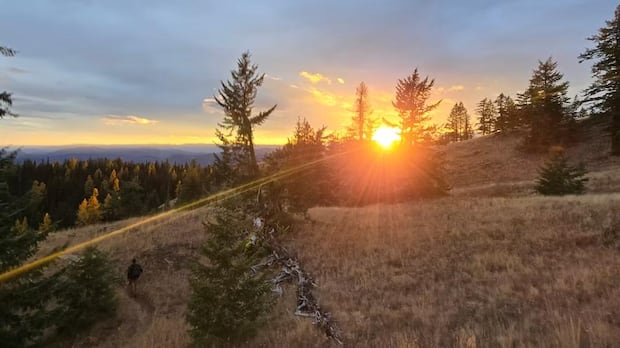
The mine would be located roughly five kilometres north of the Canada-U.S. border and almost 400 kilometres east of Vancouver.
Concerns from the mine’s opponents include impacts on sensitive ecosystems, such as the habitat for the threatened mountain holly fern, air and water quality — including asbestos and acid rock drainage — and dissatisfaction with community consultation.
WHY Resources originally submitted permit applications in 2019 with a proposed production capacity of 200,000 tonnes of ore per year, which would have automatically triggered an environmental assessment, according to the court decision.
But the company amended its application in 2024 to propose a capacity of 63,500 tonnes per year, which does not meet the 75,000-tonne threshold requiring an environmental assessment.
SRRACS argued that the project could accommodate a much larger production capacity and questioned whether the EAO had scrutinized the application with that in mind.
In the lawsuit, the advocates argued that any future production capacity increases would sidestep the need for a fresh environmental assessment certificate.
The EAO’s decision stated that if WHY Resources decides to expand its permitted area and production, it would have to remain compliant with provincial requirements and apply for new permits.
However, SRRACS argued that the current footprint of the project could accommodate a much higher production capacity, meaning a certificate could never be needed.
According to the judgment, WHY had already stated it would intend to increase production capacity after two years if the mine proved viable.
But the judge found that the EAO had to assess WHY’s intended production capacity as submitted, and “not to speculate about a proponent’s future intentions.”

Weatherill also rejected arguments from SRRACS and the Sinixt Confederacy that the lack of an environmental assessment certificate meant WHY was side-stepping its obligation to consult with Indigenous peoples.
He found that other parallel regulatory processes would provide a framework for those consultations to take place.
“[The province] recognized that ‘environmental assessment is just one process within the broader provincial commitment to reconciliation,'” Weatherill concluded.
In a social media post, SRRACS said it plans to appeal the decision.