



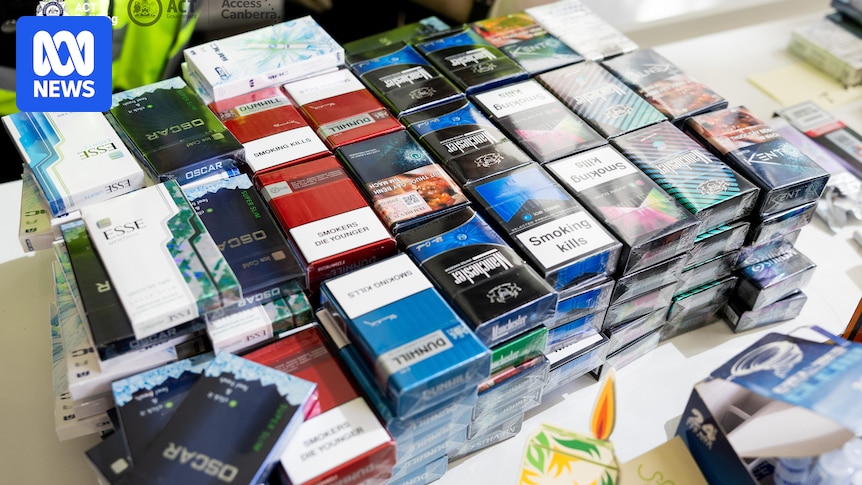
Nearly $10 million worth of illicit tobacco and vapes were seized in Tasmania last financial year, the state’s health department says.
The state government said 5.43 million cigarettes were seized, five times the amount from the year before.
There was also a sharp increase in the amount of loose tobacco taken, with 2,535 kilograms ending up in the hands of tobacco control officers.
On top of that, 29,899 vapes were taken — nearly three times higher than the year prior.
Tasmanian authorities have seized nearly $10 million worth of illegal tobacco and vapes in the last financial year. (ABC News)
“We will continue targeted operations throughout Tasmania as part of our commitment to reduce smoking rates and protect our young people from harm,” said Acting Premier and Health Minister Bridget Archer.
Police Minister Felix Ellis said the Department of Health and Tasmania Police had formalised enforcement work and information sharing between the agencies last year, while four new tobacco control officers were hired.
Last month, the Tasmanian parliament also passed new laws cracking down on the sale of illegal tobacco products.
The bill created a new offence for the sale and supply of illicit vaping products, and increased the penalties for selling them or illicit tobacco.
It also banned the sale of smoking products from vending machines and introduced new powers to close businesses that sell illicit products or operate outside of the licensing frameworks.
Tasmania calls for excise cut
Tasmania Police Detective Inspector Troy Morrisby said there was a clear connection between organised crime and the illicit tobacco trade, which was a “particularly profitable activity”.
“It can be convenient for people to want to justify the purchase of cheap convenient tobacco, but the fact is they are funding organised crime,”
he said.
“We see the harm of that, we see the harm to community members, we see people being caught up in violent activities.”
Troy Morrisby says there’s a clear link between illicit tobacco and organised crime. (ABC News: April McLennan)
Mr Ellis urged the federal government to cut the tobacco excise tax, saying it was pushing smokers into the black market.
“It is failing on every term — we’re seeing a huge increase in organised crime,” he said.
“We’re seeing a decrease, a massive decrease, in the excise collected by the federal government and we are seeing a decrease in smoking rates, all while we’re having a huge impact on the cost of living for those who can least afford it.”
Felix Ellis and Bridget Archer with some of the illicit tobacco and vapes seized in Tasmania. (ABC News)
Ms Archer did not outline how much she thought the excise should be cut.
“But we need the federal government to play its part, and pull whatever levers it can to disrupt the supply of illicit tobacco,” she said.
A spokesperson for Federal Treasurer Jim Chalmers did not provide comment when approached by the ABC.
Opinions mixed on tobacco excise
The Australian Medical Association has not backed calls for the tobacco excise to be cut, with branch president Meg Creely calling the idea an “oversimplification”.
“We all agree it’s a problem — it’s just how do we best manage the problem without creating another problem related to health and cigarettes,”
she said.
Meg Creely believes cutting the excise will increase smoking rates. (ABC News: Jake Grant)
Dr Creely said lowering the excise would trigger an increase in smoking rates.
“I think Tassie sits at a rate of about 15 per cent of adults currently smoking — we sat in the 30s [per cent range] in the 80s, so we’ve done really well,” she said.
She urged governments to continue with enforcement and education programs about the risks of smoking.
Theo Foukkare, of the Australian Association of Convenience Stores, said the price difference between legal and illegal retailers was a major problem.
“It’s like a game of whack-a-mole — you shut them down, they reopen somewhere else. You shut them down, they move to an online model,”
he said.
Theo Foukkare believes more Australians will switch to legal tobacco if the price goes down. (Supplied: Theo Foukkare)
Mr Foukkare said while legal tobacco retailers were selling a packet of 20 cigarettes for $35 to $40, an illegal packet could be offered for as low as $15.
He argued that cutting the excise by 50 per cent would lower the legal price down to around $25, and shift some buyers back to licenced retailers.
“In our view, generally most Aussies want to do the right thing; they know that supporting these illicit stores with the cheap smoke is actually funding other organised criminal activity,” he said.