







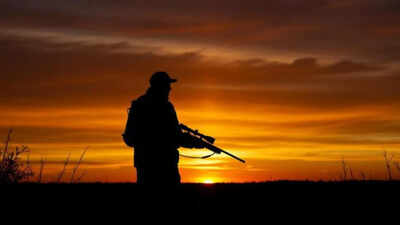
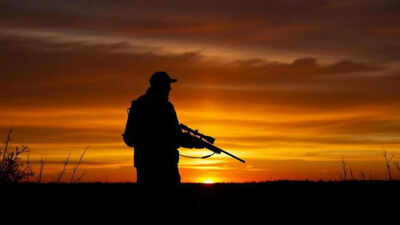
In the Arctic, success is not measured by skill alone but by something far less predictable: the state of the sky, the wind, and the ice beneath one’s feet. A hunter may prepare for weeks, but a sudden shift in temperature can erase every plan. This is the reality captured in the proverb, “The weather decides for the hunter.” It is not poetic exaggeration. It is a survival truth shaped by one of the most extreme environments on Earth.
Meaning survival before mastery
At its core, the proverb expresses a simple but harsh idea: humans do not dominate nature, they respond to it. In Arctic hunting cultures, particularly among Inuit communities across Greenland, Canada, and Alaska, hunting is governed by environmental conditions that cannot be negotiated.Sea ice thickness determines whether travel is safe. Wind direction controls scent and sound, affecting the ability to approach seals or caribou. Sudden storms can strand hunters on drifting ice or force them to abandon expeditions entirely. In this sense, the “decision” to hunt is never fully human. It is conditional on nature’s approval.Ethnographic studies by Arctic researchers and institutions such as the Inuit Circumpolar Council have repeatedly documented how traditional hunting calendars are flexible rather than fixed, shifting constantly with weather and ice behavior.
Origin rooted in Arctic lifeways
While the exact wording of the proverb is difficult to trace to a single author or moment, its meaning is deeply embedded in Inuit oral traditions and broader Arctic survival knowledge passed down through generations.In pre-industrial Arctic societies, hunting was not a recreational activity but the foundation of survival. Communities depended on marine mammals like seals and whales, as well as land animals such as caribou. These animals, in turn, moved according to seasonal ice formation, snow depth, and temperature fluctuations.Early ethnographers, including explorers and anthropologists in the 19th and 20th centuries, recorded that Inuit hunters often described weather as an active force that “gives permission” or “refuses access” to game. This worldview reflects not a lack of agency but an intimate understanding of ecological dependency.
When ice becomes a map and a warning
To understand the proverb fully, one must understand Arctic geography itself. The ice is not static. It forms, cracks, drifts, and melts in cycles that are increasingly unpredictable.According to the National Snow and Ice Data Center (NSIDC), Arctic sea ice has been declining significantly over the past several decades, with younger and thinner ice replacing older, more stable formations. For hunters, this is not an abstract climate statistic. It directly changes how, where, and whether hunting can occur.A thick, stable ice sheet once allowed hunters to travel safely across frozen seas. Now, thinner ice can break without warning, making traditional routes dangerous or unusable. In such conditions, weather is not just an obstacle but a determining authority over human mobility.
Significance beyond survival
The proverb also reflects a deeper cultural logic: humility in the face of environmental systems. In Arctic traditions, respect for weather is not symbolic. It is practical ethics.A hunter who ignores wind shifts or ice sounds risks not only failure but life itself. Over time, this fosters a mindset where observation is more important than force. Success depends on reading subtle environmental cues such as cloud formations, snow texture, animal behavior, and wind direction.Researchers studying indigenous knowledge systems have noted that this form of environmental literacy is highly sophisticated, often aligning with modern meteorological understanding, even if expressed in different language and practice.
Contemporary relevance in a warming Arctic
Today, the proverb carries new urgency. Climate change is reshaping Arctic environments faster than many ecosystems can adapt. The Arctic Council and NOAA Arctic Report Card have documented rising temperatures, shrinking sea ice, and shifting wildlife patterns.For hunters, this creates a paradox. Traditional knowledge remains essential, yet increasingly unstable conditions make prediction harder. Ice that once formed reliably at certain times now forms later or breaks earlier. Migration patterns of animals such as seals and caribou are shifting in response to temperature changes.This unpredictability makes the proverb even more literal. Weather does not just influence hunting decisions. It disrupts entire cultural rhythms that have existed for centuries.
Philosophical importance humans as participants, not rulers
Philosophically, “the weather decides for the hunter” challenges modern assumptions of control over nature. In many industrial societies, nature is often treated as a resource to be managed. The Arctic perspective reverses this hierarchy.Here, humans are participants in a system they cannot fully command. The proverb aligns with broader ecological philosophies that emphasize interdependence rather than dominance. It suggests that survival depends not on overcoming nature but on understanding its limits and rhythms.This idea is increasingly relevant in global discussions on climate resilience. As extreme weather events become more common worldwide, the Arctic experience becomes less distant and more instructive.
Why it was said and who it was for
The proverb was not created for literary effect. It emerged from lived necessity. It was spoken among hunters preparing for journeys across uncertain terrain, taught by elders to younger generations learning how to read ice and sky.Its audience was anyone whose survival depended on the natural world, which in Arctic societies meant nearly everyone. It functioned as both guidance and warning: do not assume control, observe carefully, and accept that the environment ultimately sets the terms.
Listening to the world that decides
“The weather decides for the hunter” is more than an Arctic saying. It is a compressed philosophy of survival shaped by one of the most demanding environments on Earth. It reflects a worldview where nature is not background scenery but an active force that governs human possibility.In a time when climate systems everywhere are becoming more unpredictable, the proverb feels less like a regional insight and more like a global reminder. No matter how advanced human tools become, there are still forces that set the boundaries. The hunter may prepare, but it is the weather that decides whether the journey even begins.