









It’s been all about building as many new homes as possible in Ontario recently, but now a big corporation wants to stop housing projects in the Sarnia area — something that’s pitting rural and urban communities against one another.
Cargill wants the provincial government to utilize its Minister’s Zoning Order (MZO) for the opposite reason it was originally intended.
The tool has become increasingly common as Ontario pushes to build 1.5 million homes by 2031. An MZO allows the housing minister to override the local planning process and make decisions directly. Usually, that means speeding up development.
But in Sarnia, Cargill wants Minister of Municipal Affairs of Housing Rob Flack to step in and block new homes from being built near its property.
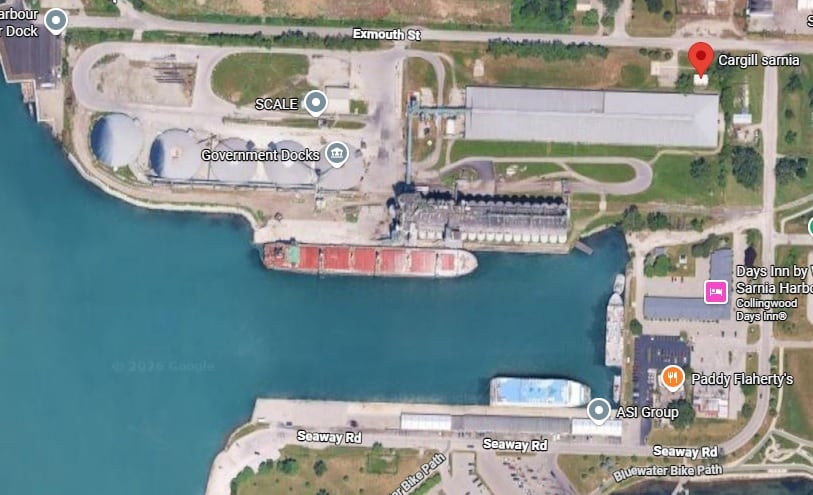
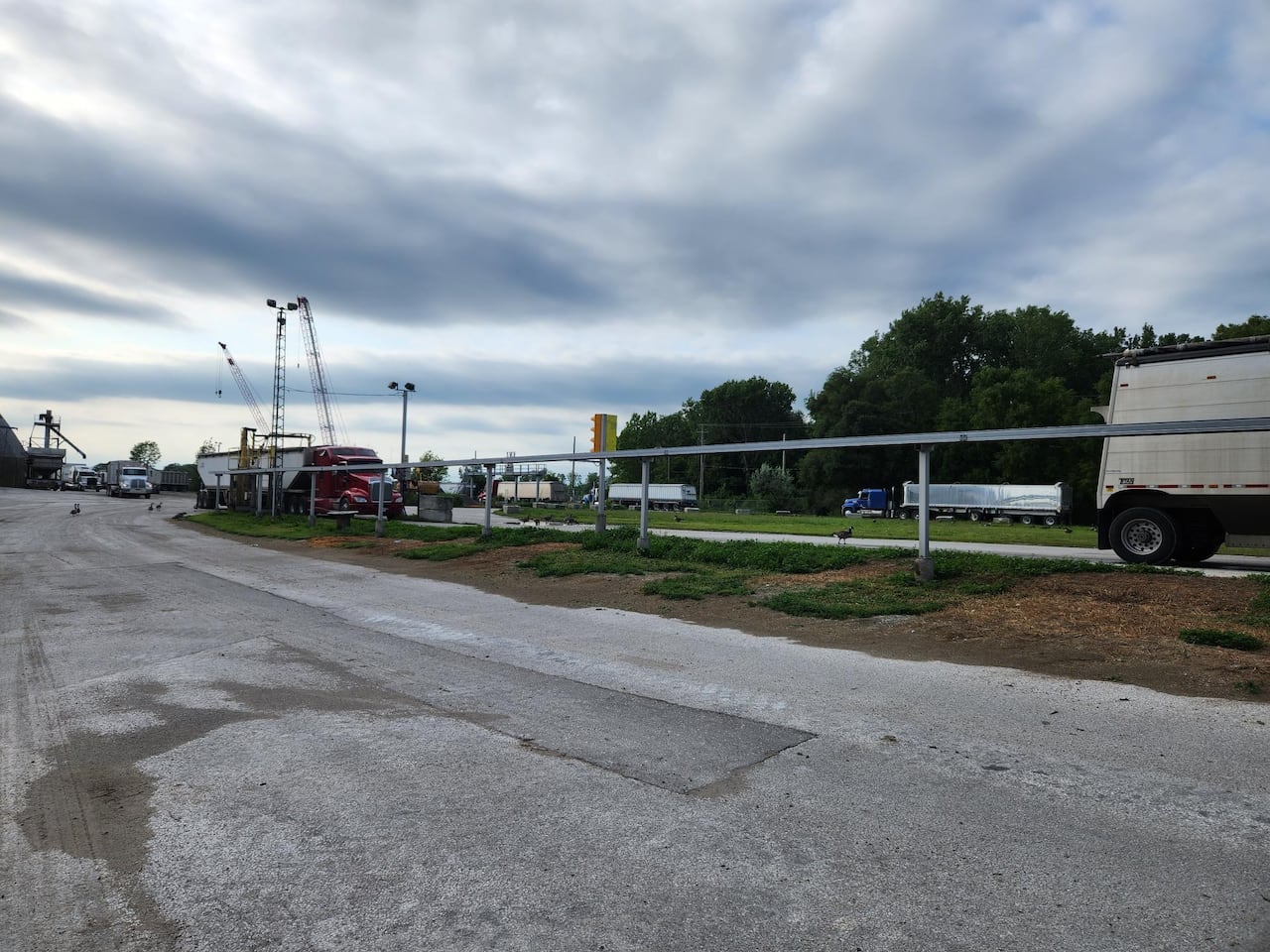
The company is one of the biggest agricultural corporations in the world, and it operates a large grain terminal at Sarnia Harbour. This is where farmers truck their corn, soybeans and wheat at harvest time. Some of the product also comes in by rail. The grain gets loaded on to lake freighters for transport.
It’s estimated more than a third of all the grain exported from Ontario goes through the terminal. Fertilizer is also brought in from ships at this site.
Across the road, to the north, there’s a tract of land within the boundaries of the Village of Point Edward. For the past four years, a developer has been seeking to get townhouses built there.
Meanwhile, southeast of Cargill, near the harbour, there’s an old restaurant property. Sarnia city council approved redevelopment plans on that site on May 25. The plan is to build a 14-storey apartment building.
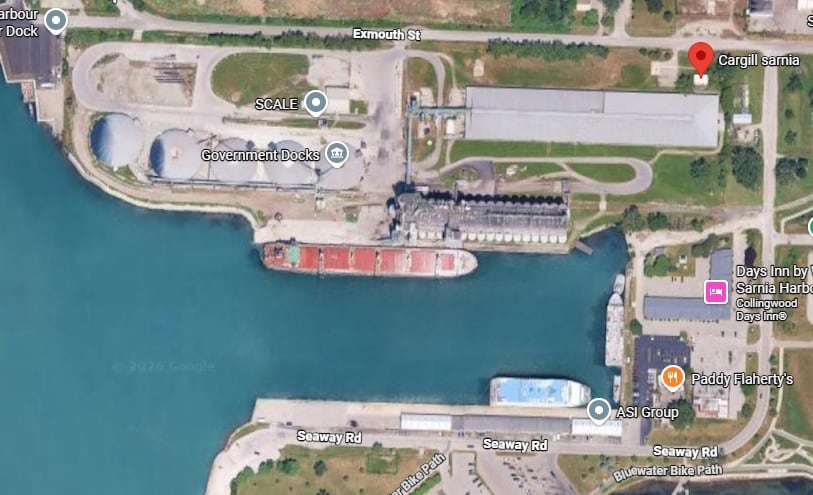
Last December, Cargill applied for the MZO, asking that “new sensitive uses” be limited within 650 metres of its grain elevators.
The report to council says Cargill is concerned that if housing does get built, it could result in “new limits on their continued operation.”
If granted, the MZO would allow the housing minister to overrule whatever decisions Sarnia and Point Edward make to allow these projects to go forward.
Sarnia Mayor Mike Bradley previously told CBC News he’s been frustrated dealing with the company.
“They’re ignoring the local community, and I would suggest that they do it at their peril,” he said.
“The rail traffic, the truck traffic, is a disruption to this community, but we have been silent on that. That may change if the zoning order goes through.”
Windsor Morning12:19To build or not to build? That is the question, facing a giant agricultural corporation and Sarnia residents
Windsor Morning producer Peter Duck with a story about an issue that is pitting rural and urban communities against one another in Sarnia-Lambton.
The Ontario Federation of Agriculture (OFA) is in support of Cargill’s stance, along with some other farm groups.
President Drew Spoelstra says the company’s Sarnia terminal is a “critical component of Ontario’s agri-food network.”
“There are a lot of competing uses. I understand that … housing needs to be built. Obviously, we’d like to see it built in urban centres that are already urbanized, but we also need our critical infrastructure to operate effectively as well,” said Spoelstra.

Several rural municipalities in Lambton County have also voiced their support for Cargill’s concerns.
Tim Williams is a councillor with the Township of Enniskillen — and also a farmer.
He says 90 per cent of his crop goes through the Sarnia terminal, and if it didn’t exist, he’d have to truck his product to Windsor or Hamilton.
“I’m just concerned that no matter what they think, when people move in and there’s dust and noise from an industrial facility, they’re going to take issue with that. I’m quite sure they will,” he said.
“And that being the case, probably the next thing you’d see would be restriction on hours that they can work, restriction on what they can do.”
Bev Hand is the mayor of Point Edward.
She feels badly for the townhome project developer, and says the land has been zoned residential for nearly 30 years already.
“They just don’t want to deal with complaints,” she said.
“We don’t feel like the government should command and tell us how we should be operating our planning. But I really think that there’s a way we could work together.”
But could the community be in danger of Cargill pulling its terminal out of Sarnia if nearby housing is allowed? The complex has existed in Sarnia since 1927.
Jennifer Marchand is the government and industry relations leader with the company.
“We really, truly believe that planning decisions around it should recognize the importance of preserving it as critical trade infrastructure,” she told CBC News.
“We’re focused on preserving the terminal’s ability to operate in a way that supports the Ontario farmers and the global trade and regional economy for the long term.”
There doesn’t appear to be any timeline on the zoning order request made to the province, as it’s at the discretion of the housing minister whether it’s granted — nor is there a deadline for official commenting.
CBC News requested an interview with Sarnia-Lambton Conservative MPP Bob Bailey, and was referred to Municipal Affairs and Housing Minister Rob Flack. His office did not reply to a request for comment.
“That’s going to be interesting to see how the [provincial] government, which way they go, knowing what we’ve heard the last couple years from them, ‘Build, build, build.’ This kind of is the opposite situation for them,” said Kevin Marriott, warden for Lambton County and a farmer in his own right.