







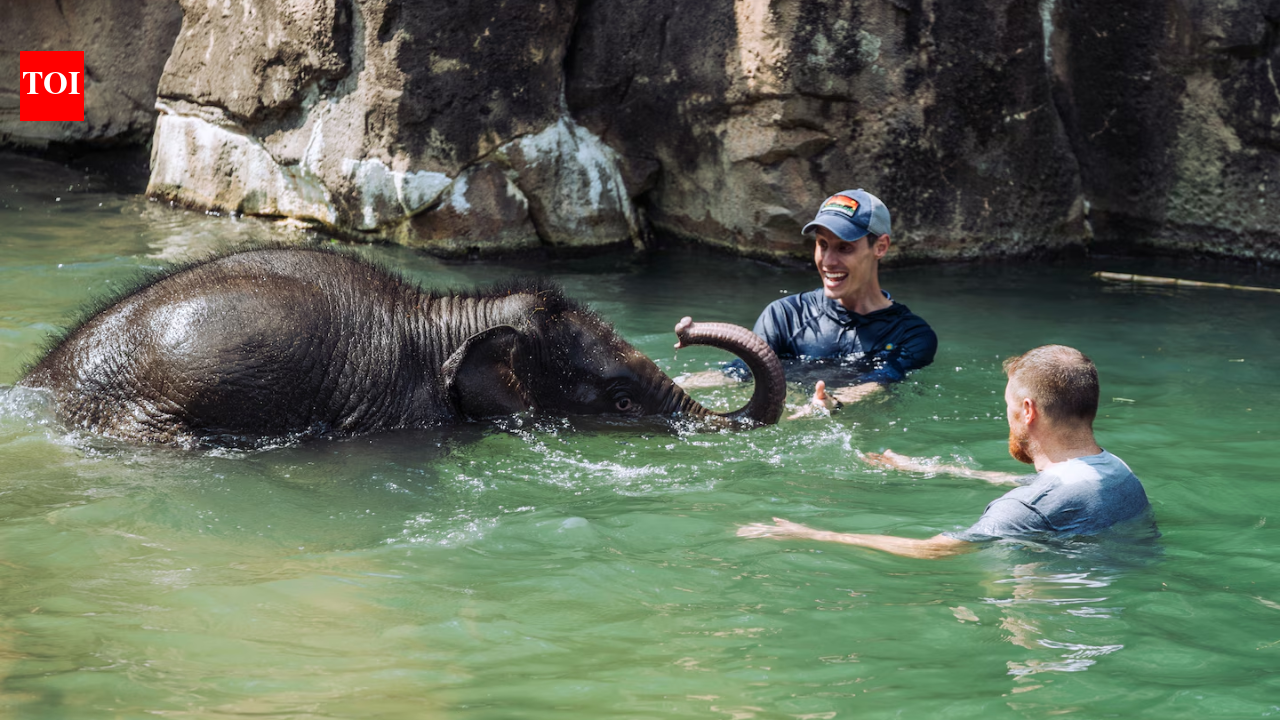
When Asian elephant calf Linh Mai was born at the Smithsonian’s National Zoo in Washington, D.C., in February 2026, her arrival was celebrated as an important step for the conservation of an endangered species. But within hours, the joyful occasion turned into a race against time. Her mother, Nhi Linh, rejected the newborn instead of nursing or protecting her, leaving the calf critically vulnerable. Senior elephant keeper Robbie Clark remained at the zoo for nearly a month, sleeping on-site and helping provide round-the-clock care as staff worked tirelessly to keep Linh Mai alive. Today, her survival is being hailed as one of the zoo’s most extraordinary success stories.
Why Linh Mai’s survival became an extraordinary conservation story
In the wild, a newborn elephant depends almost entirely on its mother during the first weeks of life. Calves must begin nursing soon after birth to receive nutrient-rich milk and antibodies that help protect them from disease. Without maternal care, their chances of survival drop dramatically.According to The Washington Post, Nhi Linh showed little interest in feeding or bonding with Linh Mai after the birth. Zoo staff quickly intervened, feeding the calf with bottles every few hours, monitoring her health around the clock and encouraging repeated interactions between mother and daughter in the hope that the bond would eventually develop. Robbie Clark and his colleagues worked continuous shifts, often sacrificing sleep to ensure the calf never went without care.
How one keeper helped the newborn survive against the odds
Hand-raising an elephant calf is one of the greatest challenges in modern zoo medicine. Young elephants require frequent feeding, careful temperature regulation, constant veterinary supervision and opportunities to socialise with other elephants to develop normally.The National Zoo team gradually introduced Linh Mai to the rest of the elephant herd while continuing behavioural training sessions with Nhi Linh. Over time, the mother began showing increasing interest in her calf, marking a significant breakthrough after weeks of uncertainty.The Washington Post reports that Linh Mai’s survival reflects years of preparation by veterinarians, keepers and conservation specialists, as well as the extraordinary dedication of staff who remained by her side during the most critical period of her life.
A hopeful milestone for Asian elephant conservation
Asian elephants are classified as Endangered by the International Union for Conservation of Nature (IUCN), with wild populations threatened by habitat loss, fragmentation and human-elephant conflict. Every successful birth contributes valuable knowledge to conservation programmes aimed at safeguarding the species.Linh Mai’s story has become more than a tale of survival. It highlights the intensive care, scientific expertise and emotional commitment required to protect endangered animals under human care. What began as a heartbreaking rejection ultimately became a powerful example of perseverance, with one tiny calf surviving because an entire team, and one devoted keeper, refused to give up on her.