







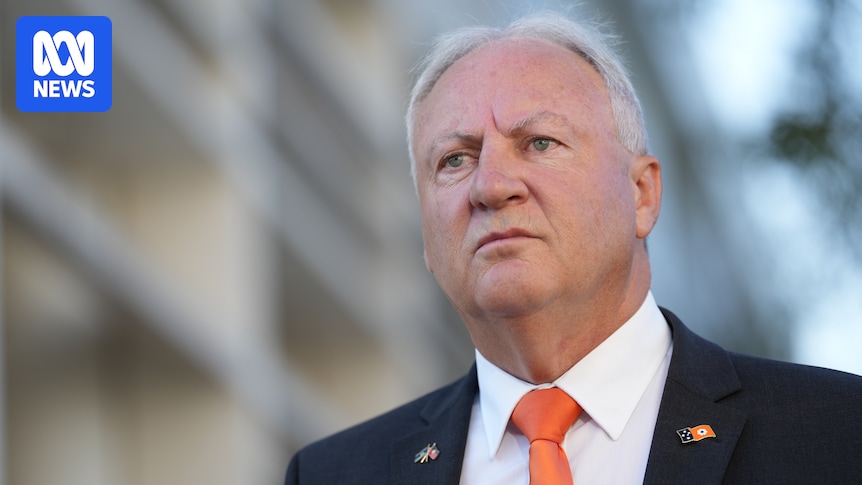
The Northern Territory government is planning to extend alcohol bans in town camps which it says will prevent “rivers of grog” from flowing into remote communities.
The NT is home to 43 town camps — small Aboriginal communities on the outskirts of Darwin, and regional towns including Alice Springs, Tennant Creek, Katherine and Elliott.
There are 43 town camps across the Northern Territory. (ABC News: Xavier Martin)
Long-term federal alcohol prohibition laws lapsed in 2022, but were reinstated a few months later by the previous Labor NT government after a sharp rise in alcohol-related crime across the region.
The current NT bans are due to expire in January 2027.
Aboriginal Affairs Minister Steve Edgington said his government was planning for the restrictions to continue so that the NT Emergency Response-era bans “will not expire” — but it is not yet clear if the extension will be indefinite.
“We are making sure that the rivers of grog don’t flow again into town camps to reduce alcohol-related violence and crime and to improve community safety and wellbeing,” he said in a statement.
“Alcohol-fuelled violence and antisocial behaviour have had devastating impacts on too many Territory families and communities for too long.
Steve Edgington says the NT government hopes to reduce alcohol-related violence and crime. (ABC News: Dane Hirst)
“Extending these bans is a practical measure that helps reduce harm and supports safer, stronger communities.”
The Country Liberal Party (CLP) government said it was working to introduce legislation to parliament for the extension before the end of 2026.
Extension welcomed by health sector
The move has been broadly welcomed by the NT’s Aboriginal-controlled health sector.
In a statement, the Aboriginal Medical Services Alliance NT (AMSANT) chief executive Donna Ah Chee said the sector had called for an extension of the alcohol bans which helped maintain “important protections against alcohol-related harm”.
Donna Ah Chee supports the extension of alcohol restrictions. (ABC News: Eleni Roussos)
“We have seen what happens when effective protections are removed, and we have also seen the positive impact they can have when they are in place,” she said.
“The evidence is clear that effective alcohol supply regulation reduces alcohol-related violence, trauma and harm.
“The right of women and children to be safe must remain the overriding concern.”
Announcement comes in wake of tragedy
The announcement of the ban extension comes as the federal Coalition calls for greater safety in town camps, following the alleged murder of five-year-old Kumanjayi Little Baby after she was taken from Old Timers town camp in Alice Springs.
NT Police have confirmed there was a party with alcohol at the town camp on the night she was allegedly abducted, with multiple bottles of Jim Beam photographed inside the house.
There had been a party with alcohol at the town camp home Kumanjayi Little Baby went missing from. (ABC News: Matt Garrick)
The NT government is responsible for funding the town camps, and then sub-contracts various services and maintenance to Aboriginal-run organisations like Tangentyere Council.
Chief executive of Tangentyere Council Walter Shaw was asked last month whether alcohol was causing widespread harm within town camps.
“I think there’s widespread alcohol issues throughout the Northern Territory,” he said.
Walter Shaw says alcohol bans are a matter for the NT government. (ABC News: Xavier Martin)
“It’s part of the Northern Territory culture; [but] at the end of the day, if these are restricted areas when it comes to alcohol, it is a policing matter.”
Mr Shaw has previously voiced his support for the “abolition of punitive, race-based” town camp bans.
Asked whether he still supported the bans being lifted, Mr Shaw said it was a matter for the NT government, but that Tangentyere Council would be open to taking on more responsibility in helping stop alcohol flowing into town camps in the future.
NT Labor has not yet responded to whether it is in support of the bans being extended.