








Listen to this article
Estimated 4 minutes
The audio version of this article is generated by AI-based technology. Mispronunciations can occur. We are working with our partners to continually review and improve the results.
Rick King remembers the sound of glacial water rushing down a nearby mountain toward his property.
“It’s a roar and sounds like a heavy wind,” King said. “It’s unnerving.”
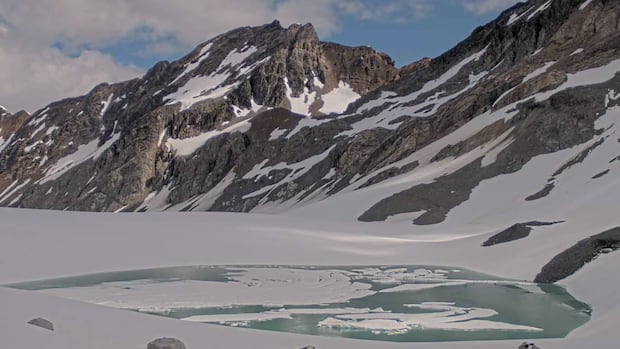
He is one of 24 properties on evacuation alert northwest of Pemberton, B.C., as Place Glacier continues to melt into a rising glacial lake. It could burst or spill over at any minute.
This is the third year in a row that the glacial lake outburst is expected to happen, and residents near the community of Birken have been on evacuation alert since June 7.

The clock continues to tick on when a glacier lake will burst. A small community northwest of Pemberton, B.C., is facing the threat of flooding and an evacuation alert. The CBC’s Alanna Kelly spoke with those residents.
The Squamish-Lillooet Regional District (SLRD) said once the lake reaches 30 metres deep, an evacuation order will be issued.
Research scientist Jeff Crompton said it is difficult to predict exactly when it will happen.
“We know that it’s very likely to drain once that water reaches its maximum height … it might drain before that, and that’s uncertain,” Crompton said.
Properties flooded last two years
Last year, the creek-bed beside King’s property rose roughly two feet from sediment, trees and rocks in the outburst.
“If it bursts now, there’s absolutely no room for the water,” King said. “That’s going to flood our yard, our farmland, our pasture for our cows and probably our house.”

Next-door neighbour Don Coggins is also concerned about his property being flooded again.
“We’re just waiting, and it’s going to happen, and we’re going to get flooded again,” Coggins said.
They both fear this year could be worse in times past.
“If we get a major outburst at even at today’s level, it all comes this way, our homes are underwater,” Coggins said.
An embankment at Place Creek, above Poole Creek, was damaged last year and sent water towards both Gates Lake and Poole Creek.

The SLRD confirmed the embankment was strengthened this year to maintain the creek flow into its “natural and normal” alignment to Poole Creek and reduce it from going towards Gates Lakes.
King said this means properties in one area are being protected, while it will be worse for his.
“In the previous floods, half of the water went towards Gates Lake, and if it all comes this way, I’ll be standing in six or eight feet of water,” King said. “It just seems to me that it’s really unfair that we’re going to take the brunt of this.
Residents calling for action
Coggins and King are both on edge and believe more could be done to prevent flooding.
“What I want to see is action,” Coggins said. “I want somebody to do something and not just monitor, anything would be better than nothing.”

They are asking for Poole Creek to be dredged so it can handle the outburst water, the culvert widened so more debris can flow through, a barrier that evenly divides the water between Gates Lake and Poole Creek and drain the glacial lake.
“I would like to see them solve the problem at its source,” King said. “Find a way so that the lake doesn’t build up and doesn’t all drain at once.”
Fracture glacier with explosives?
B.C.’s Ministry of Emergency Management and Climate Readiness said consultants did propose a mitigation option that would use explosives to fracture the glacier and allow it to drain.
A spokesperson said this mitigation option will not be funded as there “are also concerns that explosive use could generate unforeseen geotechnical impacts in high alpine terrain.”

Coggins said their hands are tied as they are not allowed to do any work in the creek.
“They won’t allow us to do anything, so it becomes a no-win situation,” Coggins said.
SLRD board chair Jen Ford wants residents impacted by landslides to be included in the provincial Disaster Financial Assistance Program.
“We would love for that to be extended to communities where landslides are the impact, and that is still not included,” Ford said.
She said the speed at which Place Glacier is changing is a real indication of what could happen at other glaciers.
“This is a canary in the coal mine situation,” Ford said.