






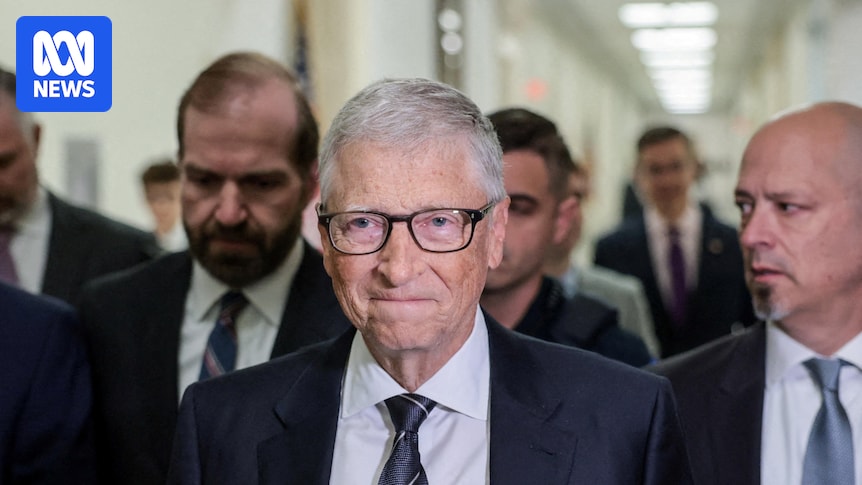
Microsoft co-founder Bill Gates has denied having “victimised anyone” as he began closed-door testimony to US politicians over his relationship with notorious sex offender Jeffrey Epstein.
Mr Gates, one of the world’s richest men and a leading philanthropist, appeared before the House Oversight Committee for a transcribed interview about the disgraced financier, who died in a New York jail in 2019 while awaiting trial on sex trafficking charges involving underage girls.
“I never witnessed nor had any indication that Epstein was engaged in ongoing criminal conduct,” Mr Gates said in prepared opening remarks released as the interview began.
“I never went to his island, his ranch, or his Florida home. I have never victimised anyone.”
A picture of Bill Gates with an unknown woman was released by the House Oversight Committee Democrats in December last year. (Supplied: House Oversight Committee Democrats)
The panel asked Mr Gates to appear after documents released by the Justice Department raised new questions about his contacts with Epstein, whose network of wealthy and powerful associates has fuelled years of scrutiny and conspiracy theories.
US President Donald Trump, who had a years-long relationship with Epstein, opposed releasing the files, prompting accusations of a cover-up that dogged his first year back in office.
Mr Gates said he supported their release and hoped survivors of Epstein’s crimes would receive justice.
Hillary and Bill Clinton gave testimony to the same committee earlier this year. (GOP Oversight Committee)
He told the panel he was introduced to the business tycoon in 2011 by people he trusted in his professional and philanthropic work, and accepted the introduction because Epstein claimed he could raise billions of dollars for global health projects.
“I recall being aware that Epstein had faced prior legal issues, but I did not fully understand the extent of the crimes he committed,” Mr Gates said.
“I accepted the introduction without applying the scrutiny I should have.”
Mr Gates said he had increasingly extensive conversations and meetings about charitable giving with Epstein from 2011 to 2014.
But he said no vehicle for donations was created, no money was raised and their interactions ended in December 2014.
‘Deeply sorry’
“I should never have met with Epstein in the first place,” Mr Gates said.
The Epstein files include a 2013 draft email in which the financier appeared to suggest he had helped Mr Gates manage the fallout from extramarital affairs, including by seeking antibiotics after a sexually transmitted infection.
Mr Gates has called the email fake and denied the allegations, but he acknowledged that Epstein had learned sensitive information about his personal life, including the fact that he had been unfaithful in his marriage.
He accused Epstein of trying to use information about his infidelities, “in addition to many lies that he layered on top,” to pressure him to re-engage.
“He was unsuccessful in this effort, but it shows some of the ways he tried to leverage his interactions with me to further his agenda,” Mr Gates said.
Simply appearing in Epstein-related documents does not indicate evidence of a crime.
Mr Gates said he now understood that Epstein had sought to build “an image of legitimacy” around himself through ties to reputable and powerful people.
“If the time I spent with Epstein lent him any credibility, I am deeply sorry,”
he said.
The House Oversight Committee has been examining how the government handled the Epstein case and what it has released from its files.
Bill and Hillary Clinton and Commerce Secretary Howard Lutnick have already testified.
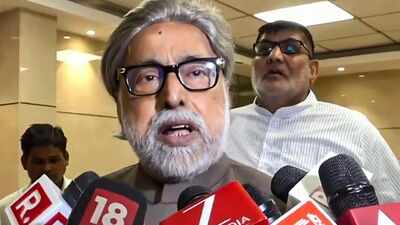
Emerging from the interview, Republican congressman Tim Burchett suggested Mr Gates appeared “well-coached” and had revealed little, providing no new names to officials investigating Epstein’s associates.
But Robert Garcia, the committee’s top Democrat, said Mr Gates had “provided us with information about other folks that were in Mr Epstein’s orbit.”
“So far Mr Gates has been cooperative in answering our questions,” Mr Garcia told reporters.
AFP