









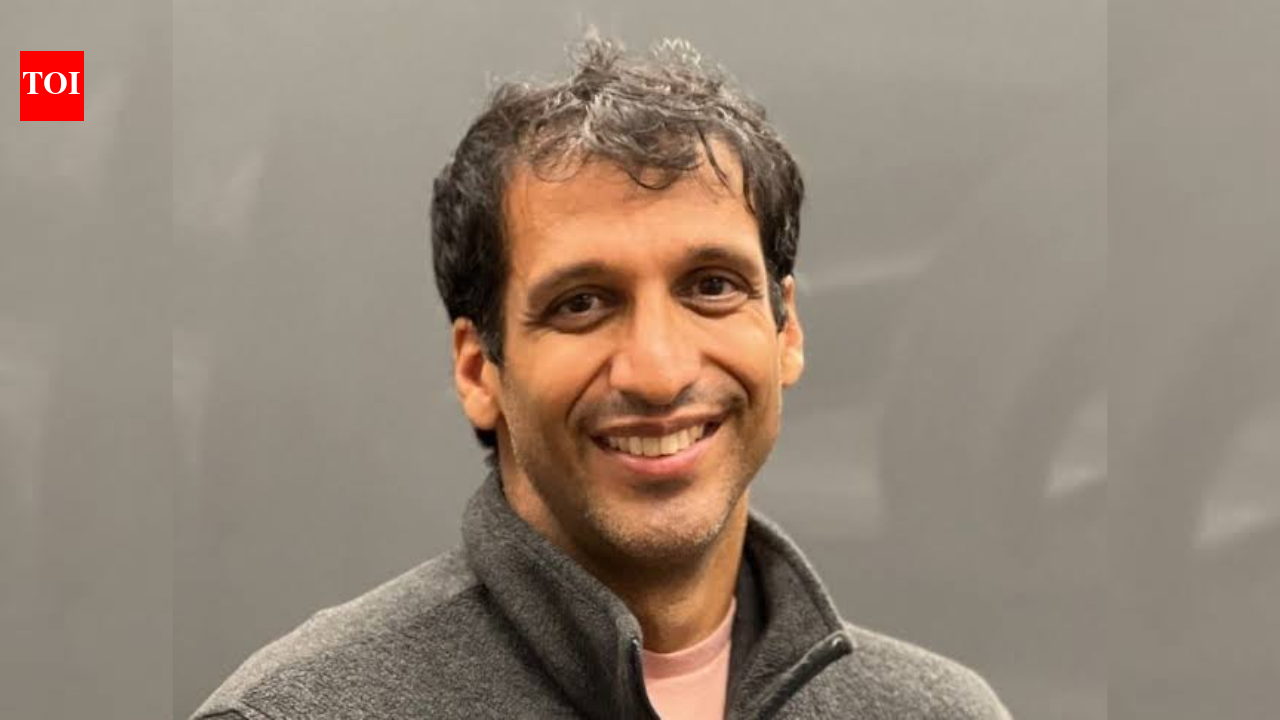

Cellular Intelligence has appointed Arjun Raj, PhD, as its chief scientific officer and scientific co-founder, the artificial intelligence company announced on Thursday, elevating the University of Pennsylvania scientist to lead the company’s overall scientific strategy as it develops a universal foundation model of cell signalling.Raj, who joined the company full-time in 2025 as head of computational biology while on leave from the University of Pennsylvania, has now extended his leave and expanded his responsibilities to oversee the integration of experimental biology, computational biology, machine learning and translational science into what the company describes as a closed loop system designed to understand, predict and ultimately control cell behaviour.The designation of scientific co-founder recognises Raj’s role in shaping the company’s scientific foundations, including the design of experiments, data generation methodologies and the development and validation of its models.“Arjun joined us because he saw the possibility of building something biology has never had: massive, context-rich, time-resolved perturbation datasets, and models purpose-built to learn from them. In his first year at the company, he helped turn that possibility into reality,” said Micha Breakstone, Ph.D., co-founder and chief executive officer of Cellular Intelligence.“Arjun moves fluently between machine learning and experimental biology while remaining deeply grounded in fundamental science. Naming him scientific co-founder recognizes the company he has already helped build. As chief scientific officer, he will lead our efforts to scale the foundation model and unlock a new era of predictable cell engineering.”Raj said the company’s approach addresses a long-standing bottleneck in biology by generating high fidelity, time resolved perturbation data specifically for machine learning rather than relying on static observations collected for other purposes.“I have spent my career trying to understand how individual cells make decisions, and what has always limited the field is the data,” Raj said.“Cellular Intelligence is building high-fidelity, time-resolved perturbation data generated expressly for learning. For the first time, I can see a path from observing cellular decisions to predicting and eventually controlling them.”The announcement comes as Cellular Intelligence seeks to connect its foundation model platform directly to therapeutic development. In May, the company acquired STEM-PD, an investigational Phase 2 ready Parkinson’s disease cell therapy programme, from Novo Nordisk. The company says the programme will serve both as a therapy it aims to advance for patients and as a proving ground for its AI driven platform, with clinical and manufacturing insights feeding back into its models in a continuous learning system.Cellular Intelligence has developed a proprietary capsule based platform capable of running time varying, sequential signalling combinations in parallel within a single experiment. The company says this expands the scale of controlled perturbation experimentation by orders of magnitude and enables models to identify gaps in their own understanding, guide future experiments and improve with each cycle.Raj is the Richard K. Lubin Professor of Bioengineering and Professor of Genetics at the University of Pennsylvania. Trained originally as a mathematician, he became an experimental systems biologist and co-developed a widely used method for visualising and counting individual RNA molecules inside single cells. His research has contributed to the understanding of stochastic gene expression, cell identity, rare non genetic states in cancer therapy resistance and cellular memory.He earned bachelor’s degrees in physics and mathematics from the University of California, Berkeley, and a doctorate in mathematics from the Courant Institute at New York University. After postdoctoral training at the Massachusetts Institute of Technology, he joined the University of Pennsylvania faculty in 2010.