






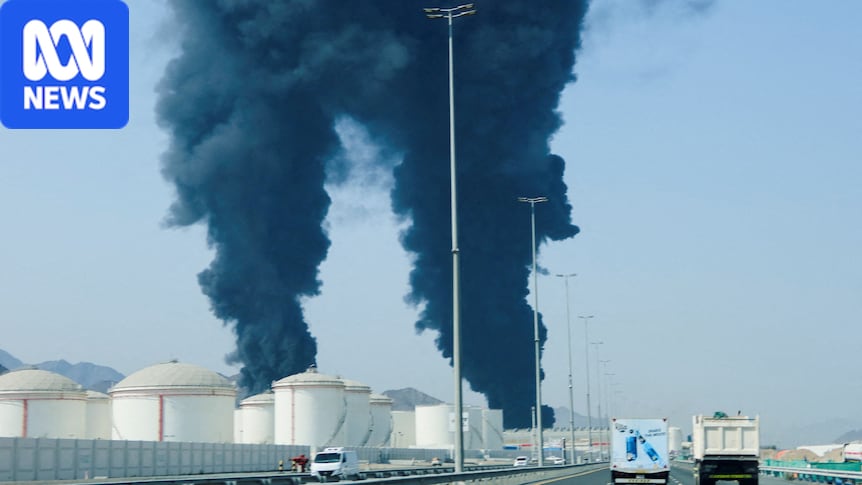
The Strait of Hormuz is closed again, tankers are being attacked, the Gulf’s oil and gas exports are threatened, and chaos remains the new norm.
But for months, countries and companies have been finding ways to bypass the choke point, and are now making plans to future-proof themselves from even more disruption with new pipelines and a potential new port.
Analysts say Iran can play its Hormuz card for the next few weeks or months, but not forever.
They argue the war has forced the world to adapt and reduce its heavy dependence on a single, narrow energy corridor, thereby minimising Tehran’s leverage over the crucial waterway.
But opinion is divided on how viable these alternatives really are in the long term.
Just this week, Iran threatened to expand its campaign to throttle global energy markets to the Red Sea route, using its Houthi allies in Yemen.
So what alternatives already existed before the war? And what are the oil-rich Gulf states thinking now?
How Gulf nations are bypassing the strait
Before the conflict began on February 28, around a fifth of the world’s oil and gas traffic passed through the Strait of Hormuz daily, delivering about 20 million barrels of oil to the rest of the world.
But analysts say global oil markets are not in “panic mode” despite the resumed fighting — largely because of contingency planning since the war began.
“We never really lost all the barrels from the Middle East that would go through the Strait of Hormuz because the Saudis stepped in immediately,”
global oil expert Carol Nakhle said.
Dr Nakhle, the CEO of advisory company Crystol Energy, pointed to Saudi Arabia’s alternative route.
“They started diverting a big chunk of their exports away from the Strait of Hormuz into their pipeline that goes all the way across the kingdom into the Red Sea,” she said.
The East-West pipeline was built in the early 1980s and carries crude oil across a 1,200 kilometre system spanning Saudi Arabia, connecting the Abqaiq oil processing facility in the east to the Red Sea port of Yanbu in the west.
From there, Saudi oil — mostly bound for Asia — is loaded onto tankers and carried out from the Red Sea, through the Suez Canal towards Europe, or through the Bab el-Mandeb Strait to the Gulf of Aden.
The pipeline has the capacity to process 7 million barrels of oil per day.
And Saudi Arabia is now considering expanding its capacity, allowing the kingdom to transport more oil without crossing the Strait of Hormuz, sources told Reuters last week.
“The UAE [and] the Emiratis have done the same, albeit to a much smaller extent, where they diverted some of their exports away from Hormuz into another pipeline that takes their oil export outside the Hormuz area,” Dr Nakhle told AM.
The Abu Dhabi Crude Oil Pipeline, also known as the Habshan-Fujairah Pipeline, can carry up to 1.8 million barrels a day from the oil fields in the south-western area of Abu Dhabi, to the Emirati terminal on the eastern side of the strait that bypasses the choke point.
The rush to build new infrastructure
The UAE is also reportedly seeking to establish a new port to further reduce dependence on the Strait of Hormuz.
The Financial Times reported this week that a Dubai-based supply chain operator was in talks to build a new port and container terminal in the coastal area of Fujairah, where the existing Habshan–Fujairah Pipeline ends.
As well as eyeing new plans, two major projects are already underway that would help these nations avoid the Strait of Hormuz.
The UAE has begun construction on another West-East pipeline, which has been fast-tracked since the beginning of the war.
It’s due for completion in 2027.
The Basra-Haditha Pipeline in Iraq was approved in 2024, and construction began in May this year, two months after the start of the US-Iran war.
It’s part of an even more ambitious plan to connect oil fields around Iraq’s southern city of Basra to Jordan’s Red Sea port city of Aqaba, and link up with projects through Syria and Turkey.
This week, discussions on the vital pipeline ramped up between Iraq and Jordan’s leaders, according to local media.
The United States is also throwing its backing behind efforts to revive a defunct pipeline between Iraq and Syria which has been shut since the Iraq War.
No silver bullet solutions for Hormuz
While some analysts are hopeful that the alternative pathways could reduce the world’s dependence on the Strait of Hormuz, others are more cautious.
“I think people are running ahead of themselves at the moment,” Simon Henderson, an energy policy analyst from the Washington Institute, said.
“Some of these pipeline proposals are to get oil, principally, to the Mediterranean coast, which would be sort of nice, but it’s not where it needs to be.
“So you should see some of these plans in this context.“
There’s also nervousness Iran could choke another crucial gateway — the Bab el-Mandeb Strait, a narrow pathway between Yemen and Africa that provides access between the Red Sea and Asia.
The International Energy Agency estimated about 5 per cent of global oil production crossed the strait before the latest conflict.
Its capacity was almost double that a few years ago, before Houthi forces in Yemen repeatedly attacked commercial ships in late 2023, during the early stages of the Israel-Hamas war.
“The Houthis in Yemen have been playing games and interfering with shipments, so the [Saudi pipeline] is a partial fix, but not a reliable fix,” Mr Henderson said.
Iran is now threatening to use the Houthis, an ally and key partner in its “Axis of Resistance”, to shut the Bab el-Mandeb gateway.
The Bab el-Mandeb Strait is located between Yemen and Djibouti on the Horn of Africa. (Getty Images: Gallo)
There has already been a sudden military escalation in Yemen this week — with the government there bombing a runway at Sanaa International Airport to prevent an Iranian aircraft from landing.
Houthi rebels in retaliation, fired ballistic missiles towards southern Saudi Arabia, and declared the era of de-escalation with Yemen’s neighbour was officially over.
The new plans for expansion around the UAE are also reliable solutions, according to Mr Henderson, the director of the Gulf and Energy Policy Program at the Washington Institute.
“The UAE port of Fujairah has already been attacked by Iran. So building a pipeline to an additional pipeline through to Fujairah … doesn’t necessarily solve your problem,” he said.
“There’s also a time element in this. It takes time as well as money to expand a pipeline, and we’re talking probably 18 months to two years.“
The UAE port of Fujairah has been attacked by Iran, earlier in the conflict.
(Reuters: Staff)
He also pointed to the problem facing countries such as Kuwait and Qatar, which he said cannot export natural gas or LNG other than through the Strait of Hormuz.
“As yet, they haven’t come up with any ways around their particular problems,” he said.
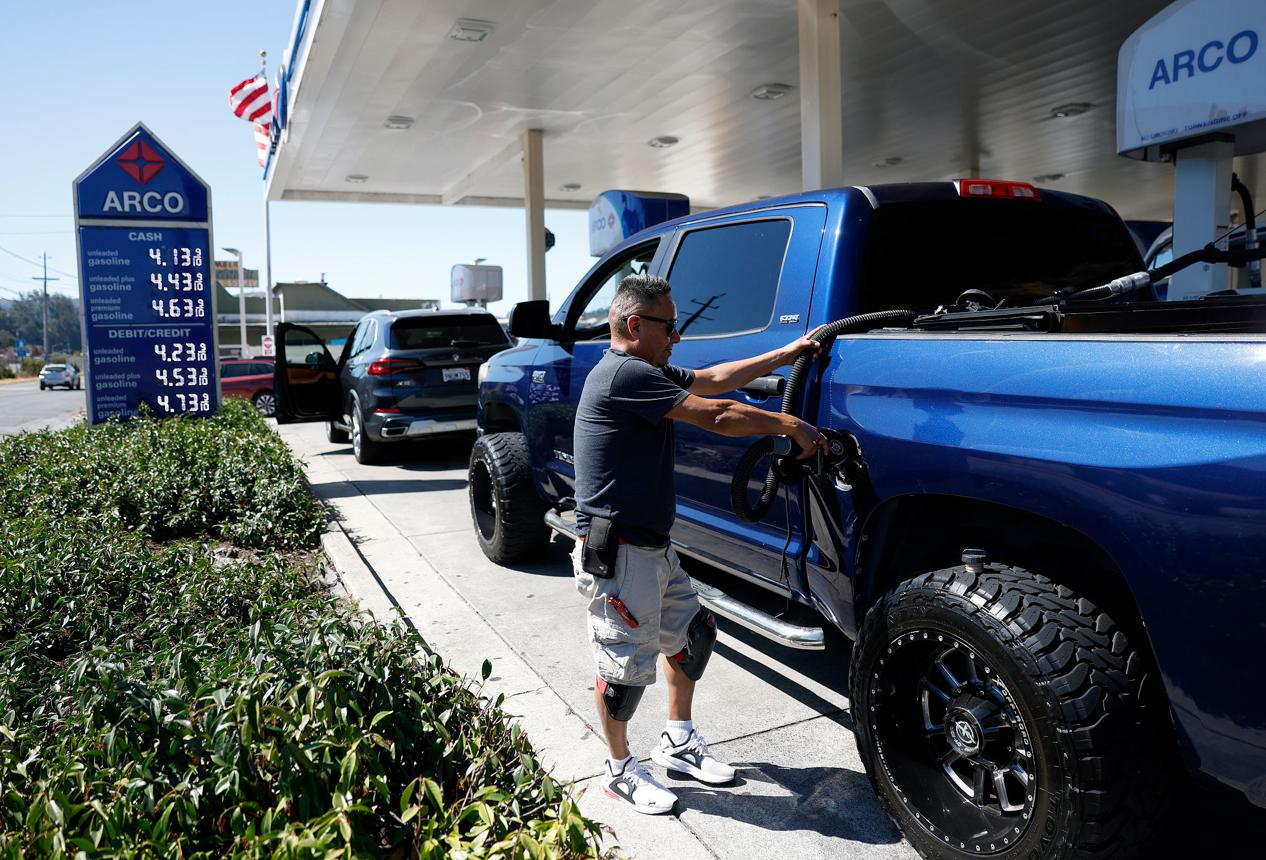
Why the price at the pump has been ‘muted’
As fighting escalates again in the Middle East, supply chain experts say the reaction at the pump will be more “muted” than the initial price surge in March.
“The price of oil has gone up, but it frankly hasn’t gone up as much as people sort of expected,” Mr Henderson said.
“Although the increased tension of the last few days has caused it to go up again, it’s still at what I would call, an inconvenient level rather than a potentially disastrous level.”
As well as the alternatives in the Gulf already being used, additional oil supply has also come to the global market through other countries.
Since the war began, oil production outside the Gulf has increased to almost 2 million barrels a day above 2025 levels, largely from the US, Venezuela, Guyana and Russia, according to the International Monetary Fund.
Mr Henderson said demand for oil had also slowed down, amidst a move to alternative energies such as coal and renewables.
“Chinese demand has fallen substantially,” Mr Henderson said.
“Why this has happened is not clear — but it implies that Chinese purchases of oil in recent years have been much more than the demand for actual oil in China. And maybe they’ve been putting it into long-term storage and building up storage capacity.”
He said the long-term impact of the closure of the Strait of Hormuz and the energy challenge, will be an increased search for “alternative energy supplies other than oil and gas”.