









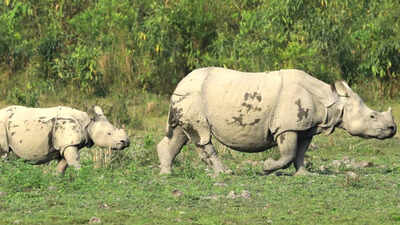
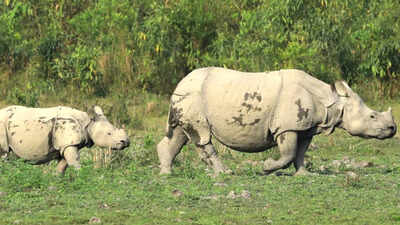
Pilibhit: The rhino population in the Dudhwa Tiger Reserve (DTR) has increased to 53, according to the fourth rhino census conducted between June 25 and 27.The exercise was carried out in six hourly shifts each day by 20 teams comprising trained forest personnel and WWF-India staff, who surveyed the reserve atop 20 camp elephants accompanied by mahouts.Sharing the findings with TOI, DTR Field Director H. Rajamohan said the reserve recorded a net increase of five rhinos, despite three recent deaths caused by territorial conflicts and predation.The casualties included four-year-old male calf Himanshu and Kalpana’s eight-month-old female calf, both killed in attacks by an 18-year-old dominant male rhino, Napoleon, in August 2025 and January 2026, respectively.Another female rhino, Rajeshwari, was killed by two tigers in March this year.The latest census recorded 17 adult males, 25 adult females and 11 calves older than one year.Among them are eight rhinos aged 10–15 years that have been released from the reserve’s two Rhino Rehabilitation enclosures (RR1 and RR2), covering 27 sq km and 13.4 sq km, respectively, to improve genetic diversity and reduce inbreeding. Survey teams searched the enclosures extensively, including dense grasslands and marshes.The free-ranging rhinos include Vijay Shri and Deepika, released in November 2024; Nakul and Riddhi, released in March 2025; and Harsh, Deepti, Sushma and Rashi, released in March 2026.“Of the 53 rhinos, six are housed in RR1, 36 in RR2, while 11 now roam freely in the wild, significantly improving sighting opportunities for tourists in Dudhwa’s open safari zones,” Rajamohan said.DTR Deputy Director Jagdish R. said the reserve’s rhino reintroduction programme began in 1984 with the translocation of seven founder rhinos from Assam and Nepal to the Kakraha area of the South Sonaripur range.“Their population has now grown more than seven-fold and coexists with tigers, elephants, leopards and sloth bears in Dudhwa,” he said.Uttar Pradesh remains one of only three states in India, along with Assam and West Bengal, to support a wild population of the greater one-horned rhinoceros.