









Northern Territory veterans are joining calls for the federal government to dump its plan to place a $5,000 cap on the cost of allied health services they can access from next year, without being reassessed for support.
The new cap will apply to services including psychology, occupational therapy and exercise physiology from July 1, 2027, unless veterans are able to gain approval for extra funding under a new process that’s yet to be revealed.
The change is part of a federal government push to streamline the approvals process for veterans seeking healthcare support, and has drawn criticism from veterans and veteran groups around the country.
Palmerston veteran Shane Pascoe-Bell has a long list of mental health and physical injuries dating back to his service in the 3rd Battalion Royal Australian Regiment parachute infantry in East Timor in 1999.
Shane Pascoe-Bell says he’s concerned about the plan to cap access to mental and physical health support. (ABC News: Marcus Kennedy)
“When you are parachuting, you are hitting the ground at 7 metres a second with 50-plus kilos of equipment,” he said.
“I’ve just had surgery on my knee, I’ve got a plate in my neck, and I have to have a few more artificial disks put into my lower back — the workload just eventually broke me down.”
Mr Pascoe-Bell said he had been assessed as unable to work again, and the allied health services he needs to access cost at least $15,000 a year.
“I am already asking myself whether I am going to have to go without physio for a couple of months, or not see the counsellor for a couple of months,” he said.
“You start to weigh up what part of you, health-wise, is the most important, so that’s driving up anxiety among everyone at the moment.“
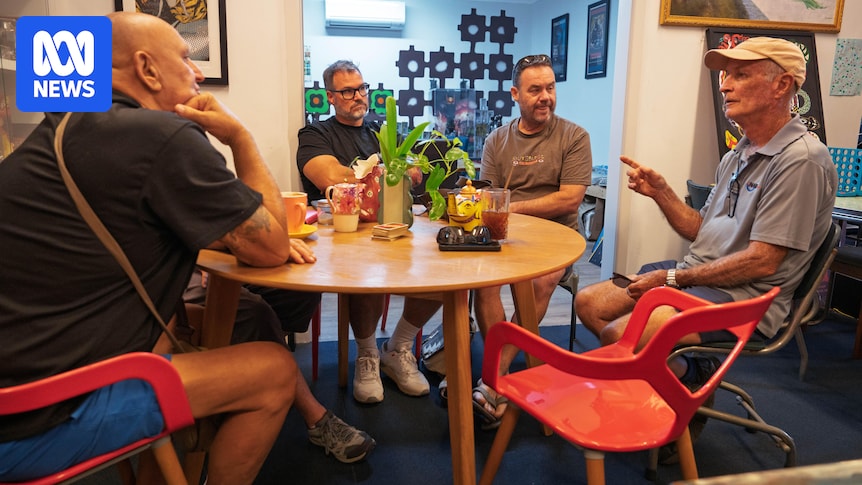
Shane Pascoe-Bell says veterans living in the Northern Territory are feeling anxious about the change. (ABC News: Jane Bardon)
Veterans potentially worse off
Former president of the Council of Australian Veterans’ Darwin branch, Adam Giuliani, said the changes — announced by the federal government in its May budget — were worrying many ex-service people.
He served in the army for 20 years, including in East Timor in 1999 and in Iraq, where he received both physical and mental injuries.
“This is just another kick in the guts where veterans will potentially be in a worse-off situation than they would have been before the Royal Commission into [Defence and] Veteran Suicide,” he said.
“Like, today I went and had my hearing aids maintained and I had a psych appointment; I have an osteopath appointment once a week, so what do I drop off?
“Just my physiology once a week would use 80 per cent of that $5,000.
“And as we know, if veterans don’t get the treatment they require, they fall through the cracks.
“There should be no limit on recovery, repair, and mental health treatment for anyone who has an accepted condition.“
Mr Guiliani argued veterans who aren’t able to work “won’t be able to pay for their own health services”.
“Once the services drop off, veterans will be isolated again, and we’ll have the same issue with suicides again,” he said.
Adam Giuliani served in both East Timor and Iraq, sustaining injuries in the two decades he served in the army. (ABC News: Felicity James)
Veterans’ Affairs Minister Matt Keogh told the ABC the federal government was changing to the $5,000 limit because veterans had reported they found the current system “incredibly annoying”.
At the moment, veterans can receive 12 sessions with an allied health service each year, after which they have to get another referral from their GP to access more.
But Mr Keogh said it was not intended there would be a hard limit of $5,000 that would stop veterans from receiving more allied health services per year.
“We are moving to a system where we will instead have a $5,000 allocation, but for some veterans, they may need more than $5,000 a year in allied health services, and we’ll make sure they can still access those services where they have a genuine clinical need,” he said.
“When we are talking about allied health, we are talking about exercise physiologists, occupational therapists, psychologists and a number of other providers, we’re not talking about GPs or psychiatrists.”
Matt Keogh says there will be consultation on the health approval process. (ABC News: Simon Beardsell)
Changes causing stress and anxiety
However, Mr Giuliani said uncertainty around how that process would work, and a lack of clarity about the list of allied health services that would be included in the $5,000 cap, was worrying veterans.
“I suggest putting this change on hold as it’s created a lot of stress and angst in the veteran community, and holding a Senate inquiry to ensure there is transparency and it’s documented,” he said.
Mr Pascoe-Bell said if the Department of Veterans’ Affairs (DVA) carried out assessments for services beyond $5,000, it risked creating longer waiting times — which he said veterans couldn’t afford.
Veterans are worried about what the changes could mean for their ongoing support. (ABC News: Jane Bardon)
“If DVA is going to manage that approval process, that will add another queue that could get quite lengthy,” he said.
“Just come out and tell us the process and alleviate everyone’s anxiety.“
Mr Keogh said the government would consult veterans’ organisations about how the approvals process should work.
“We are going to spend the second half of this year consulting with the veteran community and with those service providers to make sure we have a system that works properly and makes sure there’s no gap in service provision to support those veterans who need additional allied health services,” he said.
“We’ll have 12 months to not only undertake that consultation, but to explain how the system will operate well before it starts.”
Mr Keogh said the federal government had also raised the amount DVA would pay to allied health service providers, meaning veterans would have a greater choice of providers to choose from.
He added that from Wednesday, veterans would be able to more easily find information about where they could get support, from a new veterans wellbeing agency within the department.