







Australia will strengthen its social media ban for young people as a priority amid concerns the powers behind the world-first laws are not strong enough.
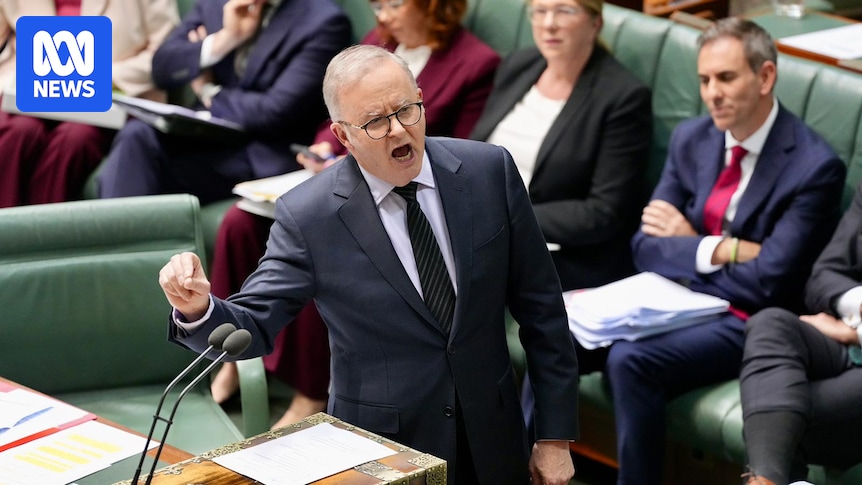
Prime Minister Anthony Albanese has confirmed the federal government is considering tougher measures to check the “power” of the “unaccountable” tech giants behind popular social media platforms.
“There is more to do,” he said in Question Time today.
Since December, platforms including Instagram, Facebook, TikTok, Snapchat, YouTube, Twitch, Kick and X have been legally required to block and take reasonable steps to prevent young Australians signing up.
Companies face fines of up to $49.5 million for failing to prevent Australians aged under 16 from accessing their platforms.
Earlier this month, eSafety Commissioner Julie Inman Grant said the social media age restriction legislation had only “very thin scaffolding”.
“I don’t have potent powers,” Ms Inman Grant told The Sydney Morning Herald.
The government is considering Julie Inman Grant’s comments. (Four Corners: Keana Naughton)
Labor has previously warned the eSafety Commissioner would “throw the book” at tech companies who failed to prevent Australians aged under 16 from accessing social media, but no fines have been issued despite apparent non-compliance.
Social media ban ‘complex’ and needs bolstering
Mr Albanese has now confirmed Labor is considering Ms Inman Grant’s comments and work that would “require a further strengthening of the social media ban”.
“We’re working on that as a priority because this is something that other generations didn’t have to deal with, which is why it is complex,” he said.
“We can’t allow the power that these companies, which are unaccountable, which get massive amounts of … profit and have extraordinary power. We need to make sure that Australians are in charge of this.”
Mr Albanese said the global community was also tackling issues related to the impact of algorithms on children, and Australia should be proud 16 other countries have “followed our social media ban”.
Algorithm concerns on government’s radar
The PM made the comments in response to a question from independent Wentworth MP Allegra Spender about whether the government would consider laws to give all Australians the ability to opt out of online algorithms.
He did not indicate whether Labor would go down this path, but said the algorithms were being considered as part of a plan to establish a digital duty of care.
An algorithm is a complex set of rules and code that a platform uses to automatically sort, filter and rank content so it is customised for each individual consumer.
Rather than showing posts in a chronological order, the system predicts what a user is most likely to watch, click or share.
Mr Albanese said algorithms drove people towards “more and more extreme positions”.
“So, they start of in a mainstream position talking about ethnicity perhaps or faith and they end up over a period of time receiving in their inbox — not just children, adults as well — Nazi-level propaganda with calls for violence,” he said.
Mr Albanese said it was incumbent on the parliament to be conscious of digital harms, including the prevalence of sexual violence linked to young people’s exposure to online content.
“We need to be courageous about this,” he said.
Labor to impose ‘duty of care’ on tech platforms
The government is currently consulting on an issues paper to introduce a digital duty of care that would legally require online platforms to prevent foreseeable harm to Australians.
The proposal is aimed at shifting regulation from reactive take-downs of harmful content to more proactive risk management to prevent issues in the first place.
It also extends beyond content, potentially applying to algorithmic systems, recommendations engines, bots and platform design.
An early report into Australia’s social media minimum age laws released by the eSafety Commission in March revealed significant concerns had been raised about how Facebook, Instagram, Snapchat, TikTok and YouTube were enforcing the ban.
More than 4.7 million accounts assessed to belong to Australians aged under 16 were removed, deactivated or restricted as of mid-January, but the report found “many children … still have their accounts or can create new accounts”.