





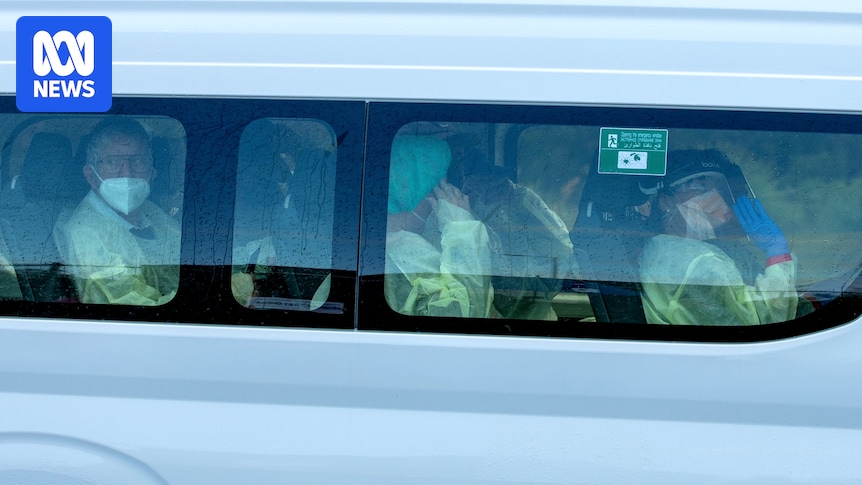
Six people who were on board a cruise ship at the centre of a deadly hantavirus outbreak have been released from quarantine after 42 days living in isolation.
The four Australian citizens, one permanent resident and one New Zealander have been living at a centre originally built for housing COVID-19 patients on the outer fringes of Perth after arriving in the city on May 15.
The group had been on board the MV Hondius, a cruise ship bound for Antarctica, when an outbreak of hantavirus spread on board in April, ultimately killing three people.
All six passengers remain well and consistently tested negative for the virus, health officials say.
The quarantine completion date and time was based on when the passengers disembarked the MV Hondius (May 12) in the Canary Islands, which is considered to be day zero.
The Australian government said it was supporting Australian passengers to return to their home states today by assisting with transport to the airport and arranging flights.
‘I’d definitely do it again’
Australian passenger Peter Marsh, who spoke exclusively to the ABC from inside the quarantine centre, said he would “absolutely” do it all again to be able to see what he did on the cruise.
“The first part of the trip was wonderful. We went to South Georgia, which is just one of the most wonderful places on Earth … Then going through the islands of Tristan da Cunha and St Helena and Ascension Island were all wonderful,” the 82-year-old said.
Peter Marsh is at Tristan da Cunha in the South Atlantic Ocean. (Supplied)
“The time in the Resilience Centre in quarantine has been, not what I would have chosen, but it’s really been perfectly manageable, and we’ve been looked after incredibly well.
“So balancing the two, the pleasure of the boat trip and the level of inconvenience from the quarantine, I’d say the boat trip wins out 100 per cent and I’d definitely do it again.”
For Mr March, it is important to take the unexpected turn of events in his stride.
“To be able to accept that things don’t always go the way you want them to go is a good approach to life,” he said.
Helping to break up the long quarantine were daily walks around the ground, an opportunity to spot birds.
“I find that being able to throw your mind out to looking for birds and saying, ‘Whoopee, I’ve seen a new bird’ … that birding activity keeps my mind fully occupied … it’s just a wonderful pleasure to see them,” he said.
Mr Marsh was eagerly awaiting the reunion with his family.
“Having a hug with my wife, my beloved wife of 57 years, and my children and grandchildren is certainly top of the agenda,” he said.