









Milk is a staple in Indian households and is considered a rich source of calcium and other nutrients. But, when the source of nutrition becomes toxic and turns out to be fatal, the system comes under question. Something similar happened in the state of Maharashtra when the police and the Food and Drug Administration (FDA) busted an alarming case of milk adulteration in Bhoom taluka of Dharashiv district. Scroll down to read the details.According to a NDTV report, the officials seized around 2,30,470 kilograms of low-quality milk powder that was being use for milk adulteration over the last six months. With the help of milk powder, the players were producing approximately 23,04,070 litres of synthetic (artificial) milk, which is estimated for Rs 9 crore 21 lakh 62 thousand 800 rupees.The NDTV report further states that the most alarming part of this investigation was the fact that the accused used to mix 10 litres of synthetic milk into every 100 litres of pure milk (representing a 10% rate of adulteration). Based on this 10% ratio, officials highly suspect that a total of more than 2.3 crore (23 million) litres of adulterated milk was supplied to various parts of Maharashtra from the milk collection centres in the Bhoom area.
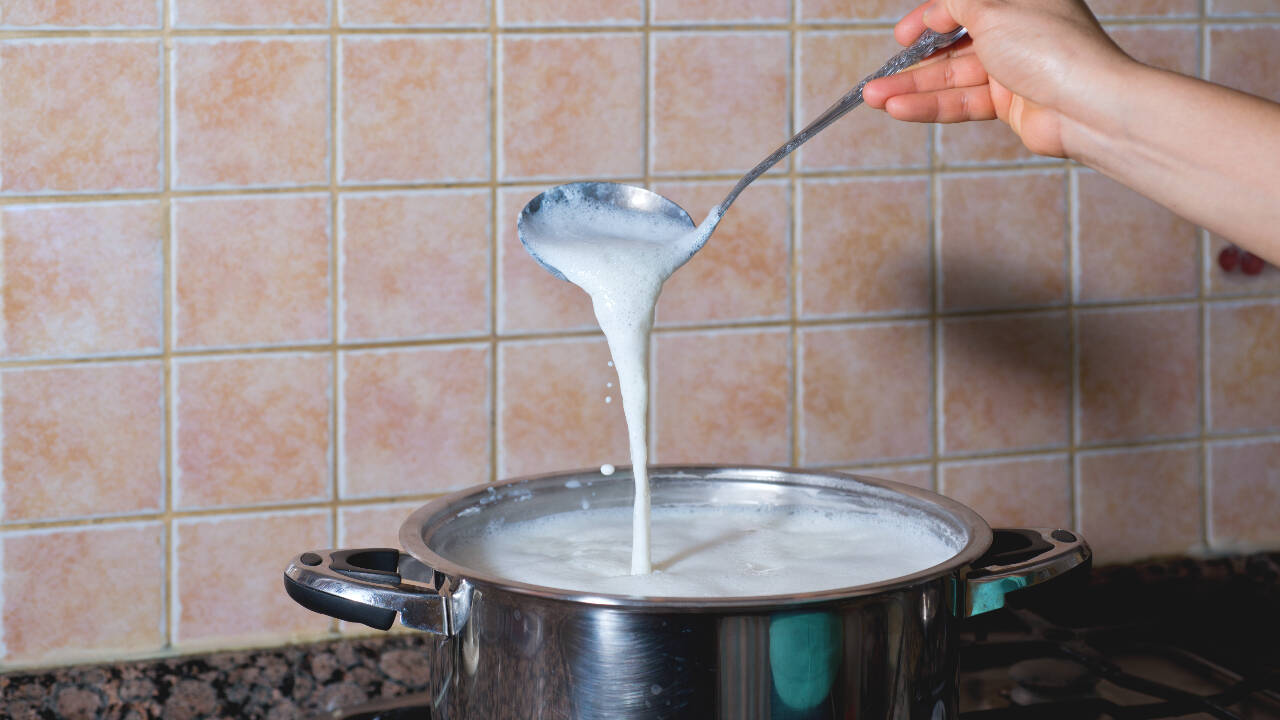
Why the consumption of such milk is alarming
The report has also highlighted that to make the milk look authentic, the players used to maintain the fat levels with the help of detergent powder, palm oil, and extremely low-quality chemical powder. A Special Investigation Team (SIT) led by a police inspector has been formed to track down the absconding adulterators.
Why the consumption of such milk is alarming
According to medical experts, consumption of such adulterated milk can damage the the liver, kidneys, and digestive system, which can prove life-threatening for children, pregnant women, and the elderly.
How to assure you consume safe milk
According to the Food Safety and Standards Authority of India (FSSAI), it is important to buy FSSAI-approved milk brands and to double check the purity of milk, there are simple and easy ways one can use at home to check milk purity. Scroll down to read the details.Starch adulteration test: For this test, boil 2-3 ml of milk and let it cool down. Add 2-3 drops of iodine solution to the milk. If the milk is pure, the colour will remain unchanged or will turn slightly yellowish and if it turns blue, then it is adulterated with starch.Detergent adulteration test: For this test, take 5 ml of milk in a transparent glass and add an equal amount of water. Shake it well. Pure milk will have no lather or minimal lather formation, while milk adulterated with detergent will have persistent lather or froth formation.

Detergent adulteration test
Urea adulteration test: For this test, take 5 ml of milk in a test tube. Add an equal amount of soybean or arhar powder to it. Shake well and let it sit for 5 minutes. Dip a red litmus paper in it. If the red litmus paper remains red, the milk is pure, and if it turns blue, the milk is adulterated with urea.Presence of formalin: Take 10 ml of milk in a test tube, and add 2-3 drops of concentrated sulphuric acid along the sides of the test tube without shaking. If the colour of the milk doesn’t change, the milk is pure and if violet or blue rings are formed, the milk is adulterated with formalin.
Synthetic milk test
Synthetic milk test: Add 5 ml of milk and 5 ml of water in a test tube. Shake it well. If it doesn’t form a stable lather, the milk is pure, and if it forms a persistent froth, then it is adulterated with synthetic detergents.Water adulteration test: For this test, take a drop of milk on a polished and slanting surface. If the drop remains in place or flows slowly, leaving a white trail behind, the milk is pure. If it drops quickly without a trail, then the milk is adulterated with water.Images Courtesy: istock