






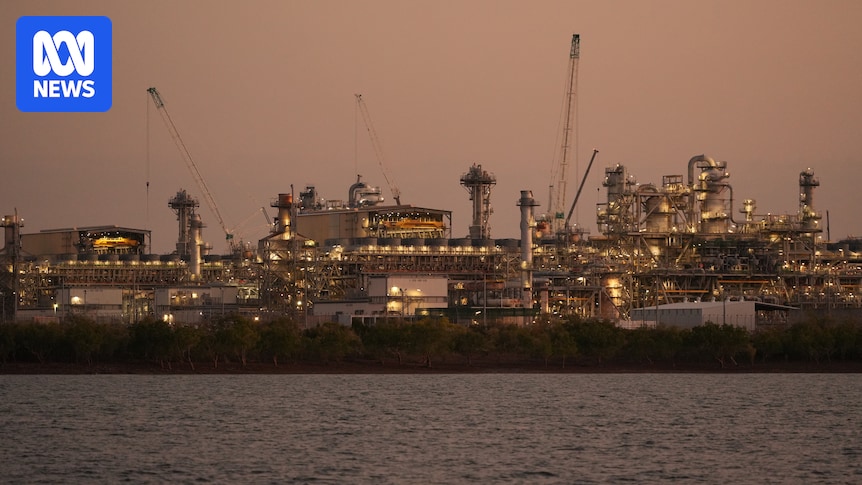
Unions and Japanese gas company Inpex have reached a deal after months of tough negotiations and weeks of strikes, with all industrial action at the Ichthys operation to cease today.
Workers have been walking off the job since early June after negotiations broke down, threatening gas exports to Asia amid the global fuel crisis.
However, an in-principle deal was reached on Tuesday night and operations resumed as usual today, with a formal vote by union members expected to take place soon.
It is understood the deal includes 3.75 per cent annual pay rises as well as improved job security and career progression systems, which had been a major point of contention between the parties.
The deal has not been confirmed by Inpex and the company has been contacted for comment.
More than 400 workers are based at the Ichthys facility, which takes gas from sites off the West Australian coast before it is processed in Darwin and shipped from the local port.
While many Inpex workers are fly-in, fly-out staff, the company has an office in Darwin’s CBD. (ABC News)
Workers are represented by the Electrical Trades Union and the Offshore Alliance, which is a combination of the Australian Workers’ Union and the Maritime Union of Australia.
Inpex lost a bid to stop industrial action in the Fair Work Commission (FWC) last weekend, after it argued the shutdowns would cause “significant damage” to the nation’s economy and jeopardise trade ties, but this was rejected.
While the FWC was satisfied the strikes and worker bans would “threaten to cause a full production stoppage”, it found this would not damage Australia’s economy.
The ABC understands several vessels bound for Asia from Darwin have been delayed by the industrial action.
Industry lobby group Australian Resources and Energy Employer Association has also argued pay rises at Inpex would increase labour costs by 50 to 60 per cent and push the company’s average salary to more than $500,000 a year.