


Former Australian of the Year Professor Richard Scolyer has died aged 59 after fighting the “worst of the worst brain cancers”.
His legacy: fast-tracking revolutionary cancer treatment by volunteering to be “patient zero” in a radical approach to treating his tumour.
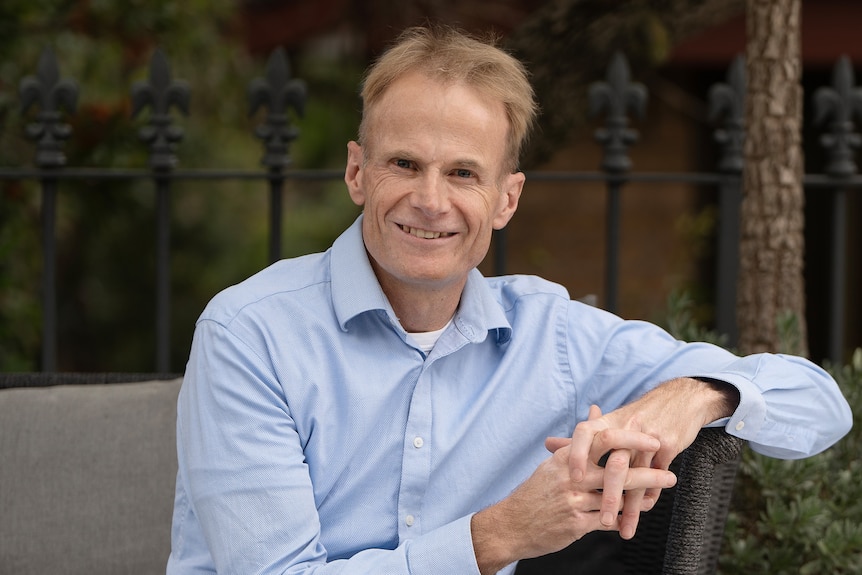
Richard Scolyer’s greatest legacy will be opening up new treatment pathways for future brain cancer patients. (Australian Story: Tom Hancock)
Scolyer fought the aggressive brain cancer for almost three years, defying the terrible survival odds.
“I’m just amazed, to be honest, that I’m still here,” he told Australian Story in January 2026. “The average survival is in the order of 12 months for the type of cancer that I’ve got. But to still be here more than two and a half years later, that’s incredible.”
Scolyer’s brain cancer showed signs of recurrence in March 2025, much to the shock of his friends, family and public, who were right behind him, hailing him “a hero”.
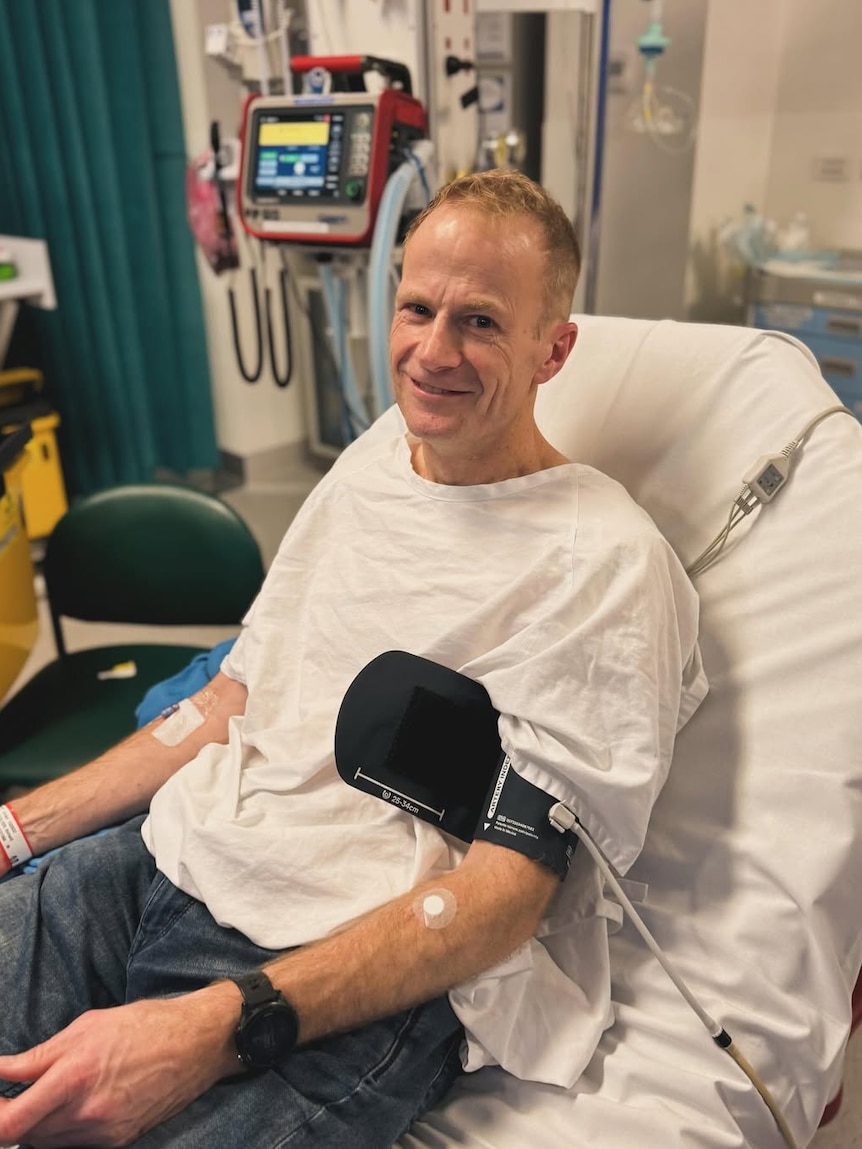
Richard Scolyer undergoes treatment in June 2024.
(Supplied: Instagram/ @profscolyer)
“I am positive about it but obviously devastated to be looking at passing away in the not-too-distant future. I’m not ready to do that yet,” he told ABC Radio Sydney at the time.
“I’m just been blown out of the water by the kindness of most Australians about the journey that we’re going through.”
One of the world’s top melanoma pathologists, Scolyer was diagnosed with IDH “wild” type glioblastoma in 2023 at age 56.
Loading…
In an open letter he wished to be published after his passing, Scoyler described his life as one “filled with happiness, optimism, opportunity and passion”.
“I’ve spent the past three years being open and honest about my journey with glioblastoma, in part to be transparent about what cancer patients and their families go through, and in part to provide hope and inspiration that we can and should continue to push boundaries to propel the cancer field forward,” he wrote.
“Having dedicated my 35-year working life to patient care, cancer research and improving lives, I wanted to keep contributing, even in my darkest hour.”
Scolyer first shared his story in an Australian Story episode in 2023.
“Unfortunately for me, I got one of the worst of the worst brain cancers where there isn’t a cure for it. Bugger that. I’m not happy to accept that,” Scolyer told Australian Story.
“I want to do something that gives me a fighting chance against this tumour.“
Scolyer was the first in the world to receive immunotherapy before removing a brain tumour, an approach based on melanoma science that he and colleagues, including his co-director at the Melanoma Institute of Australia, Georgina Long, had researched and developed.
It was radical and risky. No-one knew exactly what would happen, but Scolyer would live for years despite a prognosis of months.
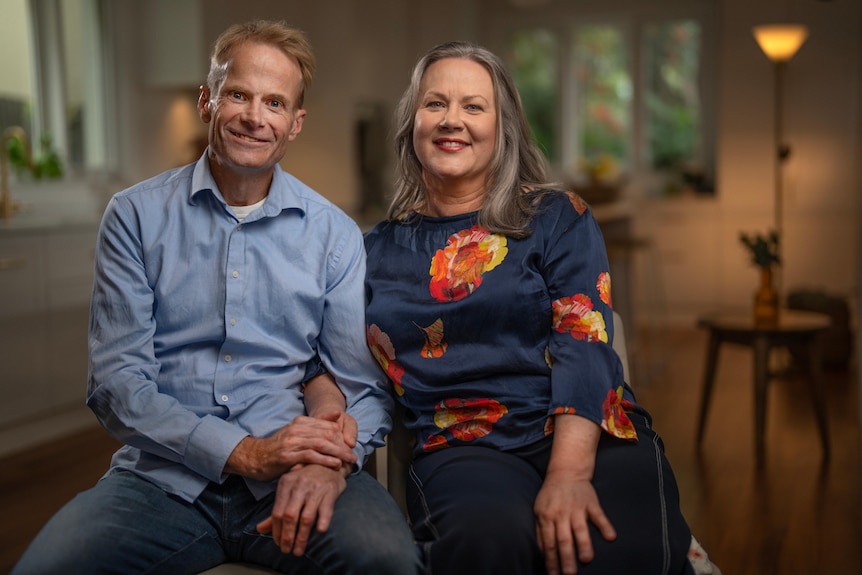
Richard and Katie Scolyer sat down for an interview with Australian Story in 2025 for one of several episodes. (Australian Story: Tom Hancock)
Scolyer himself called the decision to undergo the non-proven treatment a “no-brainer” for someone facing certain death.
In an interview for an upcoming Australian Story episode, Scolyer explained that while he was terminal, he was determined to keep contributing the best he could.
“I love my family, love my kids, my friends, people I work with. I don’t think many people would accept it [terminal cancer] until you get to a period where your life’s miserable and you can’t contribute in the same way,” Scolyer said.
“Until you get to that stage, you want to be here enjoying life and trying to make a difference, and that’s what I’ve been doing.
“Enjoy your life. Contribute to the things you’re passionate about. Don’t just lean in, leap in. That’s how you can make a difference.”
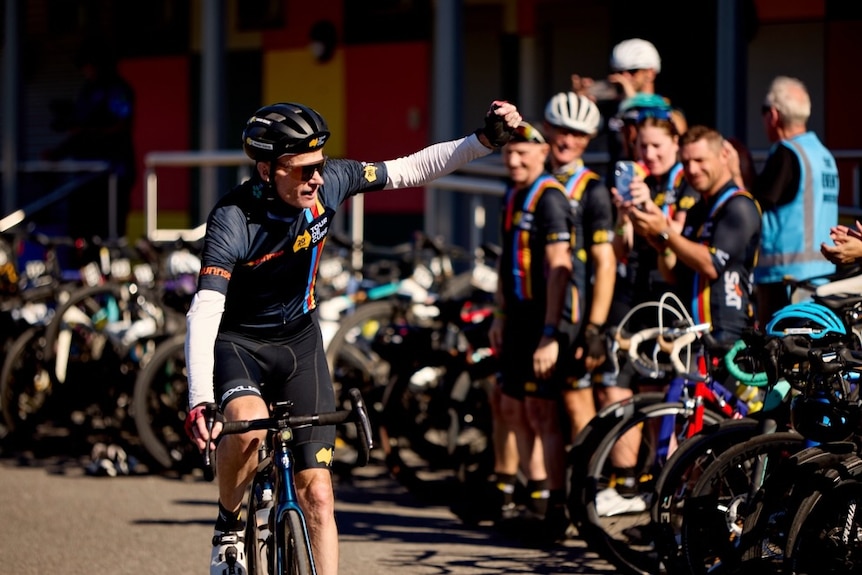
Richard Scolyer and his team raised more than $40,000 for cancer research during Tour de Cure. He completed the gruelling charity bike event just months before he died. (Supplied: Instagram/ @bridgenorth_fc)
‘Wonderful memories’ of a Tasmanian upbringing
Throughout his treatment, Scolyer kept his friends, as well as the public, abreast of his progress, posting the wins and losses on social media as a legion of supporters worldwide showed their love.
“The reason I went public initially was to raise the profile of the disease, but when it clicked with social media there was very kind support that people in the community were sending me. I’m very touched. So, thank you Australia and the many people around the world who’ve got behind me,” Scolyer told Australian Story recently.
In addition to raising awareness, social media was also a chance to tell his own story and share the lessons he had learnt throughout his life.
Born in December 1966, Scolyer grew up in Launceston, Tasmania. He had a happy childhood playing footy, swimming, and riding bikes on caravanning holidays with his parents, Jenny and Maurice, and older brother, Mark.
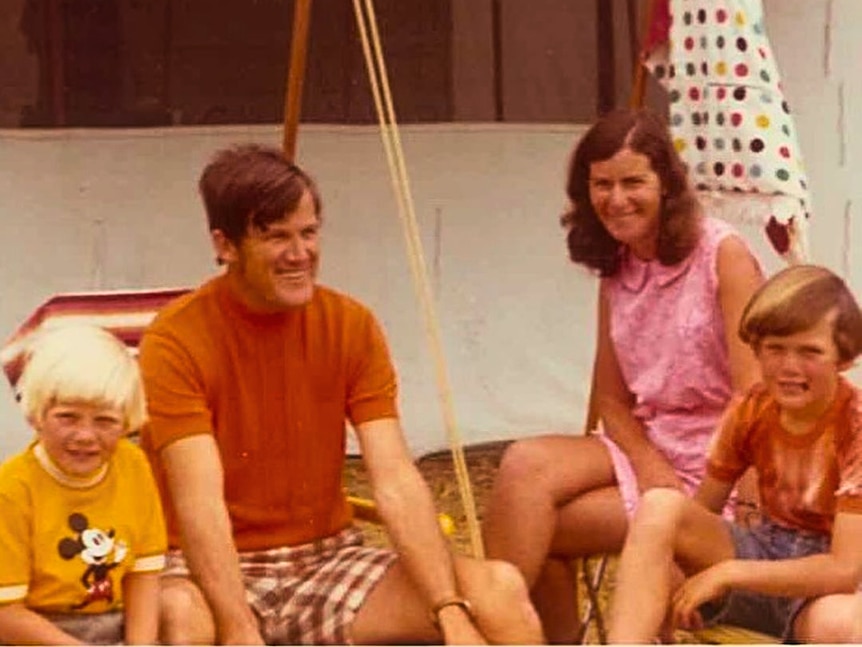
A young Richard Scolyer, left, with his family in Launceston. (Supplied: Richard Scolyer/Instagram)
Following his diagnosis, he took to Instagram to express his gratitude for his parents, sharing photos on a return trip to Tasmania.
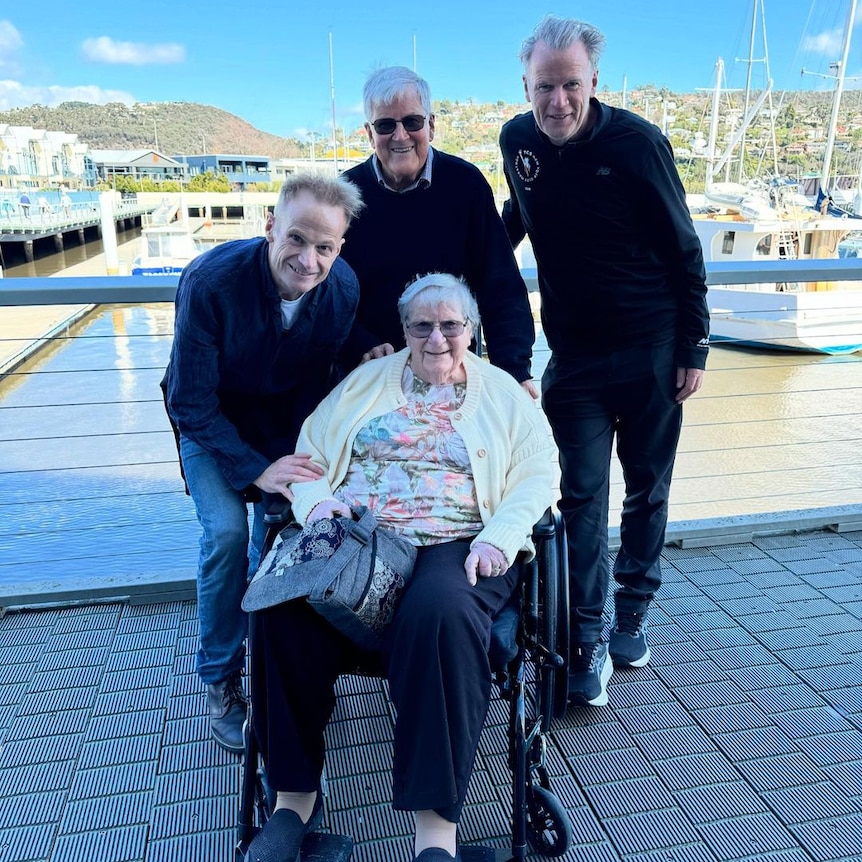
Richard Scolyer and his brother Mark with their parents Maurice and Jenny. (Supplied: Richard Scolyer/Instagram)
“We can never thank [our parents] enough for what they have done to support us, especially during our childhoods, generating such wonderful memories and providing us with incredible opportunities,” he wrote on Instagram.
“Words can’t adequately express our appreciation. I suspect many others feel the same about their own parents.
“Having my life turned upside down by a brain cancer diagnosis, I’m trying harder to express my gratitude! I’d encourage you to do the same as you never know what’s around the corner.”
The power of research
Scolyer studied medicine at the University of Tasmania before ending up in Sydney, where he pursued his interest in melanoma.
Passionate about “the power of research”, he said he wanted to “change the face of medicine and cancer treatment”.
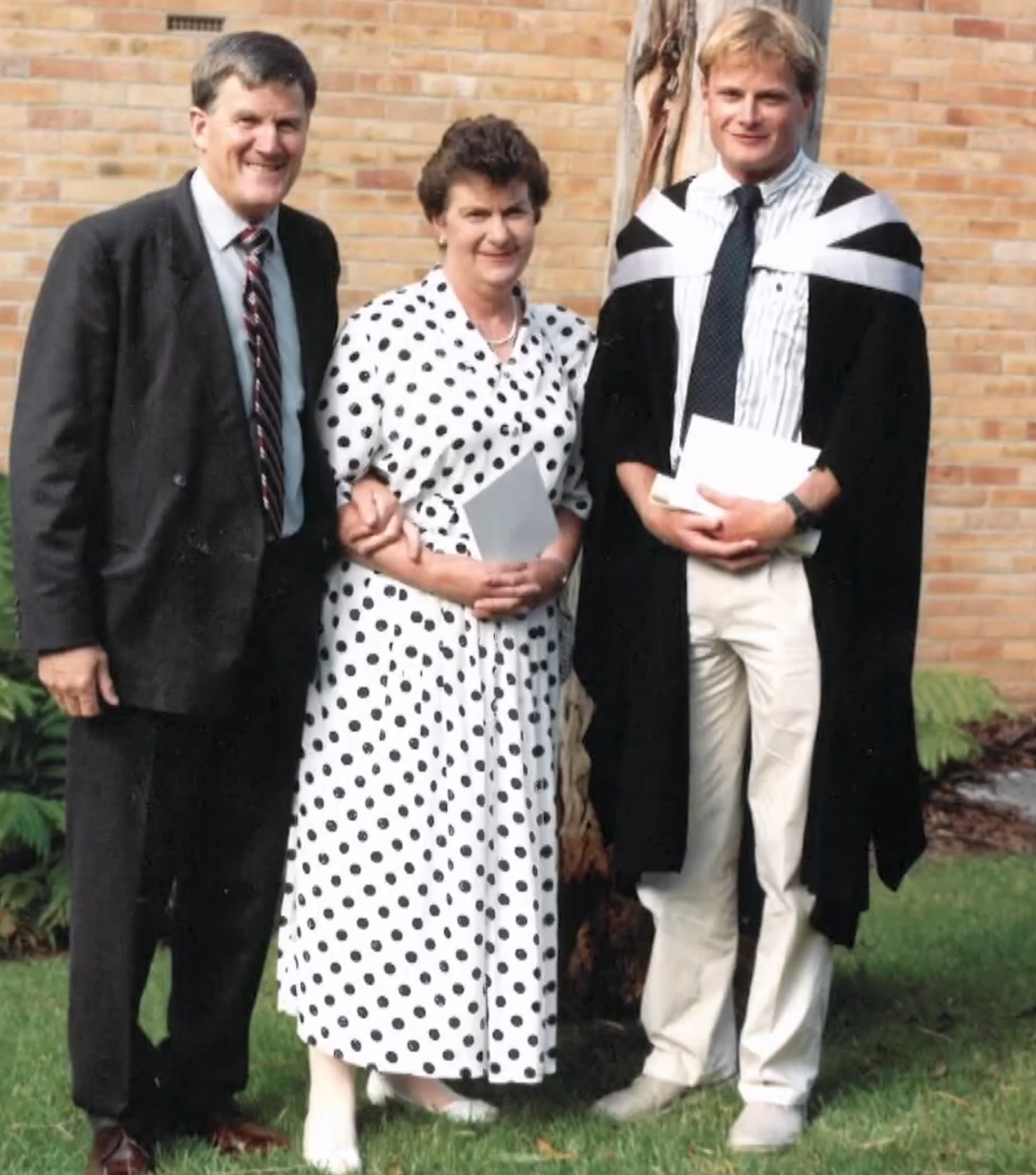
Richard Scolyer at university graduation with his parents Maurice and Jenny. (Supplied)
He helped develop the Melanoma Institute of Australia, where he met Professor Long, a medical oncologist, in 2009.
As co-directors, they helped revolutionise the treatment of the deadly skin cancer by using combination immunotherapy before removing the melanoma itself.
“With immunotherapy, we stimulate the immune system in a very specific way so that the immune system can see the enemy, that’s the cancer, and kill it,” Professor Long told the ABC.
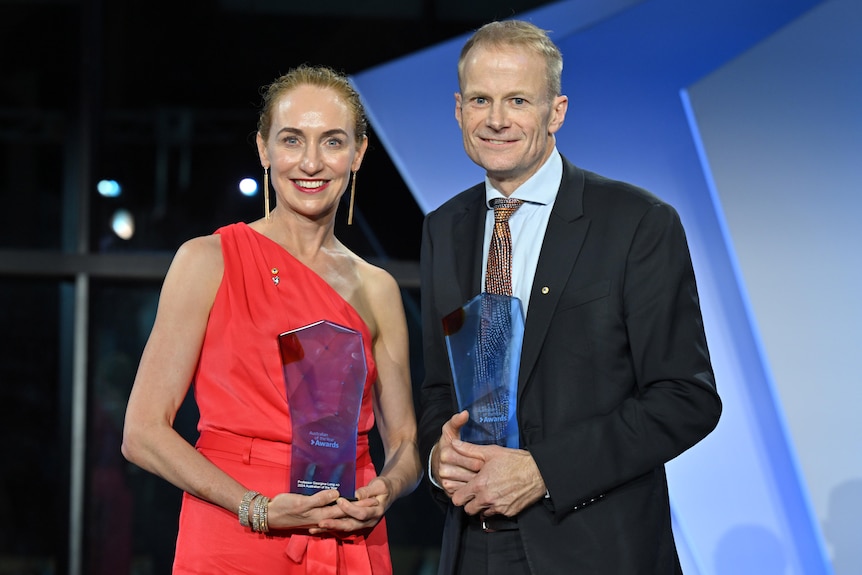
Georgina Long and Richard Scolyer were crowned joint 2024 Australians of the Year. (AAP Image: Mick Tsikas)
Fifteen years ago, patients with melanoma that had spread through the body had a less than 5 per cent five-year survival rate.
The pioneering work has increased that rate to 55 per cent. The results were phenomenal: some patients were cured.
Such an approach had never been tried on brain cancer patients before. Until Scolyer agreed to become the “guinea pig”.
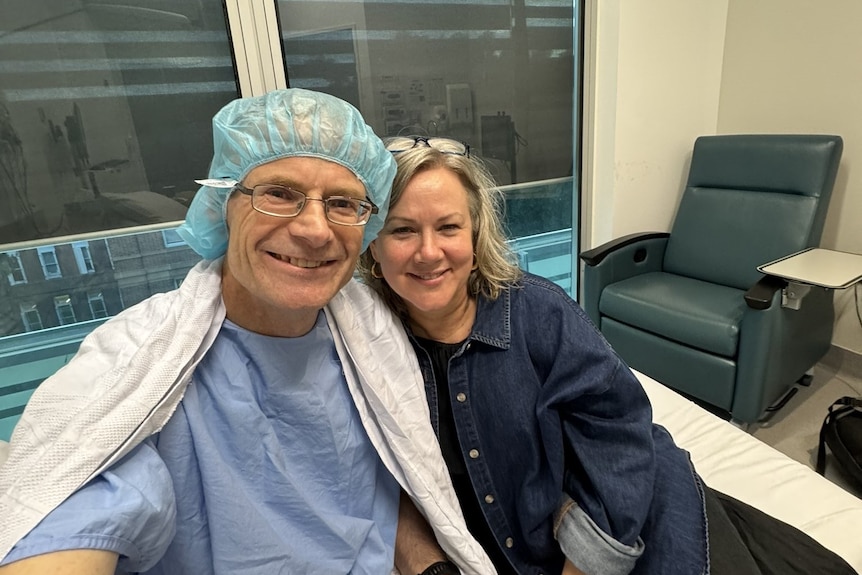
Wife Katie was supportive every step of the way. (Supplied: @profrscolyer)
‘It just feels right’: Scolyer becomes patient zero
Scolyer was always known for his fitness. Triathlons, aquathons, half-marathons — he competed in them all, sometimes representing Australia in age-based events.
In 2022 he competed in an aquathon alongside his daughter, Emily, before climbing mountains in southern Poland with his wife, Katie, while he was away for a conference.
No-one expected him to then have a seizure.
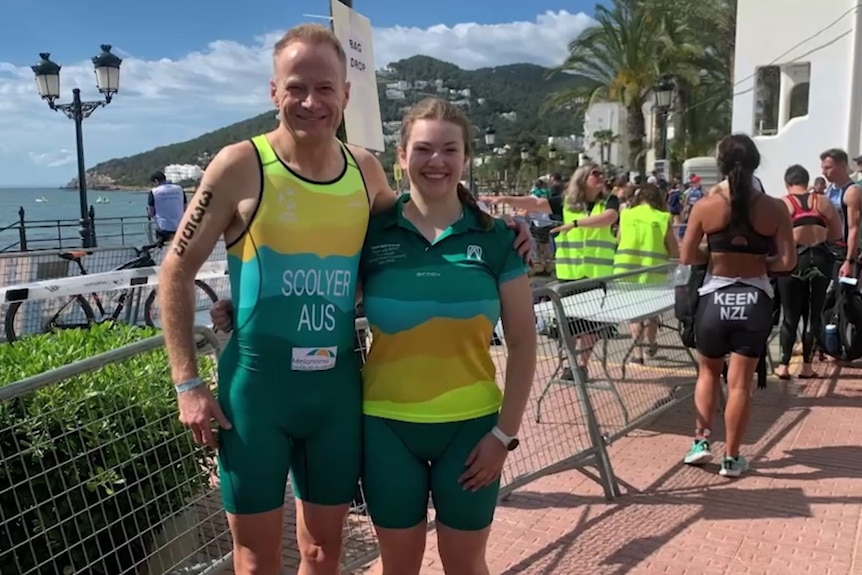
Richard and Emily Scolyer in 2022. Just weeks later, he was diagnosed with brain cancer. (Supplied: Richard Scolyer)
Shortly after being diagnosed with the aggressive brain cancer, he gave an honest and emotional interview on Australian Story.
“To be facing a death sentence … yeah. I’m not ready for this,”
Scolyer said.
“I love my life. I love my family. I’ve got three teenage children, I love my work. I love my colleagues. I love contributing to society. I don’t want to die yet.”
Scolyer’s colleague Professor Long and a research team took the knowledge they had pioneered in melanoma and “threw it at Richard’s tumour”, making him the world’s first glioblastoma patient to be treated with immunotherapy before surgery.
His team complemented that treatment with a personalised cancer vaccine.
“This is completely contrary to standard treatment,” medical oncologist John Thompson explained on Australian Story.
Loading Instagram content
At the Royal Prince Alfred Hospital in Sydney, the same hospital he had worked at for 25 years, Scolyer received six weeks of radiotherapy after surgery, but no chemotherapy.
“The brain is a very tough area to do research and try to push the field forward, to be honest. We’ve taken on risks that [we] would have trouble to get over the line normally,” he told the ABC.
“But for me it felt like the right thing to do, particularly because of the discoveries we’ve made in melanoma [that] have changed the lives of people.”
Loading Instagram content
The risks were high, but Scolyer knew better than anyone else what was involved. He was, after all, the world’s leading publisher in melanoma pathology.
In his lifetime, Scolyer co-authored more than 800 peer-reviewed publications and regularly spoke at global conferences.
His expertise was sought to review the most difficult of melanoma cases from around the world, and he was an expert member of the editorial board for the World Health Organization’s “gold standard” skin cancer textbooks.
In late April, Scolyer was awarded an honorary doctorate from The University of Sydney in recognition of his outstanding contributions to melanoma science.
Loading…
But Scolyer wasn’t just out to try to save himself. His hope was that the data collected from his treatment could “blow open” the field of brain cancer treatment.
The early results of the trial looked promising.
Scolyer and Professor Long were named joint 2024 Australians of the Year for their pioneering work in melanoma and for Professor Long’s work applying that research to brain cancer.
“I’m blown away,” Scolyer told Australian Story three months later, when he hit the one-year mark since his initial diagnosis.
In November 2024, Scolyer announced he was 18 months cancer-free, and said he “couldn’t be happier”. But he said more needed to be done to bring the treatment to a wider clinical trial.
“The average time to get a recurrence of the sort of brain cancer that I’ve got … well, at 12 months, only 25 per cent of patients are still alive,” Scolyer said.
Loading…
His daughter, Emily Scolyer, told Australian Story in 2025 that her dad “never stops”.
“We say Dad’s the blur, he never rests. He’s always pushing and striving for the next thing, which is such an admirable quality and something that I try to take on myself,” she said.
“Legacy is really important to Dad. And, as he said from the beginning, it’s the main reason why he wanted to share his story, to leave a lasting legacy.”
In his letter penned weeks before he died, Scolyer urged his fellow researchers and clinical colleagues to “stay inquisitive”.
“Stay inquisitive and brave, keep striving to break new ground. To all cancer patients, I encourage you to consider enrolling in research and clinical trials,” he wrote.
“And to government and the wider community, please keep funding science and medical research.”
‘Fine-tuning my bike and body’
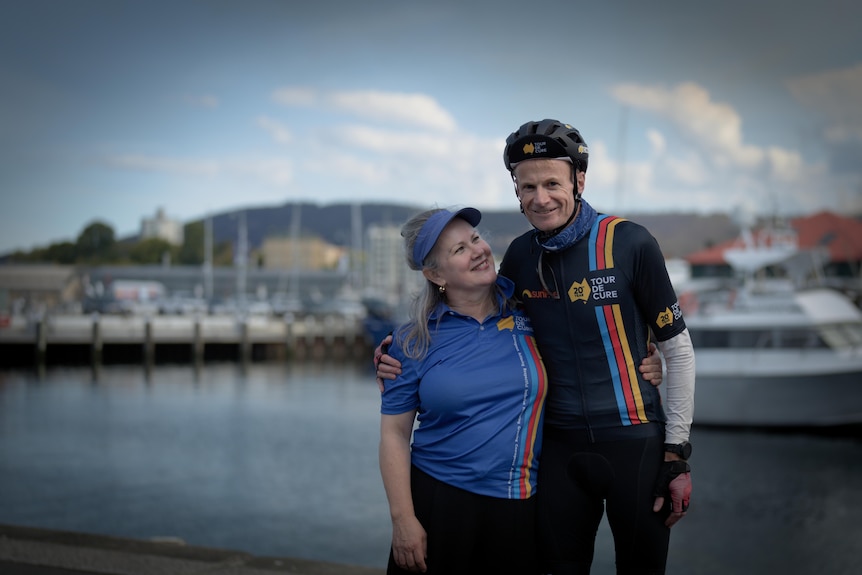
Just months before he died, Richard Scolyer took part in the Tour de Cure bike race in Hobart supported by his wife Katie. (Australian Story: Owain Stia-James)
Despite his heavy treatment, Scolyer was still well enough, at times, to continue to exercise, bike ride and carry out his duties as Australian of the Year.
In March 2024, about 10 months into the trial, he travelled to his home state of Tasmania to compete in three-day cycling event Tour de Cure.
“Fine-tuning my bike and body. Still got some respiratory symptoms but they seem to be easing/heading in the right direction,” he wrote on Instagram ahead of the event.
“I still love exercising because it buoys my mood and mental strength, especially as I travel through the highs and lows of my cancer journey.”
And, even after the cancer returned, he was gearing up to do it all over again this year. About eight weeks before he died, and despite living with fast-growing tumours, he completed the gruelling race alongside his son Matt and brother Mark. His team raised thousands of dollars for cancer research.
The King and an Akubra hat
Scolyer even met King Charles III, as His Majesty toured the Melanoma Institute facilities.
“The fact we’re both cancer patients, a lot of people have cancer, but given this is our medical specialty, I hope there’s a special bond between us,” Scolyer told The Sydney Morning Herald in October 2024.
He acquainted the king with an Aussie sun-protection staple: the Akubra hat.
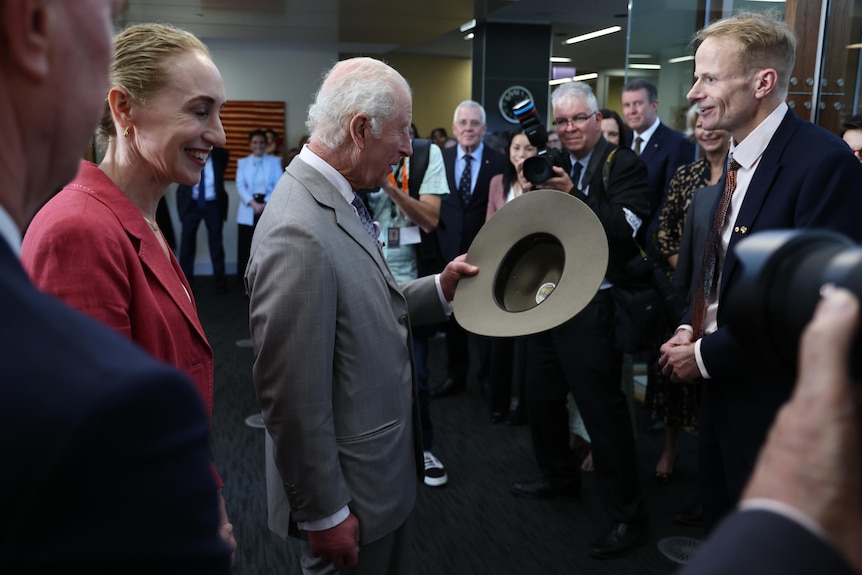
Richard Scolyer met King Charles during a 2024 visit to Australia, gifting the monarch an Akubra hat for sun protection. (AFP: David Gray)
In June 2025, just a few months after he was told he had months to live, incredibly, Scolyer completed his 250th parkrun event.
“I did a lot of parkruns in the early 2000s but then as the kids go through various parts of their life, you stop doing it,” he told the ABC at the finish line.
“And then when I got sick again, I wanted to try and get to 250. I guess it’s part of my personality.”
Always kind and thankful, Scolyer said at the time he was “touched” by the number of people who showed up to provide support.
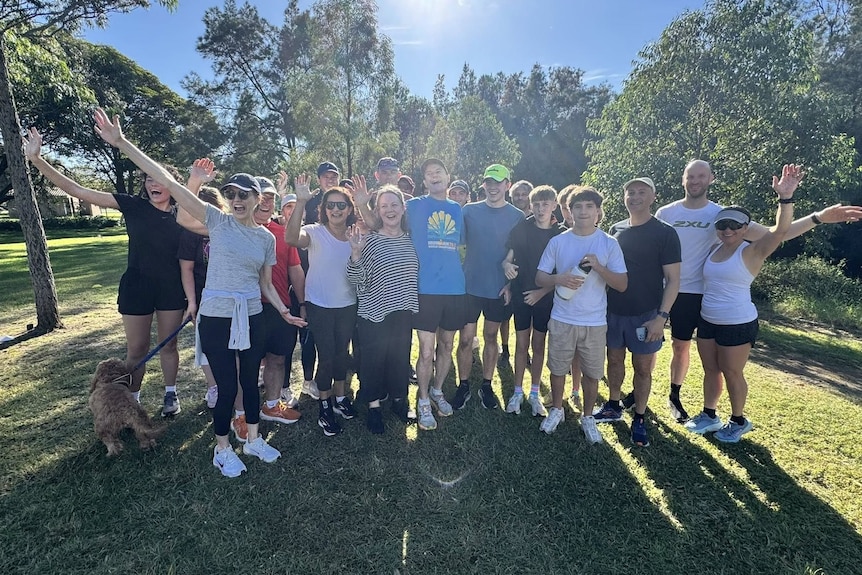
Richard Scolyer had a huge band of supporters as he completed his 250th parkrun. (Supplied: Richard Scolyer)
But Scolyer wasn’t finished just yet. A few months later he backed this up by competing in the City2Surf, alongside friends and wife Katie, to raise funds for the Chris O’Brien Lifehouse, where he once worked and then received treatment.
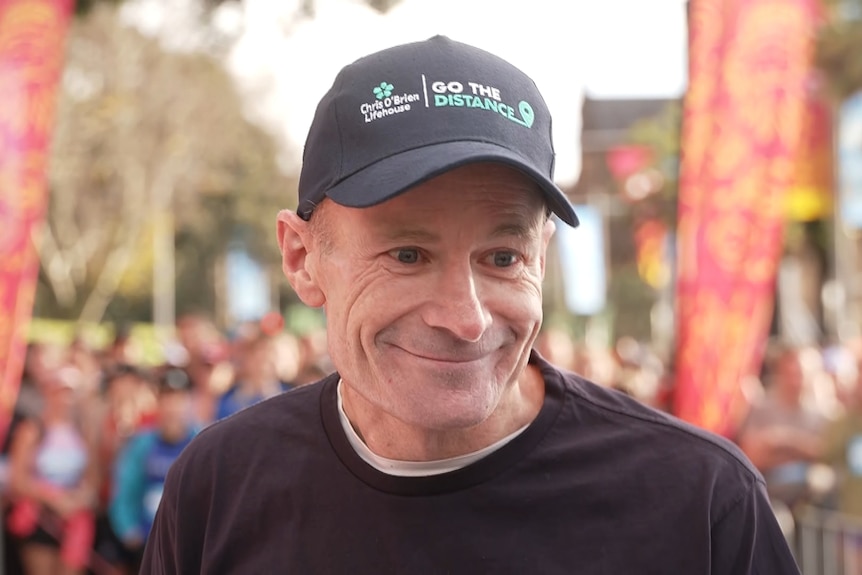
During City2Surf Richard Scolyer raised funds for the cancer institute where he once worked and then received treatment. (ABC News)
‘What a legacy to leave’
In February 2026, the clinical trials Scolyer had been hoping to see for almost three years became a reality.
Australian medical oncologist Mustafa Khasraw, from Duke University Cancer Institute Centre in North Carolina, is leading the trial to track the outcomes of using combination immunotherapy on selected patients with glioblastoma.
“The first patient … has commenced trial participation. I hope patients in Australia can participate soon,” Scolyer said.
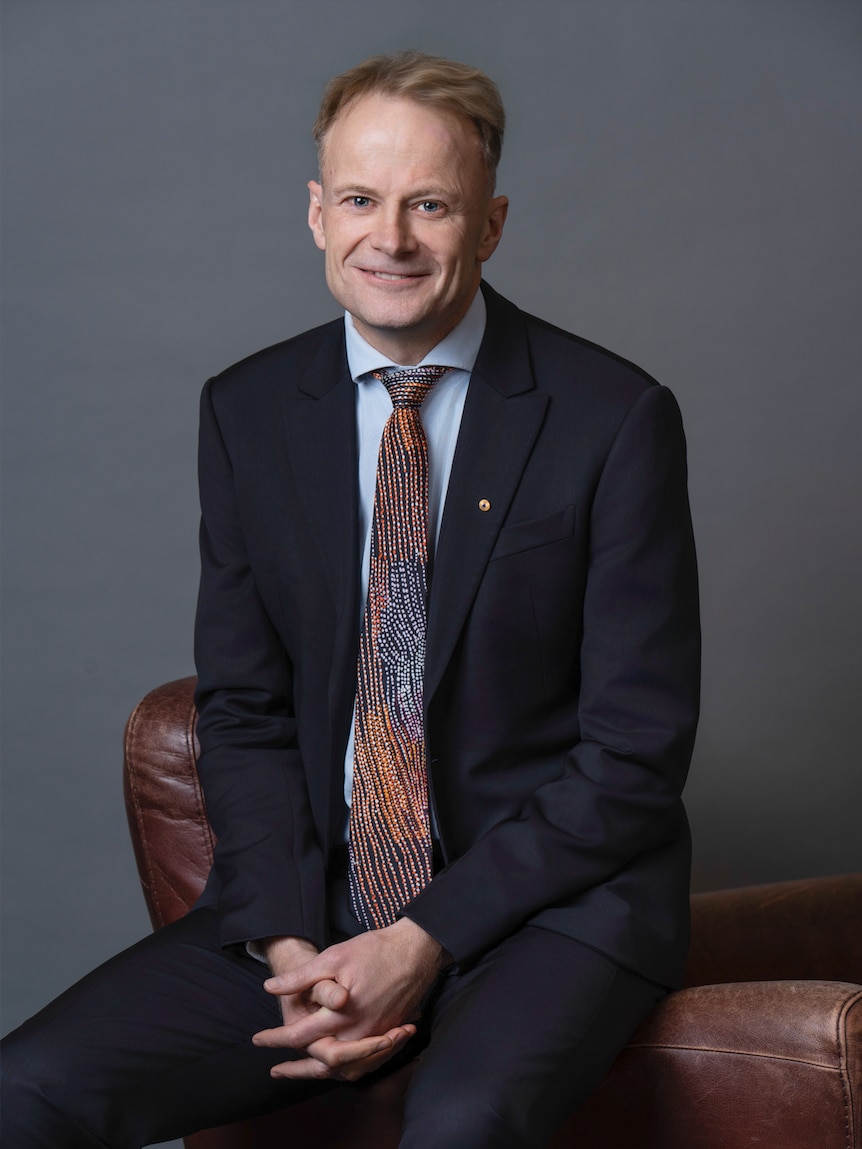
Richard Scolyer said his greatest life lesson was that cancer did not define him. (Supplied: Tim Bauer)
Three patients have been enrolled so far. A fourth is at the early screening stage, The Sydney Morning Herald reported in February.
A further trial is gearing up at the Peter MacCallum Cancer Centre in Melbourne.
If the results are strong, it could shake up the current treatment regimen of surgery, chemotherapy and radiation.
“The question is about whether this treatment I’ve had has made a difference to my outcome, or is it just luck?” Scolyer told the ABC in March 2025.
In early 2025, a research paper was released in the Nature Medicine journal documenting Scolyer’s groundbreaking treatment. Authored by a group of researchers, clinicians and scientists, the paper documented the changes in his brain tumour and blood before and after the experimental treatment.
In September 2025, Prime Minister Anthony Albanese also announced a commitment of $5.9 million towards the establishment of the Richard Scolyer Chair in Brain Cancer Research at Chris O’Brien Lifehouse, which will bring further research and treatment for brain cancer patients.
“What a legacy to be able to leave, even if it doesn’t cure me. It’ll get us closer to getting cures for patients.“
Loading…
Scolyer is survived by his wife, Katie, and their children Lucy, Matt and Emily.
“I’m very proud of our kids and how they’ve turned into such wonderful people. Well, obviously, it makes you very sad not to see how they grow up,” Scolyer told Australian Story.
“The fact that I’ve still been alive for a couple of years nearly now, and to be able to see them mature and support me and Katie through this journey, I hope it’s helped them.”
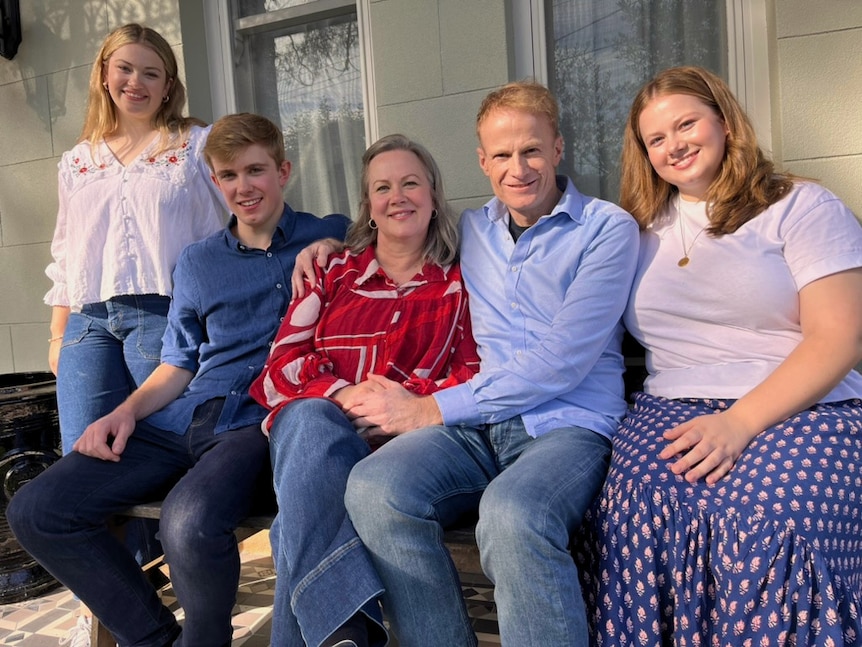
Richard Scolyer spends time with his family in 2025. (Supplied: Richard Scolyer)
In his letter, Scolyer said his greatest life lesson was that cancer did not define him.
“It may be the current road we are travelling, but it is not our entire journey. A terminal cancer diagnosis does however provide clarity as to what truly matters. It shines a spotlight on the importance of relationships, on true friendship and on selflessness.”
Daughter Emily told Australian Story that she felt “so lucky” to have a father who continued to strive for excellence.
“For Dad to be able to participate in something so groundbreaking and so potentially life-changing for a lot of patients is really amazing and is something that I’m so proud of,” Emily said.
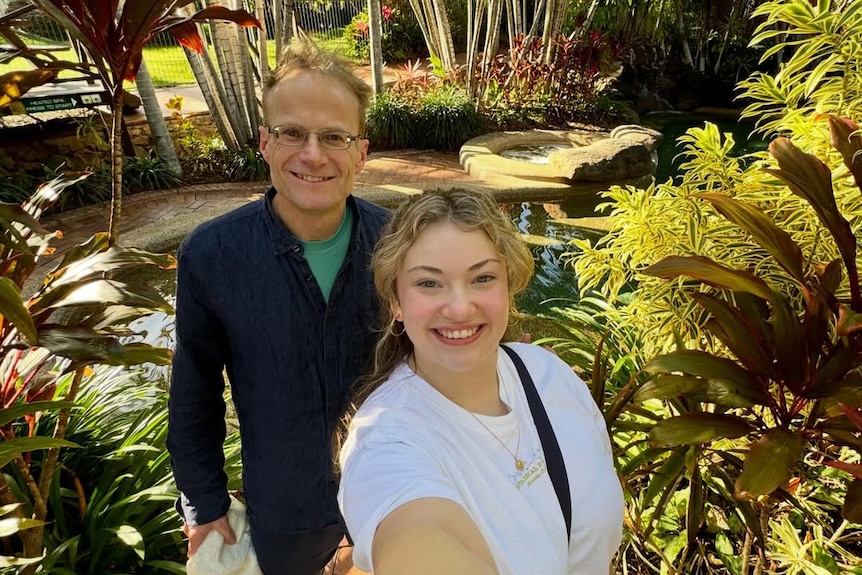
Emily Scolyer and her dad, Richard, pictured in April. (Supplied: Instagram/@emilyscolyer)
While accepting an honorary doctorate from The University of Sydney earlier this year, Scolyer encouraged people to think differently.
“The courage you show can change lives,” he told the crowd in a recorded messaged. “Be brave, be bold and challenge the status quo.
“To my wonderful wife Katie and our incredible children, thank you for the love, the strength and support. I love you all very much.”
Scolyer’s final message to all Australians was simply: “Thank you”.
“I haven’t sugar-coated my journey and I sincerely thank you for allowing me the space and opportunity to share it with you, warts and all,” he wrote.
“I would be delighted and humbled to be remembered as a proud everyday Aussie who ‘gave it a crack’ and in doing so, inspired others to pursue their dreams and passions with humility, love and compassion.”