







As we reach the halfway mark of 2026, we’ve been delighted to discover a scintillating variety of video games already this year, with something for everyone to enjoy.
There is plenty of nostalgia in a couple of the games that our critics have picked for our mid-year collection, but lots of new experiences as well.
We’re keen to hear what you think too! You can vote on your favourite game below, and we’ve added a few extras into the mix as well, so be sure to scroll right down to the end to get your vote in.
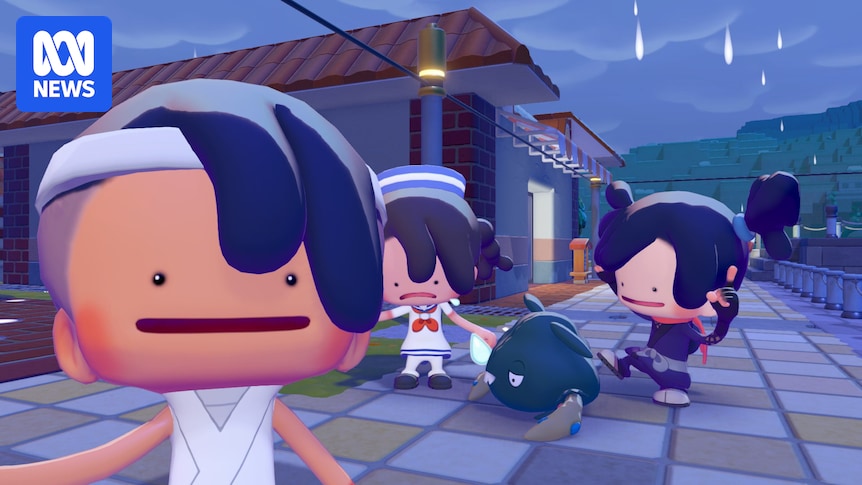
Players control the transforming Pokémon Ditto as they rebuild the ruined world in game, and create habitats for other Pokémon. (Supplied: Nintendo / The Pokémon Company)
Pokémon Pokopia
Occasionally a game comes out and everyone you know is playing it. It happened during the height of the COVID pandemic-era lockdowns with Animal Crossing: New Horizons, and in early March this year everyone was building habitats and restoring environments as a plucky human shaped Ditto.
The mainstream Pokémon games have stayed basically unchanged in format since their release in the late 90s, but it’s in the spin-off titles set within the same world where the games can get a little weirder and a little bit more creative. Pokopia is a game about restoration, it’s about building connection and community and it’s a microcosm of our own increasingly disconnected world. There aren’t any trainers, no major battles, no fighting at all; it’s a human-free world of Pokémon who find themselves alone in a scarred environment desperate for some care.
Piece by piece, literally, you rebuild and reshape each of the major environments in the game, and you can choose to build something brand new or restore what came before. I have played every single major Pokémon game and even I’ll admit I’ve almost seen it all, but Pokopia really delighted me with just how different it was.
There is still Pokémon collecting, but in this game you build specific habitats to attract back to the world all your favourites. Each are your equal and equally perplexed about exactly what is going on. If you’re an long-term fan you’ll discover plenty of references to both past games and the animated television show, but younger players without this grounding will still enjoy the creature collecting and creative building.
It’s very easy to lose a lot of time in this game as you collect the resources to build your next great idea, either alone or with Pokémon assistants. There is one shared location — a blank-slate environment named Palette Town — where you can work together with your friends online. However, I mostly spent hours just chatting to my friends as we showed each other what we made: a world full of whimsy in which to reside.
That moment of everyone playing the same game is hard to replicate, but this year it was Pokémon Pokopia that we all shared.
— Gianfranco Di Giovanni
Set in a far future, players team up or fight each other as they loot the ruins of a collapsed extra-solar colony in the Tau Ceti system. (Supplied: Bungie)
Marathon
There’s a specific kind of addictive stress that playing Marathon produces.
It comes from knowing that every time you enter a building there is a high likelihood you’ll encounter another player just waiting to end your run, strip you of your precious loot, and send you back to square one.
Bungie has made a live-service extraction shooter that is openly hostile to comfort, where every encounter with another player ends in a gunfight and the NPC enemies are just as likely to take you out. With a purposefully savage time-to-kill, Marathon is surprisingly difficult for a mainstream release in a genre that relies on capturing the widest possible audience to survive.
It’s a bold move, and one I respect.
The shooting and movement are as good as you’d expect from the developers that basically invented modern shooters with Halo and honed their abilities with Destiny. The art direction caught me off guard with it’s weird, abstract, often unsettling visuals that I became a big fan of once I settled into them. Sadly, like far too many live-service games, the UI is persistently frustrating, overly layered and cluttered in ways that make a simple task feel needlessly complicated.
As for story, there’s not much to sink your teeth into but the snippets of narrative are interesting enough to keep me engaged while in-game, but not enough to save me from skipping past them in a rush to get back into gameplay.
Marathon is a brutal, strange, and refreshing shooter with a clear artistic vision and a super fun gameplay loop that lingers in your thoughts long after putting the controller down.
— Kyle Pauletto
Climbing the mountain is not just a metaphor in The Game Bakers’ Cairn, a single player adventure in perseverance and one of Gemma’s favourite games this year. (Supplied: The Game Bakers)
Cairn
A few years ago, I went to a rock-climbing gym with some very lofty, dare I say devoid-from-reality, expectations of my performance. After not having climbed since the year seven camp incident (the lawyers say I cannot elaborate), shockingly, this attempt went no better and I vowed to never touch a rock wall ever again lest the spirit of the plastic hand grips possess my mortal body and fling me into oblivion.
Cairn made me want to take that risk. My lofty expectations remained, even in the digital space, as I dragged Aava’s professional climbing career through the mud and up the slopes of Mount Kami. Manoeuvring each individual limb made for some truly insane levels of on-mountain-yoga but I was confident that what I lacked in climbing knowledge I could make up for in brute force.
And for a while that worked. I was making daring scrambles across crumbling rock and taking risks that made for horrific looking gameplay but gave me an exhilarating rush.
But somewhere around my sixth death on the same sheer rock face, I started to crack a little.
For all its soft, inviting colour palettes and wistful score, Cairn has an stone-hard edge to its core gameplay. Every weak foothold, every muscle tremor, the knowledge that every second I spend trying to claw my way up just ‘one more ledge’ I risk Aava keeling over from hunger or exhaustion; it all makes you question the worth of what she’s doing and, in turn, what you’re willing to put yourself through to conquer that one stubborn climb.
By my fourth major milestone, I was done with brute force. I’d entered my painfully slow era of climbing, dedicating my time to mastering correct hand and foot holds and rationing Aava’s supplies like we were going to war.
It was frustrating, painful, and at times akin to how I imagine Sisyphus must have felt. But I couldn’t stop climbing.
Cairn walks perfectly along that knife’s edge of challenging and punishing, sprinkling in just enough moments of reprieve to make the pain worth it. Staring out into the gorgeous sunset, braving the chill and the rain as I hiked to my next peak, it almost made me forget I was two seconds away from flinging my controller out the window.
I don’t want to spoil the story because I fully believe you should experience it for yourself. Cairn is a beautiful game that is as aspirational as it is depressing and as gorgeous as it is punishing. January 30 was pretty early to be calling one of my GOTY contenders, but Cairn has well and truly secured its place, and I don’t see that changing any time soon.
— Gemma Driscoll
Despite its loosely American setting, Mixtape’s Australian inspirations are found in its playlist, its team’s local rock scene pedigree, and even an ABC rage T-shirt worn by its protagonist. (Supplied: Beethoven & Dinosaur)
Mixtape
After compiling an outrageous soundtrack featuring rock classics from Devo, Silverchair and Joy Division for Mixtape, Melbourne studio Beethoven & Dinosaur weren’t content to just use these precious musical relics for cheap nostalgia.
Instead, this John Hughes-style ode to the 90s musical mega nerd invented gaming’s answer to the music video.
With her era-hopping custom playlist, Stacey Rockford and her awkward, whip-sharp and ever-so-slightly abrasive teen friends reminded me how my favourite songs once captured my own ephemeral teenage feelings in a CD (then iPod) playlist.
It’s a bewildering and mesmerising collage of music and gameplay mechanics, each tailor-made to amplify every riff, key change and vocal crescendo in operatic fashion. But despite the name, it’s not just about the music.
Mixtape’s bravura cinematic aspirations and deliriously off-kilter approach to teenage thrills stand out. The game glides between first-person camcorder filming, a drunken stumble through Blockbuster, to a leaf-sweeping tidy-up sequence.
Silverchair’s anthem Freak accompanies a headbanging late-night drive through town. All the player needs to do is rock out, in time with the music or helplessly off the beat.
Meanwhile Mixtape’s take on a first kiss, controlling two tongues clumsily, fleshily, squelching against each other, to Alice Coltrane’s Galaxy in Turiya, is a gross-out moment to eclipse Resident Evil Requiem’s worst body horror excesses.
Director Johnny Galvatron told ABC Arts that Mixtape was inspired by his urge to set his favourite Devo song to gameplay.
That Devo level introduces Stacey skating recklessly down a mountain road, her friends introduced with the intro’s guitar riffs, just before new wave synths kick in as a vast Pacific Northwest backdrop balloons out into the horizon.
In moments like this, and many others like it, that song’s title irresistibly comes to mind: That’s Good.
— Francisco Dominguez
With minimalist and stylish pixel graphics, Titanium Court is inspired by Shakespeare’s Midsummer Night’s Dream, with match-three puzzle gameplay. (Supplied: AP Thomson / Fellow Traveller)
Titanium Court
Titanium Court is, at its core, a match-3 game, where the player is tasked with going to war by matching three or more tiles in order to sap resources, in order to progress. Water, wood, rocks, money, people; all fall victim to the shifting of the tides. I found this match system to be an addictive mechanic that complimented the game’s narrative offering, because this game offers a whole lot more than just a simple match-3.
Its soundtrack is a great storytelling companion that immediately introduces a world that feels unfamiliar. Peaceful bird calls are interrupted with cymbal crashes, warbles and wails similar to those of a cat when you pet it on the butt. One of the things I adore most about the game is that everything, including this music, has a purpose, even if that purpose may not seem clear at first.
Inspired by Shakespeare’s A Midsummer Night’s Dream, the game introduces questions that tug at the player as the game ebbs and flows both to and from intriguing topics like the tides that shift its tiles. With an array of ways to change the game introduced by charming characters, it taught me that you can do delightful things with minimal pixels, utilising many creative methods to show tone not only through its unique phrasing but also through metaphor and movement.
All the world’s a stage, and all the men, women and non-binary people, merely players — and as video game players, aren’t we all just queens of endless fascinating courts who desert them as soon as all their resources are sapped? I was lucky to leave Titanium Court still fresh and vibrant and I will forever treasure my moments with the game. I loved the fleeting emotion I felt, I loved how much I didn’t want it to end.
Titanium Court kept my attention the entire way with fantastic writing, an intriguing world and a uniqueness that can only be described with experience.
— Naomi Jackson
Players in Saros need to memorise boss patterns in order to complete levels, but failing and dying is a part of the game’s progression system. (Supplied: Housemarque / PlayStation Studios)
SAROS
There’s a unique class of video games where the first execution of an idea was good. But the sequel? Hoo boy! The sequel is where they really nailed it. Think Borderlands and Borderlands 2. Or Assassin’s Creed and Assassin’s Creed II.
Despite being a sequel only in the spiritual sense, that’s the realm we’re in with SAROS and its progenitor Returnal from Finnish studio Housemarque, where a kernel of a good idea (Returnal) has been elevated into GOTY-contender territory (SAROS).
In SAROS you take control of Arjun Devraj, an enforcer for the futuristic mega-corporation Soltari sent with his colleagues as the fourth expedition to the far-off world of Carcosa. It’s a planet teeming with a magical mineral to be exploited and you’ll be shocked to learn things haven’t gone well for the previous three expeditions. It’s up to Arjun to find out why.
It’s hard to think of a criticism one could level at Returnal that Housemarque didn’t remedy to incredible effect in SAROS. Returnal’s punishing structure that required a run through of every level of the game in a single sitting? Gone in SAROS in favour of more checkpoints at the beginning of each biome.
Progression in SAROS feels far less on a knife’s edge thanks to new mechanics and a more well-rounded arsenal that allowed me to be far more accepting when the game decided it wasn’t my day. Bosses in Returnal with whom I hold a generational grudge replaced with encounters that left me grinning from ear to ear, feeling like I was Millhouse playing Bonestorm. Every caveat that stopped me recommending Returnal to friends is gone.
Impressively, Housemarque didn’t throw the spooky-ooky space-madness-baby out with the bathwater as it refined SAROS from the foundation of Returnal.
Still here is a deeply unsettling tale of cosmic horror, this time drawing heavy inspiration from The King in Yellow, but rooted in a narrative that explores darkness of a far more human variety. And from the first moments of the tutorial, SAROS’s systems remain a joy to interact with. Each dodge, shield, dash and counter feels punchy and responsive in exactly the way a game that is going to repeatedly send you back to the beginning should. You can feel the confidence of a studio in its stride.
Plus, there’s plenty of home-grown pride to be found! From developer Gregory Louden to the dulcet tones of actor Ben Prendergast, Aussies abound in SAROS.
There’s so much good to say about SAROS (the art direction, the incredible performance from Rahul Kohli as Arjun), but perhaps the best thing I can say is that when the credits rolled the first time, I kept playing through them to the true ending. Then I kept playing beyond the true ending with various modifiers to see how much I could push the incredible systems Housemarque has built. SAROS might have been done, but I wasn’t done with SAROS.
— Peter Marsh
Vote for your favourite game below
Did any of these games make your list? We’d love to hear what you think is a game of the year contender below by voting in our poll.
We’ve added a few more notable titles into the mix as well.