







The NSW Ombudsman has slammed Corrective Services NSW (CSNSW) over the “unlawful and oppressive” treatment of inmates who were locked in their cells for 24 hours a day for up to three months.
In a scathing report published today, the Ombudsman found that 33 protective custody inmates at South Coast Correctional Centre were confined to their cells for at least the entire month of March 2025 and two weeks into April.
Inmates were only allowed out of their cells at that time for health and legal appointments and court appearances.
Under NSW law, all inmates are supposed to be offered access to daily open-air exercise for a minimum of two hours.
The report stated that it was highly probable the lock-in began for some inmates about January 2025 due to an influx of protective custody prisoners needing to be kept in overflow accommodation.
One of the impacted inmates told the Ombudsman he had been locked in without access to daily exercise for three months.
The influx was attributed to CSNSW stopping putting inmates in protective custody together in a limited association, including ending grouping vulnerable inmates together under section 78A orders.
Inmates are placed in protective custody away from the general prison population when there are threats to their personal safety.
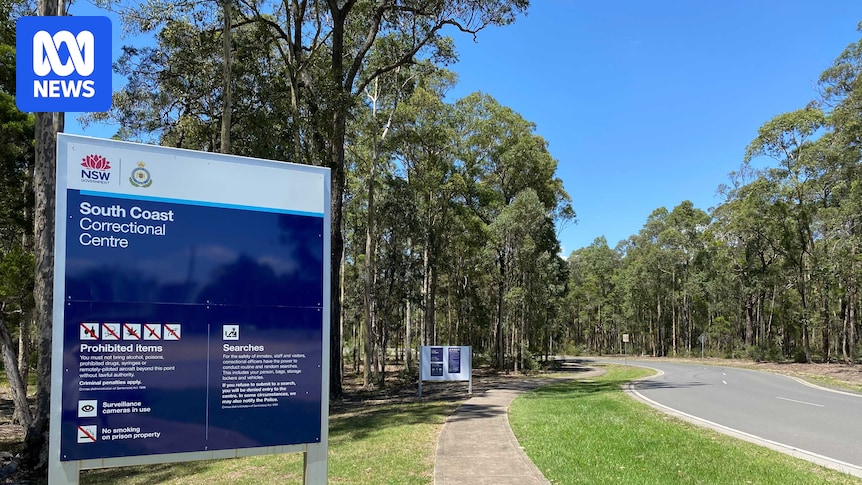
The affected inmates were in the South Coast Correctional Centre at Nowra. (NSW Government )
In a statement, NSW Ombudsman Paul Miller said the 24/7 lock-ups stopped only after multiple complaints were made to the Ombudsman’s office in April 2025, with senior CSNSW executives stating they were unaware of the situation at the time.
“Had complaints not been made to us, it is not clear how long this situation would have continued,”
Mr Miller said.
He said the influx of inmates kept in isolation and subsequent issues were “clearly foreseeable and avoidable”, and the failure to plan for ceasing section 78A orders was “unreasonable and wrong”.
A CSNSW spokesperson told the ABC the department was carefully reviewing the Ombudsman’s findings and was reviewing inmates in protective custody to identify opportunities for other placement options.
‘Lawless culture’ in corrective services
During the investigation, the Ombudsman discovered 24/7 lock-ins were impacting protective custody inmates at other prisons across the state, including at Parklea and the Metropolitan Remand and Reception Centre in Sydney and Cessnock Correctional Centre.
The investigation found the 24/7 lock-ins were also occurring at Parklea Correctional Centre in Sydney’s north-west. (ABC News)
Clarence and Mid North Coast Correctional Centres were also identified by CSNSW but poor record keeping meant the Ombudsman could not verify if protective custody inmates were impacted by the lock-ins.
The report also criticised the repeated failure of CSNSW to hand over documents requested in a timely manner as being “unlawful and wrong”.
“Ultimately, we did receive information from them eight months after we asked for it, and it was still incomplete and inadequate,”
Mr Miller said.
NSW Greens justice spokesperson Sue Higginson said there was a high likelihood the 24/7 lock-ins had happened more broadly across prisons, but that a lack of transparency and accountability meant that there was a “lawless culture” across corrective services.
“I think there is an overarching culture problem in terms of accountability, record keeping and the practices of CSNSW when it comes to the human rights of inmates,” she said.
“[There is] this culture of impunity: ‘Not only do we not need to keep records, we also don’t need to respond to the Ombudsman in a timely manner or at all.'”
Sue Higginson says there is a “culture of impunity” in CSNSW. (ABC News: Victoria Pengilley)
The Ombudsman made 13 recommendations, including reviewing the circumstances of all inmates in protective custody, improving record keeping and requiring that all correctional centres be forced to notify CSNSW if a prisoner is deprived of their outdoor exercise time for three continuous days or more.
It also recommended that NSW implement the Optional Protocol to the Convention Against Torture or Other Cruel or Degrading Treatment or Punishment as required under international law, which has been outstanding since January 2023.
In a statement, Corrections Minister Anoulack Chanthivong said he welcomed the findings in the Ombudsman’s report and would carefully consider the recommendations.