






The South Australian government will introduce legislation to remove the rights of perpetrators of serious crimes to decide what happens with the remains of their victims.
The changes to the Burial and Cremation Act will be introduced to state parliament today, on the same day as legislation to change abortion laws is set to be voted on.
Attorney-General Kyam Maher said the amendments were modelled on similar laws in Victoria that were introduced in 2021 and first used in 2024.
In that case, a man who murdered his three children had his rights to alter their gravestones removed, while he was also banned from being buried or establishing a memorial in his name in the neighbouring gravesite he owned.
Murderer Robert Farquharson’s name was scratched off the family grave. (ABC News: Harrison Tippet)
Mr Maher said he was unaware of a criminal in South Australia trying in a similar way to control what happened with his or her victims’ remains or burial site.
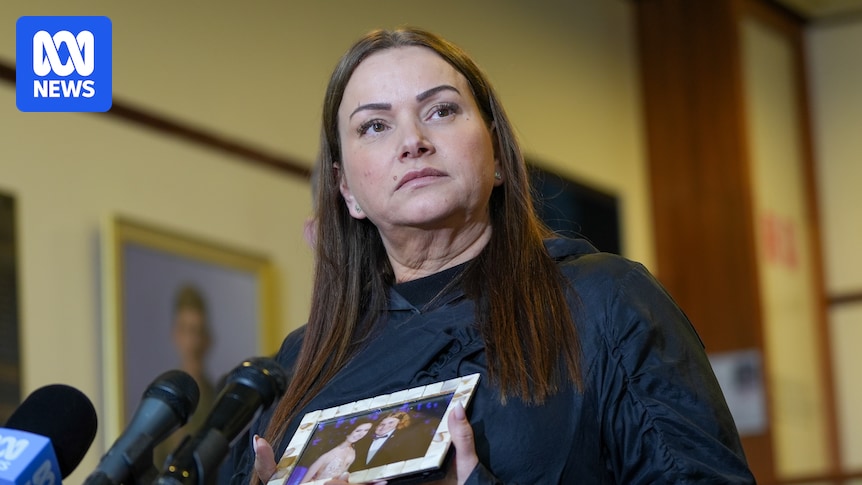
He made the announcement of the legislation alongside Magda Pearce, whose son Lukasz Klosowski and his partner Chelsea Ireland were murdered by Lukasz’s father in 2020 in South Australia’s south-east.
“This is squarely aimed at making sure someone who’s committed a very serious crime cannot re-traumatise victims, friends and family through the use of internment rights,”
Mr Maher said.
Under the changes, a victim of a crime, their relative or a partner could apply to the South Australian Registrar of Births, Deaths and Marriages to vary or force the surrender of an interment right.
As well as murder victims, the amendment could also affect, for example, a parent convicted of the criminal neglect of a child or instances of domestic and family violence.
Lukasz Klosowski and Chelsea Ireland were murdered by Lukasz’s father in 2020. (Instagram)
Changes to prevent trauma
While Ms Pearce said she had not faced interment issues when burying her son, she welcomed legislation that could lessen trauma for victims and their families.
“I see today’s announcement as very important in making sure that victims and victims’ family members are protected and they don’t have to face even more trauma and uncertainty in times where their lives have changed completely and their world has collapsed,” she said.
She said the effects of serious crime did not end with sentencing of the offender.
“I know there are many family members who will welcome this change because there’s nothing worse than having to deal with additional stress after already living through trauma,” she said.
Commissioner for Victims’ Rights Sarah Quick welcomed the changes. (ABC News: Che Chorley)
Commissioner for Victims’ Rights Sarah Quick said the legislation sent “a clear message: the rights of serious offenders must never override the rights of victims and their loved ones”.
“Most people would be justifiably shocked to learn that a serious offender could have control over their victim’s burial site, or even choose to be buried near that person,” she said.
“Allowing serious offenders to retain interment rights is not only deeply insulting, it is traumatising and can cause ongoing harm to those left behind.
“These amendments are crucial. They prevent serious offenders from inflicting additional pain on the families of victims and ensure that the dignity of the deceased is respected.”
The legislation would still have to pass both houses of parliament and be assented to by the governor.