



The life of an “ordinary bloke”-turned-renowned architect and Catholic priest is being examined to decide if he will be named Western Australia’s first ever saint.
Monsignor John Cyril Hawes, who spent about 24 years in WA, left a lasting impression on the Midwest with a trail of his holy buildings scattered throughout the region.
Originally from England, Monsignor Hawes worked in the Bahamas, regional WA, travelled to America and finally settled back in the Bahamas.
Now, 70 years since his death, a push from the Diocese of Geraldton to advance his canonisation is progressing, with an archivist recently travelling overseas to interview people who crossed paths with the famous architect.
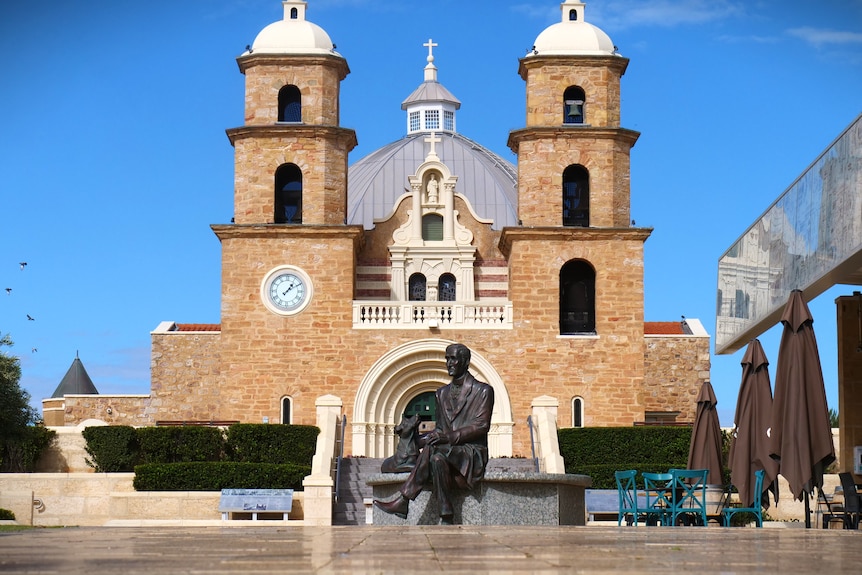
St Francis Xavier’s Cathedral sits tall in the heart of Geraldton and is one of John Cyril Hawes’s most famous works. (ABC News: Piper Duffy)
From architect to priest
Monsignor Hawes was born in 1876 in Richmond, England into a middle-class Anglican family. He developed a fascination with architecture before converting to Catholicism later in life.
Throughout the Midwest he built a famous body of work in the heart of WA country towns such as Geraldton’s St Francis Xavier Cathedral and Our Lady of Mt Carmel in Mullewa.
Perth Catholic Church archivist and historian Odhran O’Brien is researching Monsignor Hawes’s life to gather evidence for the Diocese of Geraldton’s case for sainthood.
Mr O’Brien told ABC Radio Perth that Monsignor Hawes led a “remarkable” life.
“I think he’s a remarkable character for a number of reasons, the fact that he was such an ordinary bloke in a lot of ways but also was an Anglican who started off as an architect … then converted to Catholicism and became a priest,” Mr O’Brien said.
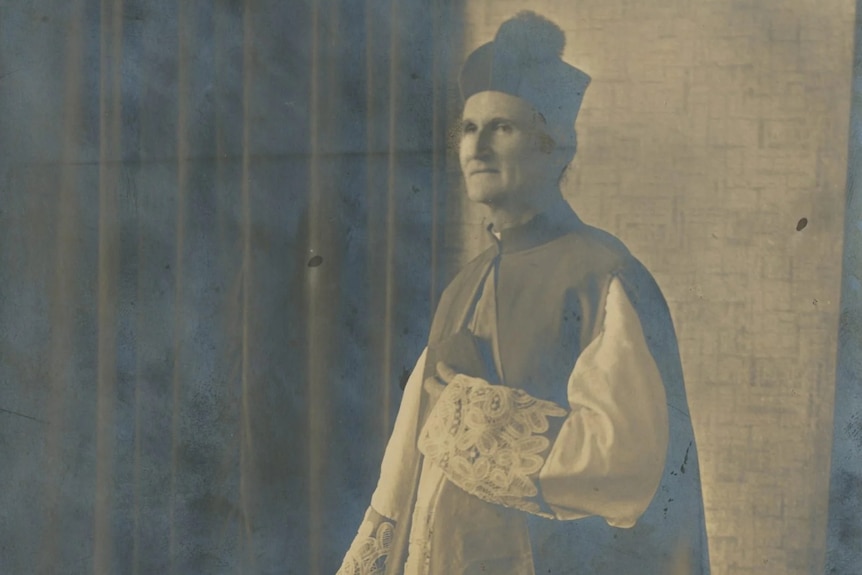
John Cyril Hawes was an Anglican priest before he converted to Catholicism. (Supplied: Monsignor Hawes Heritage Centre)
Mr O’Brien said it was Monsignor Hawes’s “mission” to build holy buildings for regional communities.
“[Monsignor Hawes] had an absolute passion for architecture and he felt it was part of his mission in life,” Mr O’Brien said.
“He was living out his faith by building these churches [and] responding to the needs of the local community to provide them with a place to gather.
“He built the churches from local materials in the arts and crafts style and it was about making do with the resources that you’ve got immediately around you.”
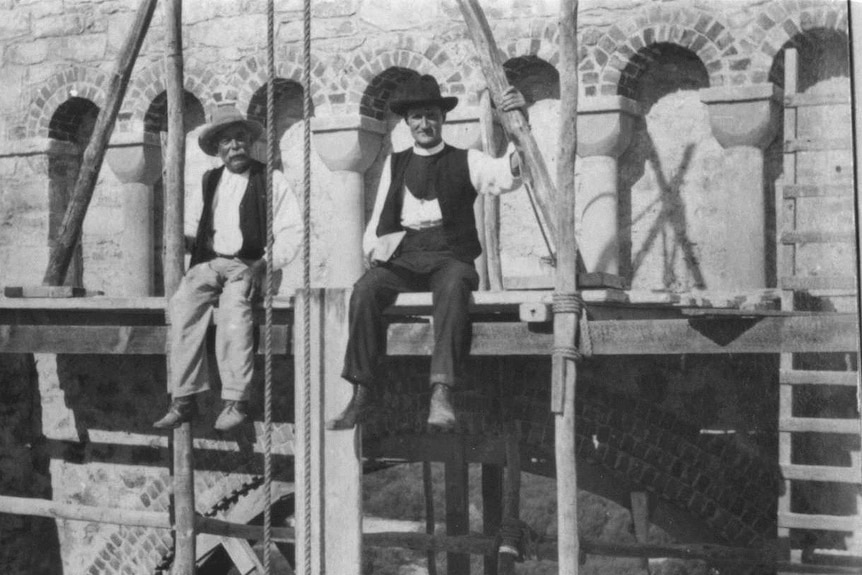
John Cyril Hawes and a worker take a break during work on St Francis Xavier’s Cathedral in Geraldton in the 1920s. (Supplied: Geraldton Diocese)
After studying in Rome with the priesthood, Monsignor Hawes became an Anglican priest but for almost a decade he internally battled with his religion until he converted to Catholicism and was ordained again as a Catholic priest in secret.
“I think [Monsignor Hawes] was apprehensive about the reaction … there was a greater divide between Anglicanism and Catholicism,” Mr O’Brien said.
“He wasn’t just an Anglican, but an Anglican priest who then converted to Catholicism, which is a pretty significant change in your life.“
Long journey to sainthood
In 2017 Archbishop of the Bahamas Patrick Pinder suggested promoting the cause of Monsignor Hawes for sainthood to Diocese of Geraldton chancellor Father Robert Cross.
Now, more than a decade later, Mr O’Brien has travelled to the Bahamas, America and England to gather evidence for the Diocese of Geraldton’s cause for Monsignor Hawes’s canonisation.
Father Cross said archival research involved Mr O’Brien interviewing some of the last people alive who met Monsignor Hawes.
“[Mr O’Brien] has actually come across one person in the Bahamas who knew Monsignor Hawes while he was still alive.
“And there’s evidence here in Geraldton of people turning to John Hawes in prayer, asking for divine intervention.”
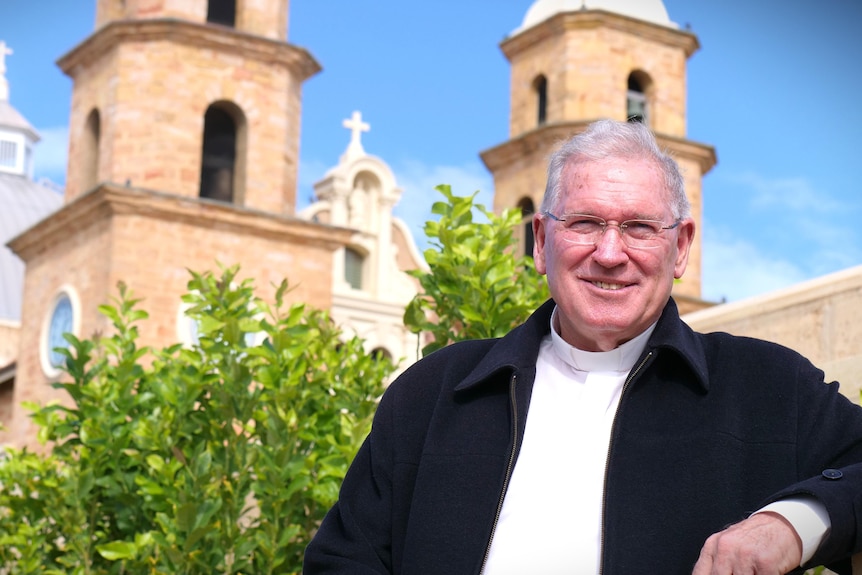
Robert Cross, who earmarked John Cyril Hawes for canonisation, says the process can take up to 100 years. (ABC News: Piper Duffy)
Father Cross said the process of canonisation was “meticulous” and took many years.
“The very first part was to petition the congregation for the cause of saints in Rome to have his cause looked into … then he is given the title Servant of God,” he said.
“The process is very meticulous and you have to keep records of everything you do.
“The next stage is called the Roman stage where all the documentary evidence is gathered together and presented to the Congregation of Saints … where it is deemed [if] this is a man of extraordinary virtue.”
Although the case is progressing, Father Cross said he didn’t expect WA to have its first saint just yet.
“These things take a long time, sometimes up to 100 or more years … so I don’t expect this process will be completed anytime in the near future,” he said.
“[However] I think it would be a great privilege for the community and for Western Australia to have him declared a saint.”