





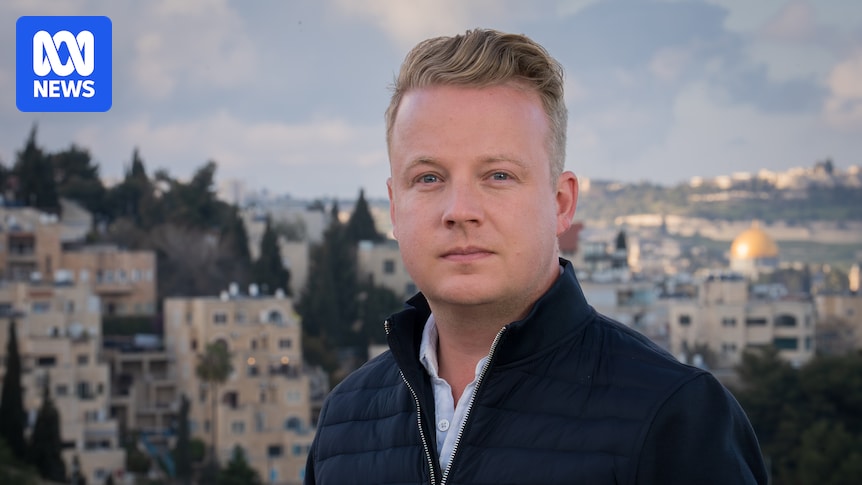
Hello, ABC Middle East correspondent Matthew Doran in Jerusalem here.
It’s been 107 days since the war between the US, Israel and Iran began, and it seems like it’s now the closest Washington and Tehran have been to a deal that would begin a process to end the conflict.
Here’s what you need to know right now
- A new Israeli strike on southern Beirut may be derailing efforts to get the US and Iran to sign an agreement on the next steps in the broader regional war. On Sunday, Benjamin Netanyahu and his defence minister, Israel Katz, announced a strike on a claimed Hezbollah target in Dahiyeh. The attack on what the Israeli military described as a command centre followed more fighting between Israeli forces and Hezbollah in southern Lebanon — and the firing of rockets and explosive drones at Israeli border communities.
- Donald Trump has said the strike shouldn’t have happened and that nothing should derail the broader Middle East peace process. And he’s made that view clear in another expletive-heavy confrontation with Mr Netanyahu, reported by Fox as asking the prime minister “what the f*** are you doing?” When Israel attacked Beirut last week, Iran launched barrages of missiles at Israel in protest, prompting Israel to return fire. What followed was more than 12 hours of attacks between the two countries, threatening to plunge the region back into all-out war. Iran’s top negotiator, Mohammad Baqer Qalibaf, has already said “America either lacks the will to fulfil its commitments or the ability to do so”, while Iranian state media is reporting comments from one of the country’s top military officials that the strike on Dahiyeh won’t go unanswered.
- Over the weekend, Israeli media had been reporting the Netanyahu government was frustrated about the prospect of a deal — resigned to the fact it looks like it will get over the line, because Mr Trump wants it to be signed, but worried about the impact it will have on Israel’s agenda. Of particular concern was whether the US would force Israel to pull back from attacking the Iranian-backed Hezbollah in Lebanon. Some commentators had suggested Israel may try to inflict some final blows on Hezbollah before any deal is signed, in a bid to carve Lebanon out of any agreement or to scuttle it altogether. President Trump told Axios the prime minister has “no f***ing judgement”.
- There are conflicting narratives from the US and Iran as to exactly how close the parties are to signing a peace agreement. Mr Trump was saying it would be signed on Sunday night, which happens to coincide with his 80th birthday, while Iranian officials have said the process could take a few more days. Regardless, it doesn’t seem like senior representatives from Washington and Tehran will be in the same room to put pen to paper. Mediator Pakistan is suggesting it will be an “electronic signing”.
- Any deal is only the start of this process: it would extend a ceasefire for 60 days, and lead to the reopening of the Strait of Hormuz and the lifting of the US blockade on Iranian ports and ships. But more difficult issues, such as the future of broad sanctions, Iran’s nuclear program and its stockpiles of enriched uranium, look set to be discussed in that next phase.
This is why it matters
Just as it seemed like a long-promised breakthrough was looming, another explosive spanner was thrown into the works. Once again, the region is on alert as Israel attacks southern Beirut and Iran promises retaliation.
Israel is insisting it is exercising self-defence, pointing to a number of explosive drones fired at its north on Sunday, some which slipped through the country’s air defences and terrorised communities living near the border.
But the speaker of the Iranian parliament, Mohammad Baqer Qalibaf, had a different take: “The game of bad cop and good cop is outdated,” he posted on X. That was a reference to the United States and Israel, and is indicative of the deep levels of mistrust which exist between the two.
Mr Qalibaf, who is the regime’s top negotiator in talks with the US, immediately linked the Israeli strike to the fragile peace process. “If you lack the will and ability to fulfil your commitments, speaking of continuing the path is not possible,” he wrote.
Mr Trump quickly turned to social media to denounce the Beirut strike, “particularly on a special day when we are so close to a Peace Deal with Iran.”
“Israel has the right to defend itself against threats, but the attack it was responding to was very small and meaningless, nobody was hurt, injured, or killed, and should not disrupt this important process,” he posted on Truth Social. “We are very close to a Deal that will bring peace to the region, including to Lebanon, and all sides should stand down. There should be no more attacks by Israel anywhere in Lebanon, but there should also be no more attacks by any other party, including Hezbollah, against Israel.
“This could be the beginning of a long and beautiful peace — Let’s not blow it!”
Late last week, the president announced a deal with Iran was finalised and would be signed within days. He’d made such a claim almost 40 times before, but this time it seemed different.
Israel’s prime minister quickly set about to distance his country from the agreement. Mr Netanyahu said Israel “was not a party” to the negotiations, but thanked the US president for his commitment to curbing Iran’s nuclear ambitions.
Some saw that first comment as giving Israel some leeway to continue acting as it wanted, and reporting in the Israeli media over the weekend suggested a view was forming within the government and the military that efforts against Iran in future may have to be run without the express support of the United States.
Even if the deal comes off, despite this latest Israeli intervention, it’s important to remember this would be the beginning of the process to end the war, not an immediate and all-inclusive peace deal. And that’s because of the way it’s structured.
It kickstarts a 60-day process for some of the more prickly matters in these negotiations to be discussed; specifically the unfreezing of Iranian assets, the lifting of crippling economic sanctions and the future of Iran’s nuclear ambitions.
When signed, both the US and Iran will be championing this as a win. The messaging to domestic audiences will be crucial for Mr Trump, who has repeatedly criticised previous deals struck with Iran, and for the Tehran regime, given the growing pressure that has been on it from the Iranian population.
Remember it was six months ago that anti-regime protests erupted across the country, before they were met by a deadly crackdown by Iranian security forces. And while we’re looking back into recent history, it’s worth noting this weekend was the one-year anniversary of the last Iran war beginning: the 12-day conflict between Israel and Iran, which the US later joined.
That was meant to be a massive blow to Iran. But clearly the US and Israel believed another, and this time more complicated, conflict was necessary. Will history repeat?
As Mr Trump hosts the UFC on the South Lawn of the White House, it’s this fight halfway around the world which is stealing attention.
And what I’ll be watching in coming days
If another crisis is averted, and an agreement between the US and Iran is finally reached, the situation in Lebanon will still be critical in ensuring its success.
As we have seen, Iran is watching developments between Israel and its proxy, Hezbollah, very closely and sees Israel as a partner of the US.
In that sense, despite the insistence from Mr Netanyahu Israel isn’t a party to the deal, its conduct would likely impact its longevity.
If Israel and Hezbollah continue to trade fire, it could unwind everything.
Thanks for joining me. I’ll see you at the same time next week.