






Can democracy survive the existence of trillionaires?
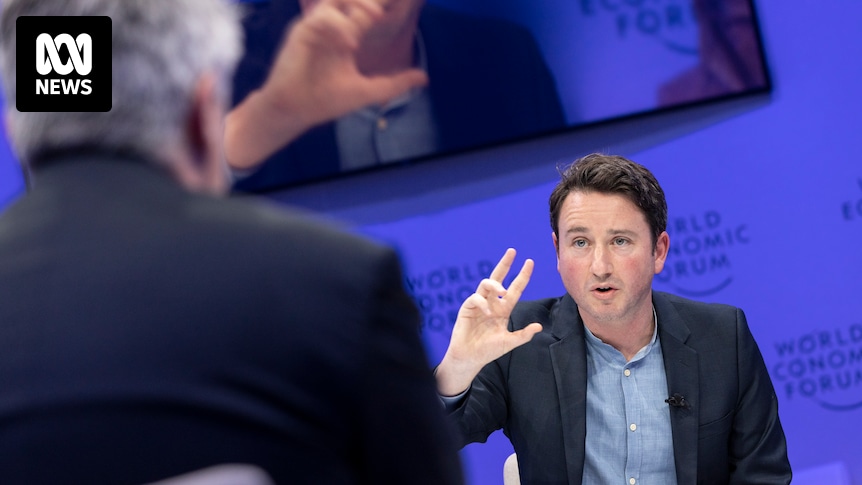
French economist Gabriel Zucman, one of the world’s foremost experts on wealth taxation, raised that question last week.
He said anyone celebrating Elon Musk’s US$1 trillion fortune needed to understand the fundamental tension between extreme wealth and the very possibility of democracy.
“The explosion of billionaire wealth has been one of the defining features of our time,” he wrote.
“It is impossible to understand today’s world if one ignores this upheaval.
“For with the explosion of the wealth of the super-rich has come an explosion of their power. The power to tilt markets, to shape public discourse, to influence policymaking, to stall social progress.”
In a series of tweets, he explained how the world had seen nothing like what it was seeing today.
He said that at the peak of the Gilded Age in the United States, the four wealthiest families in the US could have bought 4 per cent of all of the goods and services produced in the US in a single year.
“This is a Senate of the monopolists, by the monopolists, and for the monopolists!” (Source: ‘The Bosses of the Senate’, by Joseph Keppler (1889), wikicommons)
But today, he said, that same tiny fraction of the US population, the top 0.00001 per cent (which now includes 19 households), could buy 14 per cent of everything produced in the US in a single year.
He published the graph below to show what that looks like.
The concentration of wealth among the top 1 per cent in the US has become extreme. (Source: Gabriel Zucman)
We have to understand what this level of extreme wealth can buy, he said.
“That’s how Musk could buy Twitter on a whim for US$44 billion in 2022. That’s how [Larry] Ellison can buy TikTok, CBS, and CNN today. That’s how billionaires could account for 20 per cent of all political donations in the 2024 election cycle,” he said.
“As the AI boom is minting billionaires by the day and the first trillionaires are now coming into view, one thing is becoming clearer and clearer.
“The battle between democracy and oligarchy will be the defining battle of the 21st century,” he said.
The mind-boggling number
The human brain can’t comprehend how large $1 trillion is. The Verge tried to explain it this way:
“If you were to count out a million seconds, it would take you 11 and a half days,” it wrote.
“A billion seconds would take you 31.7 years.
“But a trillion seconds would take 31,700 years — to reach that point today, you would have needed to start counting around the time that Neanderthals went extinct.”
Zucman said after World War II it had looked, for a time, as though extreme wealth belonged to the past, but it was now “coming back in full force”.
In the 1980s, billionaires used to own wealth equivalent to 3 per cent of the world’s gross domestic product (GDP). Today, it’s 17 per cent.
“And the upsurge is accelerating,” he said.
The world’s wealthiest people are becoming comparatively wealthier. (Source: Gabriel Zucman)
In the 1980s, the 0.001 per cent wealthiest families living in the UK (roughly 200 families) owned wealth equivalent to 5 per cent of UK GDP. Today, it’s 20 per cent.
“In the 1980s, when this movement started, poverty skyrocketed in the United Kingdom,” Zucman said.
“Under Tony Blair’s government, it remained at a very high level. And since then the UK has even seen child poverty rise: more than 30 per cent of children now live in poverty,” he said.
He didn’t mention Australia, but Australia is not immune to these global trends either.
And regarding what’s happening in Australian politics right now with the rise of One Nation and the flexing of billionaire wealth and its links with global influence networks, recent analysis from Alex Fein, the research and intelligence principal at RedBridge Group, is worth reading.
“What Australia is experiencing is a foreign infiltration of our democracy,” she writes.
“[Pauline] Hanson’s November address at Trump’s Mar-a-Lago resort, where she declared Australia an ‘economic and social tinderbox’ to a room of American conservative powerbrokers, was almost certainly more than a mere ‘legitimising’ event.
“The surge since looks less like the natural afterglow that comes from hanging with kindred spirits and more like a blinding flash after a local franchise is formally plugged into a near-infinitely funded global apparatus.”
The threat to the social contract
Mr Zucman is promoting his new book, We Need to Tax Billionaires. It advocates for a minimum tax on ultra-high-net-worth individuals.
It explains how billionaires in France have become so good at using sophisticated tax arrangements to dramatically reduce their income tax bills that if they all packed up and moved to the nearest tax haven tomorrow, the impact on their individual tax bills would be negligible.
“The fact is, they already pay practically nothing,” he writes.
We Need to Tax Billionaires (2026), by Gabriel Zucman.
He says the way in which modern tax systems are rigged in favour of the ultra wealthy is a fundamental violation of the principle that all citizens are equal before the law, which is “a pillar of the social contract in all democratic nations”.
“In France, Article 13 of the Declaration of the Rights of Man and of the Citizen of 1789 states that contributions to the common expenditure must be divided among members of the community according to their ability to pay,” he writes in his book.
“At the very least, this can be interpreted to mean that taxes cannot be regressive: the wealthiest people should not be allowed to pay a smaller proportion of their income than the less fortunate. And yet, any way you slice it, this is exactly what is happening today.”
He explains how modern tax systems have become inequality machines.
“Most people can only save after they pay their taxes. The ultra-rich, once again, are playing a different game: they can save nearly all of their incomes, unburdened by taxation. Which leads to a self-perpetuating cycle. The less tax you pay, the easier it is to accumulate wealth.”
And he warns that this spiral risks causing irreparable damage to our democratic ideals.
“Of course, it is hard to know where the tipping point is past which democracy becomes oligarchy,” he writes.
“Is it when the wealth of the ultra-rich exceeds 50 per cent of GDP? One hundred per cent? Two hundred per cent? When they own not 80 per cent of privately held media, but 100 per cent? Or perhaps when they finally get their hands on our public media?
“Nobody knows the exact concentration of wealth at which the kinds of plutocratic collapse we have seen in history becomes inevitable. The point of no return is anyone’s guess.
“The best we can do is study history and keep a close eye on developments around the globe in order to form an opinion.”
We have the good oligarchs, you have the bad ones
In a recent interview with The Economist, Zucman was asked to explain why he didn’t see much of a distinction between Russian oligarchs and “innovators” like Elon Musk.
Zucman said one of the interesting things about this debate was how every country seemed to think that “their” billionaires were the good ones, while other countries’ billionaires were the bad ones.
“Take Elon Musk,” he said.
“Surely he has contributed to some innovations, but he also got a cabinet position under Trump with DOGE, he plugged the servers of the government with total freedom to slash public spending that he didn’t like.
“The idea that you have the Russian Oligarch model on the one hand and the Musk Model on the other hand, that doesn’t work.
“You can see that all of those billionaires benefit from the way the law is written, they all exert in some ways some influence on policymaking, and very quickly some of them who might not have exerted some influence might be tempted to do that.
“Like Musk, for instance, he wakes up one morning in 2022 and he says, “Look, I’m going to buy Twitter,” and he turns it into a kind of propaganda machine for various ideological causes, like the re-election of Donald Trump.
“You immediately see that the distinction between the good and the bad billionaires is much more fuzzy in practice.”
The USA is no longer a liberal democracy
In March, the V-Dem (Varieties of Democracy) Institute, based at the University of Gothenburg, Sweden, said democracy in the US was deteriorating at an unprecedented rate and the world had never seen as many countries “autocratising” at the same time as during the past few years.
It said democracy was back to 1978 levels for the average global citizen.
It said 74 per cent of the world’s population (6 billion people) now lives in autocracies and only 7 per cent of the world’s population (600 million) lives in liberal democracies.
“The gains of the ‘third wave of democratisation’, starting in 1974 in Portugal, are almost eradicated,” it said.
“The USA [has lost] its long-term status as a liberal democracy — for the first time in over 50 years.”
Professor Staffan I. Lindberg at the V-Dem Institute said Donald Trump’s rapid concentration of power in his second term was especially worrying.
“Several of these countries have the economic and political weight to reshape international organisations, norms, and trade, effectively reshaping the global order. I think we are already seeing the effect of that,” he said.
At the end of the day, Zucman says it wasn’t about whether billionaires were good or bad people, or whether they innovated or not. It was deeper than that.
“There cannot be a law more lenient for the rich and powerful than for the rest of us,” he said.