






Listen to this article
Estimated 4 minutes
The audio version of this article is generated by AI-based technology. Mispronunciations can occur. We are working with our partners to continually review and improve the results.
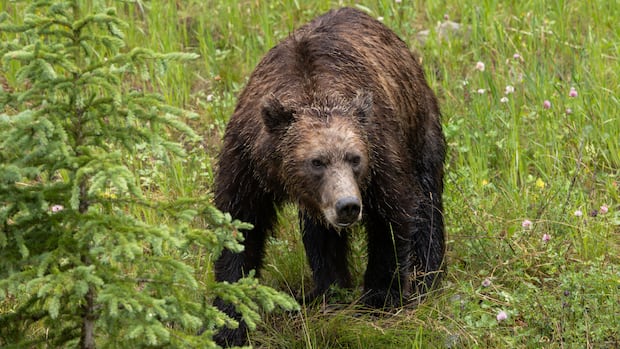
A grizzly bear was trapped and killed Saturday in central Alberta, provincial officials say.
Alberta Fish and Wildlife Enforcement Services trapped the bear near Red Lodge Provincial Park, southwest of Red Deer, according to a statement sent to CBC News.
“The bear was believed to be the same one that had unsuccessfully tried to access a chicken coop on a nearby property on June 3,” the province said.
“Following established provincial grizzly bear response guidelines and after receiving direction from Forestry and Parks wildlife management officials, the officers euthanized the bear that same day.”
The province said “the grizzly bear carcass was gifted to an Indigenous person for traditional use.”
Central Alberta has become bear hotspot
Kim Titchener, founder of Bear Safety & More, says bear encounters in central Alberta have become increasingly frequent.
“I think it is happening a lot more often than people realize in the eastern slopes of the Rocky Mountains, and out into some of the Prairie environments,” she said.
“Grizzly bears, in some places, they are moving back out into habitat that they once lived in, and they’re now being faced with populations of people that are now living there.”
She pointed to two fatal grizzly attacks near the central Alberta communities of Water Valley and Waiparous in 2021.
A grizzly mauling near Madden left a hunter with serious injuries in 2024. DNA testing confirmed that bear was the same one that killed a man near Waiparous three years prior.

WARNING: This story contains graphic images
A Calgary man is recovering from injuries after a dangerous encounter with a grizzly bear. Carmelo Silvestro spoke to the Calgary Eyeopener about what the experience was like and how it has affected him.
“Certainly there are more sightings, and there’s there’s definitely some rising conflicts, which of course is concerning for residents in those areas,” Titchener said.
She said keeping chickens in bear country requires special precautions, like electric fencing around coops.

Mountain View County beekeepers Simone and Steven Dold often have to deal with unwanted guests trying to steal from their hives, like this grizzly bear. The brazen bruin attempted to pull off a late-night heist — but didn’t get the honey it was looking for.
Titchener said other recommendations for people living in bear country include removing bird feeders, keeping compost secure and not leaving dog food outside.
“I think we need to have a bit of a paradigm shift where we just have the assumption that we’re living with grizzly bears in more of these kind of outskirt habitats, and actually manage for it,” she said.
“We can’t just go and kill every single bear,” she said. “They shot the bear and they took it away. What is the resolution here? Is that landowner now going to get an electric mat, electric fence around their chickens, or is another bear just going to show up and now get shot again? So we aren’t really dealing with the problem.”
The province said the grizzly bear was killed based on “established provincial grizzly bear response guidelines.”
Under those guidelines, bears are classified based on factors such as age, whether they have cubs, and their specific problematic behaviour — whether that’s becoming habituated to the presence of humans, learning to associate humans with food, or preying on livestock, pets or humans.
Grizzly bears have been a threatened species in Alberta since 2010.
Hunting grizzlies has been banned in Alberta since 2006, with the exception of harvesting by Indigenous hunters for subsistence or cultural purposes. The province also allows approved hunters to kill “problem” grizzlies on a case-by-case basis through the Wildlife Management Responder Network, introduced in 2024.
The Alberta government’s latest grizzly population estimate is over 1,150 bears, though there hasn’t been a provincial study on grizzly numbers since 2018.
The recovery plan includes protecting and restoring grizzly habitat in mapped-out bear management areas, working to minimize the risk of human-wildlife conflict and human-caused grizzly bear mortality, and raising awareness on bear coexistence through BearSmart programs across Alberta.