








Aboriginal and Torres Strait Islander readers are advised that this article contains the name of an Indigenous person who has died, used with the permission of their family.
The association representing Northern Territory foster carers has voiced its support for proposed changes to child protection laws, arguing the interests of families are currently being put before those of children.
The Foster and Kinship Carers Association NT (FKCANT) was one of 15 non-government organisations to give evidence across two days of public hearings into the Country Liberal Party (CLP) government’s child protection bill this week.
The CLP said the bill, introduced to parliament last month, will put the safety of children above all other considerations — but it has faced strong opposition from Indigenous groups and the NT children’s commissioner.
The changes had been in the works for some time, but the issue has gained further traction following the alleged murder of five-year-old Kumanjayi Little Baby in Alice Springs in April.
While most of the organisations that gave evidence at the hearings opposed the bill, saying it weakened the Aboriginal Child Placement Principle contained in the existing legislation, some supported it.
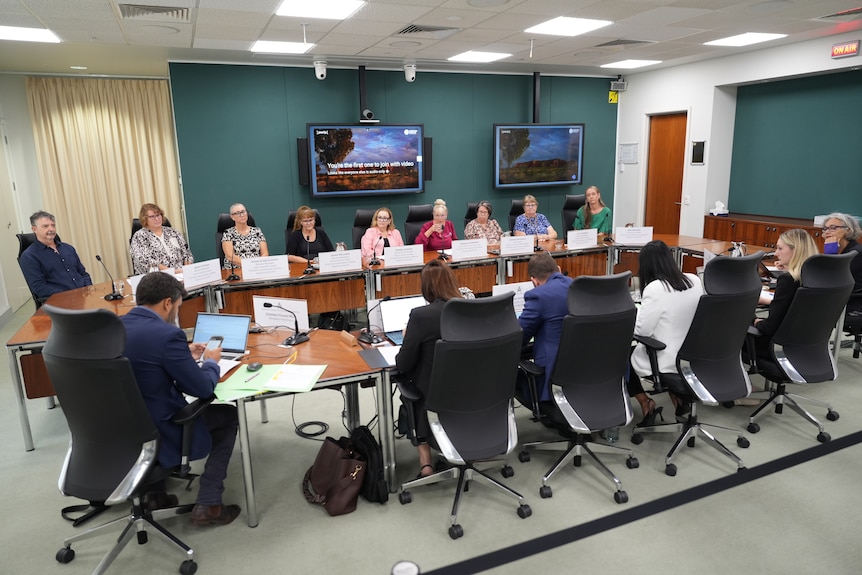
FKCANT staff told the committee the system prioritises the interests of families, rather than the children themselves. (ABC News: Dane Hirst)
Speaking to the ABC on Friday, FKCANT chief executive Amanda Thompson said the best interests of children were not always put first under the current laws.
“From what we’ve observed, sometimes … they choose culture over safety,” she said.
“I don’t think safety is acknowledged strongly in current legislation.“
Foster carer of 17 years and FKCANT board member Jackie Williams said, in her experience, families were prioritised over children.
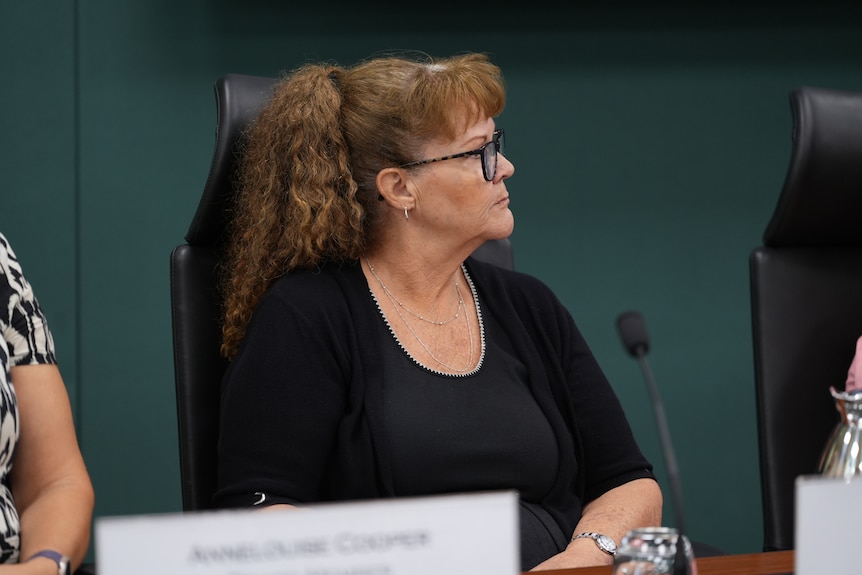
Jackie Williams has been a foster carer for almost two decades. (ABC News: Dane Hirst)
“When a child comes into care, their family’s put first, and that’s been my experience for 17 years, that the child is not first,” she said.
“We need to go back to the safety of the child.“
During the hearings, FKCANT representatives said children in foster care wanted long-term stability.
They said it was not uncommon for children to be moved from long-term carers to be reunited with their biological family, only to be returned to foster care after allegations of abuse.
Foster carer Steve Atherton said when children returned to the system, they were also often then placed with new carers.
“They’re moving from a stable household … and then, if that breaks down, they are moving somewhere else that they don’t know and are going through it all again,” he said.
“We have a little girl who screams most nights because she doesn’t feel like she’s safe.
“She’s been with us for four years and she’s still scared, asking me what time the bad people come out at night-time — it’s heartbreaking.”
Trailblazing lawyer supports bill
The NT’s first female barrister, Sally Gearin, also threw her support behind the bill while speaking at the hearings on Thursday.
She said the current legislation did not clearly state that the safety of children needed to be paramount.
“If it did, there would be no need for [the changes],” Ms Gearin said.
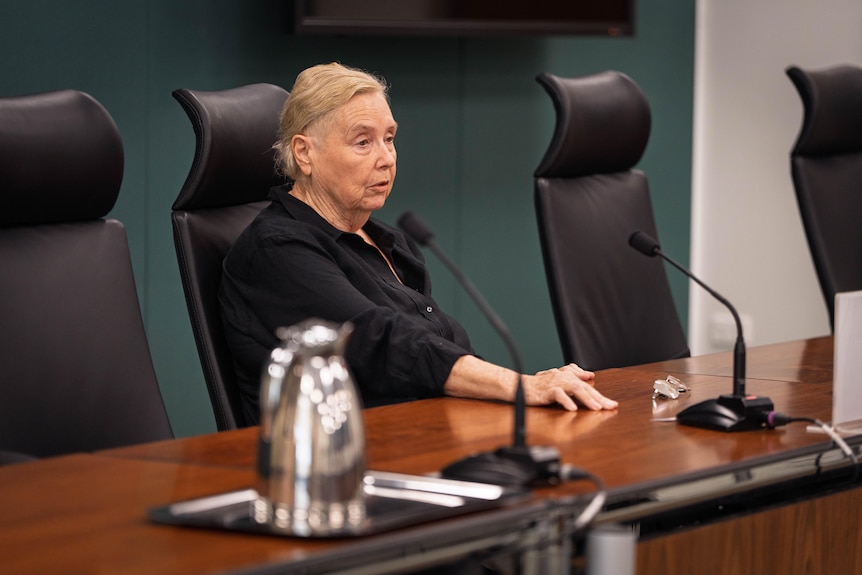
Sally Gearin provided the committee with insights based on her legal experience. (ABC News: Marcus Kennedy)
Ms Gearin pointed to the example of Kumanjayi Walker as one case where she believed the safety of a child was not prioritised.
Ms Gearin was an adviser to NT Child Protection Minister Robyn Cahill for three months, ending in April.
Mr Walker was killed in a police shooting in Yuendumu in 2019, with the officer responsible cleared of all charges and an inquest later finding Mr Walker had grown up in an environment plagued by poverty and health issues.
“The first thing to determine — is this child safe?”
Ms Gearin said.
“Now, if somebody had gone into the situation with Kumanjayi Walker, they would not have been able to say that child was safe.”
Current laws defended
Of the 150 submissions made to the inquiry, the vast majority opposed the CLP’s proposed changes and many argued the current laws did prioritise safety above all else.
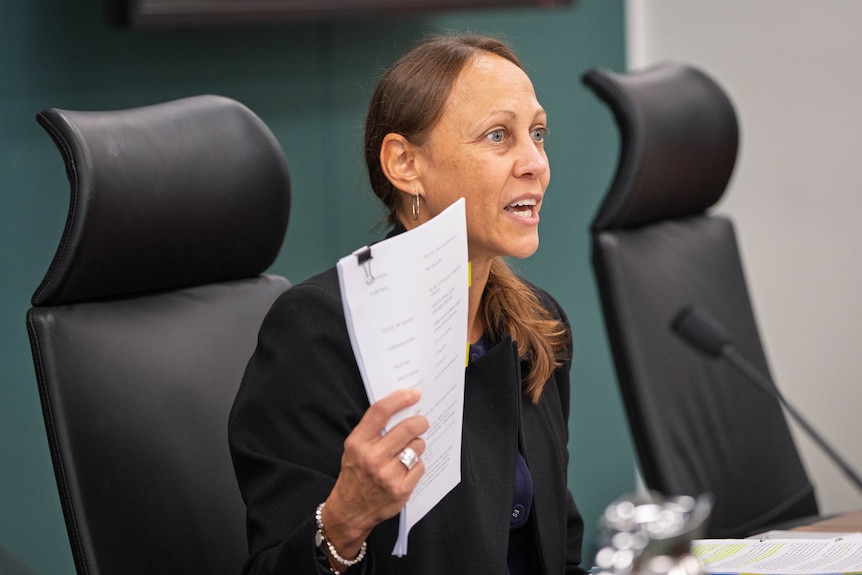
Shahleena Musk says data shows many NT children living in out-of-home care are exposed to harm. (ABC News: Marcus Kennedy)
NT Children’s Commissioner Shahleena Musk pointed to section 10 of the current legislation, which she said makes “the best interests of a child the paramount consideration in every decision”.
“The need to protect the child from harm and exploitation is already an existing — and the paramount — consideration in law,”
she said.
“There is no aspect of the current act, or in the Aboriginal Child Placement Principle, that accepts unsafe circumstances for any child.”
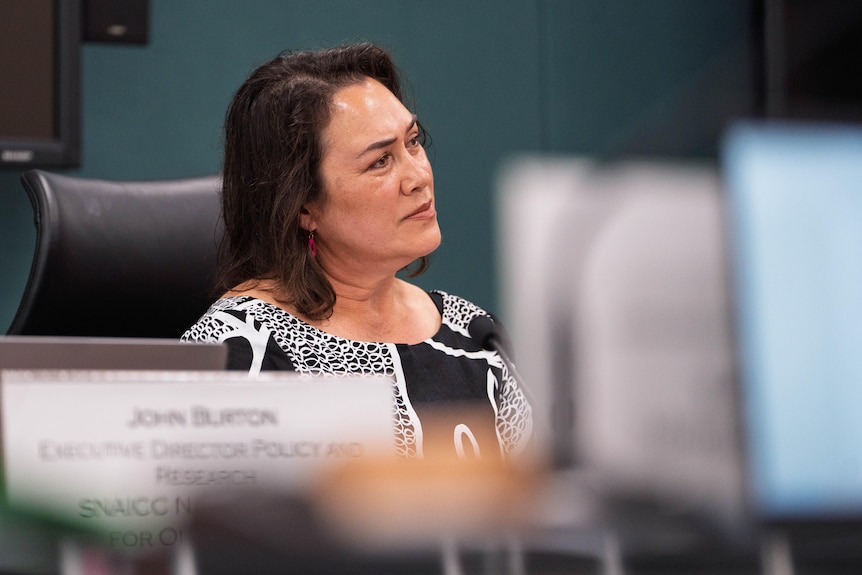
Catherine Liddle appeared before the committee on behalf of SNAICC. (ABC News: Marcus Kennedy)
Chief executive of SNAICC, the peak body for Indigenous children, Catherine Liddle, also backed in the Aboriginal Child Placement Principle, which sets a hierarchy of Indigenous placements before a non-Indigenous carer should be considered.
“What the principle categorically doesn’t do is prioritise culture over safety — to suggest that it does is ridiculous, misguided and misinformed,”
she said.
Ms Musk also said the principle was not being “actively applied in practice” in the Northern Territory, pointing to SNAICC’s submission to the inquiry which stated 74 per cent of Indigenous children in care are placed with non-Indigenous carers.
A report by the Office of the Children’s Commissioner released this week revealed almost one-third of children in care in the NT were allegedly harmed in 2024-25.
Ms Musk became emotional when speaking about the impact on Indigenous children in care who lose touch with their families.
Loading…
“They all spoke about not knowing who they are, not being able to speak their language, being ashamed because they weren’t able to perform their ceremony because they were disconnected from family,” she said.
“I’m sorry for getting emotional, but that’s what’s missing in this conversation.“
While the amended legislation would retain provisions relating to the placement of Indigenous children “in close proximity to the child’s family and community”, the Aboriginal Child Placement Principle refers to a specific set of guidelines developed by SNAICC, which are incorporated into the NT’s current act.
The Legislative Scrutiny Committee will now prepare a report for parliament based on the evidence submitted, before the bill returns to be debated.