

When Bundaberg Mayor Helen Blackburn compared the cost of the city’s rate rise to that of a loaf of bread or block of cheese per week, the backlash was swift.
AI was used to generate images of mountains of the grocery items outside the council offices, as well as a South Park-inspired parody song.
A screenshot of an AI-generated parody video about the Bundaberg Regional Council rate rises. (Supplied: Facebook)
The minimum rate rise of 8.38 per cent scraped through council with a 6-5 vote, before the budget meeting was abruptly adjourned for a week after the first motion was voted on.
As councils across Queensland begin delivering their budgets, they are juggling their own rising costs with the increasing squeeze on ratepayers’ cost of living.
Cr Blackburn said two years of zero per cent rate rises in 2020 and 2021 had put the council on a backwards trajectory, which had been hard to turn around.
“Even with what we did last year and what we’re doing this year, we’re still looking at a good 10 years before we get absolutely rock solid again,”
she said.
It is not just past decisions and financial instability the council is battling with. A fuel crisis, a devastating major flood in March and continued population growth are all competing for budget consideration.
Helen Blackburn says rate rises are necessary to change the financial trajectory of the council. (ABC News: Grace Whiteside)
“The fast growth of humans into our region means infrastructure needs to be upgraded and it should have been upgraded 10 years ago before the people came, so now we’re sort of behind the eight ball,” Cr Blackburn said.
Growing demand for relief
While council rates generally rise every year, when it is combined with the ongoing cost-of-living crisis and fluctuating fuel prices, extra costs are getting harder to absorb.
Queensland Council of Social Services (QCOSS) executive director of research and policy Bronwen Kippen said support services had seen a growing demand for food relief and fuel vouchers.
“The cost of living is so high,” she said.
“That is really pushing families into a lot of stress in terms of meeting their basic needs.“
Ms Kippen said people were delaying having children, restructuring their households to afford rent and moving back in with family members or sharing with other people.
“We’re definitely seeing people making a lot of adjustments to try and accommodate the cost of living because they can’t afford to have a lot of choice.”
Infrastructure costs ‘skyrocket’
The Fraser Coast is the fifth-fastest-growing local government area in Queensland, but Mayor George Seymour said more ratepayers did not necessarily ease the financial burden on councils.
George Seymour says an increase in ratepayers doesn’t offset the cost of the infrastructure needed to support new residents. (ABC News: Chris Gillette)
“All the materials, all the works that we have to do for the infrastructure for our growing community have just skyrocketed,” Cr Seymour said.
Fraser Coast Council delivered a budget with an average general rate increase of 5.08 per cent and a new $10 million deficit.
The rise equates to between $3.60 and $7.50 more each week, but, for Fraser Coast home owner Rebecca Matthews, the extra funds are not so easy to come by.
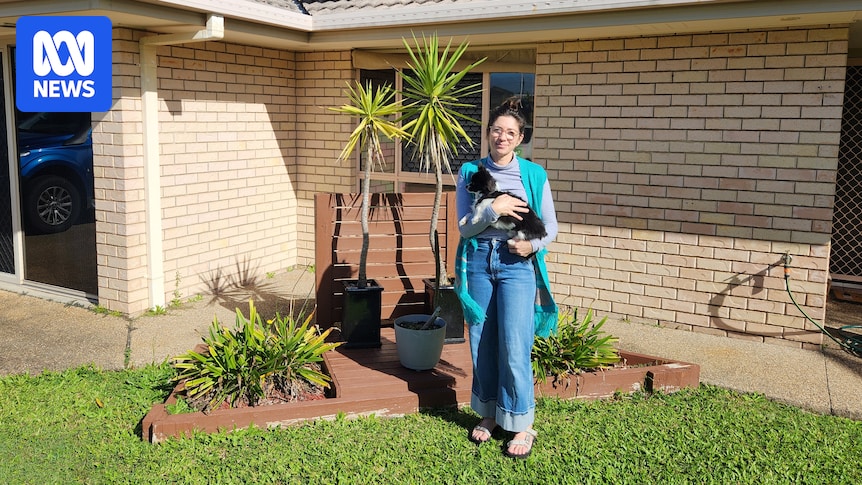
Ratepayer Rebecca Matthews says it’s getting harder to absorb rising costs. (ABC Wide Bay: Peta Johansen)
Ms Matthews said she understood the need for a rate increase but was frustrated at the extra pressure it would put on her household.
“I’m looking at the costs of fresh fruit and vegetables that I probably wouldn’t have been doing so closely,” she said.
The single mum, who is working and studying, said after years of cutting back, there was not much flexibility left in her budget.
“We’re participating in less extracurricular activities, for example,” she said.
“I get a play sports voucher for one sport, but for him [my son] to do other activities, it’s just costing me more money that needs to go to electricity or rates or whatever.”
Can’t ignore increasing costs
Further west, residents of the North Burnett are bracing themselves for what is to come.
Last year, council delivered a 25 per cent rate rise, the largest in the state, catching many residents by surprise.
Les Hotz says a rate increase in the region won’t be the 17 per cent initially forecast. (ABC Wide Bay: Nikki Sorbello)
Forward forecasts showed the council would need to increase this year’s rates by 17 per cent, but Mayor Les Hotz said that was an unpalatable amount.
“I don’t believe our increase will be anything like that, but we’ve got to balance our budget with the increases we’ve experienced,” he said.
“Just like a normal household, things are going up for council and we can’t sit back and ignore that.”
Alongside rising costs, the council struggles without a major centre, instead serving five spread-out towns.
“We’ve tried to explain that we cannot provide services such as five swimming pools, parks and gardens, town halls, a road network of 4,200 kilometres and different services people are looking for, without increasing our charges,” Cr Holtz said.
Peta MacRae says aging infrastructure is a problem residents don’t see. (Supplied: Peta MacRae)
In the state’s north-west, Mt Isa is struggling with a declining population and rising costs — primarily wages, electricity and diesel.
Renewables have helped bring the cost of electricity down, with the town not connected to the national energy market, but its infrastructure is aging.
“We’ve got sewerage and water systems under the ground that no-one can see, but there are going to be dire consequences if anything happens,”
Mayor Peta MacRae said.
“So, we need to be going through and replacing all of the essential infrastructure that the community doesn’t have an understanding of.”
There is also a large portion of the town that are not ratepayers, with 220 government houses and 43 per cent of the workforce living elsewhere.
“There are people that are flying in and out, making money and spending it along the coast,” Cr McRae said.
Despite the challenges, the council has tried to keep rate rises in line with inflation.
“It’s just a matter of living within your means, just having to make tough decisions about what you can afford, what you can’t afford, maybe not investing this time around,” she said.
Calls to increase funding
Councils say they are constantly trying to do more with less, receiving 3 per cent of federal taxation revenue.
Of that only 0.49 per cent is provided through Federal Assistance (FA) Grants and is “untied”, not required to be spent on a specific project like roads, or have matched funding.
The Local Government Association wants to see FA Grants increased to 1 per cent.
Matt Burnett says councils need more “untied” funding. (Supplied: Gladstone Regional Council)
Queensland and National Local Government Association president Matt Burnett said it had been a tough few years for councils balancing rising costs and high community expectations.
“When a service is no longer provided by the state or federal government, or by the private sector, the local council is usually the one left to pick up the pieces,” Cr Burnett said.
“The cost shift onto councils is huge, and that’s why the ratepayers are usually left with the burden.”
The federal government has launched an inquiry into local government funding and fiscal sustainability.
Cr Burnett said the LGA was lobbying for an increase to the FA Grants.
“What we need is increased untied funding so councils can use that on things like community halls, on civic centres, on parks and gardens and sporting fields, those sorts of things that every community needs.”
A spokesperson for the Minister for Regional Development, Local Government and the Territories, Kirsty McBain, said while recognising local government funding was the primary responsibility of the states and territories, the committee was examining all areas of financial assistance councils received from the commonwealth.
“We remain committed to continuing to support councils through Financial Assistance Grants. In the budget, we increased FA Grants by over 5 per cent to $3.6 billion,” the spokesperson said.
The federal government inquiry will hold public hearings in Canberra this week.