









A charity that supported 90 young people with disability to become workplace-ready last year will close its National Disability Insurance Scheme (NDIS) employment service.
Oli Evans joined the ORCA Project, run by Wesley Mission Queensland, about six months ago after leaving high school.
The 18-year-old has autism and a rare chromosomal condition that impacts his cognition, speech, motor skills and overall health.
The news of the program’s closure has been difficult for Mr Evans to process. (Supplied: Natalie Evans)
His mother Natalie Evans said the Brisbane-based project had been “life-changing” for her son, who had dreamt of working in data security.
“He’s got these splinter skills in IT where he can do amazing things,” she said.
“But he’s also got some real challenges so we were trying to find through the ORCA Project where he could use his skillset”.
The project began in 2018, offering a two-year post-school training program that supports young people with disability with training and work experience across three different locations.
The ORCA Project supported more than 90 young people with disability in 2025. (Supplied: Wesley Mission Queensland)
Last year the NDIS service supported 90 young people with disability with more than 300 work experience placements, according to the charity’s annual report.
The program’s participants use their NDIS funding to be a part of it.
In May, the charity told participants and their families the project will end on June 26 due to the “increasingly complex” NDIS environment.
The national scheme is undergoing an overhaul aimed at reducing its $50 billion a year costs, with the federal government announcing cuts in April.
Ms Evans had been feeling hopeful about her son’s life, but since hearing the ORCA program will be ceasing, she said she had “lost hope”.
Mr Evans’s mother had hoped the program would help him get a job. (Supplied: Natalie Evans)
“My heart is broken not only for Oli, but for all the other families”.
It has been difficult for her son to process the news.
“I don’t think it’s quite hit him yet,” she said.
“It’s hard sometimes for him to find his words and all the right words in the right way, but he said things like, ‘I’m so disappointed, I’m so sad.'”
‘What are we supposed to do now?’
Since Claire Rusterholz began attending the ORCA Project earlier this year, her confidence has grown.
Claire Rusterholz is currently repeating grade 10 while attending the project. (Supplied: Jenny Roberts)
The 16-year-old has Williams syndrome, an intellectual disability that impacts around one in every 10,000 people worldwide.
She has been attending the project while she finishes repeating grade 10.
Her mother, Jenny Roberts, said she had signed her daughter up for the program to help her get a job.
During one of her work placements through the project, the high schooler learnt how to catch a train.
“That was really good, and we really noticed increasing confidence for her around that,” Ms Roberts said.
Jenny Roberts says she and her daughter Claire Rusterholz are completely devastated. (Supplied: Jenny Roberts)
She said they were both shocked and devastated after hearing the program was ceasing.
“We had no idea that the program was in difficulty,” Ms Roberts said.
“I immediately wrote back to them and said, ‘Well, what are we supposed to do now?'”
She said her daughter was worried about her future.
“Claire is not work ready,” Ms Roberts said.
“She needs a bit of help to get work. She can’t compete in an open job market.”
Claire Rusterholz competed at the International Cheer Union World Championships in the United States this year. (Supplied: Jenny Roberts)
Wesley Mission Queensland provided participants a list of different organisations that offered similar programs.
But Ms Roberts said the other programs were more expensive than the ORCA Project.
“We’re going from being able to afford two days a week for two years to being able to afford one day a week for less than six months,” she said.
Challenges across the sector
A Wesley Mission Queensland spokesperson said it was “difficult decision”.
The not-for-profit organisation told the ABC in a statement it regularly reviewed its services to ensure they were “balancing impact with long-term sustainability”.
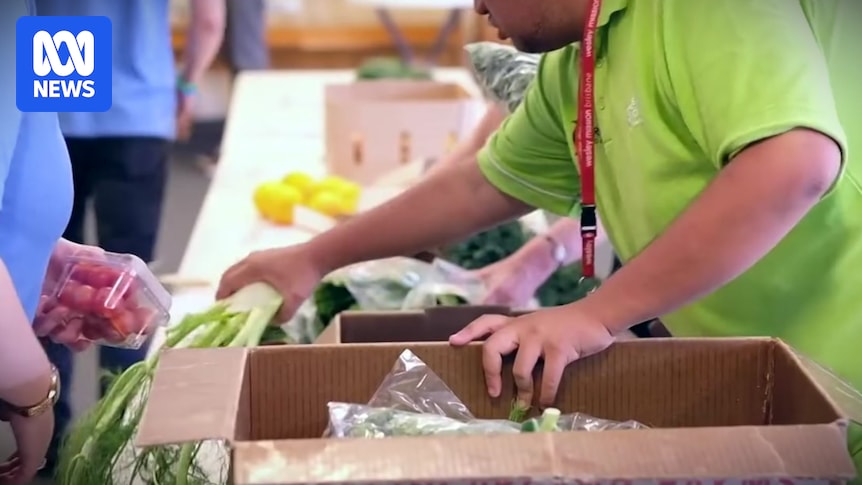
The ORCA Project supported people with disability with work placements. (Supplied: Facebook)
“The NDIS environment is becoming increasingly complex, with rising costs and ongoing changes to funding models, compliance and regulations, making long-term sustainability a significant challenge across the sector,” the spokesperson said.
“We are saddened by the impact this closure and other changes across the sector are having on families and young people with disabilities,”
The charity had hoped to transition the service to another provider to allow participants the opportunity to continue with the program.
“Despite our best efforts this did not proceed,” the spokesperson said.
“All participants have been offered support to identify other opportunities and suitable training programs”.
A spokesperson for the National Disability Insurance Agency (NDIA), which implements the NDIS, said the scheme funds eligible individuals to have the choice and control over services and that it does not directly fund providers.
“The NDIS supports thousands of people with a disability to build their work capacity and their skills, to find and keep a job,” the spokesperson said.
Since July 2024, the number of participants receiving funding towards employment support had increased by 58 per cent.
‘There’s nothing much coming up’
Ms Evans, an occupational therapist, said she is concerned about the wider disability support sector.
Natalie Evans, Oli Evan’s mother, says she is heartbroken the program is ending. (Supplied: Natalie Evans)
“With the NDIS funding cuts, there’s nothing much coming up,” she said.
“I really would like the NDIS to provide proper funding to invest in these services that are actually delivering outcomes.”
Ms Evans is now considering reducing her work hours to be with her son if she is unable to find an alternative employment support program.
“Oli isn’t someone that could just go along to a normal disability employment service,” she said.
“He really needs a bit more support to transition into employment”.