









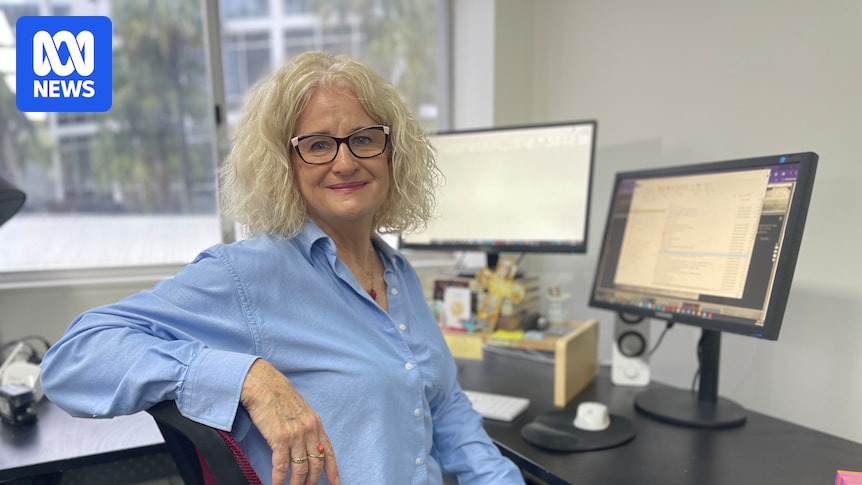
Business owner Casey O’Hare has mixed feelings about the upcoming changes to superannuation payments, known as Payday super.
Payday super reforms take effect from July 1, 2026, where businesses will be mandated to pay their staff super at the same time as their salaries, rather than quarterly.
“From a social justice point of view, I totally agree with the idea that people should be paid their entitlements on their pay day,” said Ms O’Hare, whose marketing agency is based on Queensland’s Sunshine Coast.
“Putting my business hat on, it is a little bit difficult because apart from processes, there’s actually more cash going out the door every fortnight … we have to have that cash.“
Despite diligent bookkeeping, Ms O’Hare said cash flow was often out of her control.
“Twenty-one years in business, I’ve mostly been paid for time in arrears,” shesaid.
This means she is paid after the work or service has been completed, rather than before.
“So that means that I could be paying someone at the beginning of May, paying their wages and super, and not being paid myself for that money until the end of June.”
The goal of Payday super is to address unpaid or late super contributions, also known as wage theft.
A win for employees
For Jarod Graham, who missed out on nearly $10,000 at his first job out of high school, he said these changes were a win.
Jarod Graham missed out on nearly $10,000 in unpaid superannuation from his former employer. (ABC News: Che Chorley)
“When super is paid at the same time as wages, workers can immediately see whether their employer is meeting their obligations,” he said.
“It improves transparency and accountability, and it reduces the risk of unpaid super going unnoticed for long periods of time.”
Despite trying, he said he was never able to recover his unpaid super.
“Those funds have missed out on around eight years of investment growth and compounding.
“If this system had existed when I was younger, I may have identified the missing payments much earlier.“
Deputy commissioner of the Payday Super Program at the ATO, Emma Rosenzweig, says every year, about $6.2 billion goes unpaid in superannuation.
“We want to make sure that employees are getting the retirement savings that they’re owed,” she said.
“We think that smaller more frequent amounts of contributions will really help businesses stay on top of their obligations and keep themselves on track.”
Many small businesses under pressure
While most businesses support the introduction of Payday super, 87 per cent say it will put pressure on cash flow, with more than half citing customer payments as the biggest challenge, according to a survey from accounting platform Xero.
Angad Soin says many small businesses believe they will have to rely on personal savings for super changes. (ABC News: Adam Wyatt)
“If a customer pays late or a new invoice comes in late or revenue’s a little bit lumpier than they would originally hope, that buffer [of quarterly] allowed them to smooth out that cash flow,” said Angad Soin, global chief strategy officer at Xero.
On average, Mr Soin says small business owners are paid seven days late by clients.
“A third think they’re going to have to dip into their personal savings, close to a third may feel like they have to borrow to be able to make these payments,”
he said.
Kim Owen-Jones says many small businesses are not prepared for the Payday superannuation changes. (ABC News: Steve Martin)
The general manager at software company MYOB, Kim Owen-Jones, says about 60 per cent of small businesses pay their staff weekly, adding further pressure to cash flow.
“Even outside of Payday super, cash flow often is one of the things that we hear from small businesses that is top of mind for them, so I think this just puts further pressure on that.”
She said about 15 per cent of small businesses — about 400,000 companies across the country — were still unaware of the change taking place from next week.
“There’s still a job to be done, so I think first off is awareness, then education about what it means for a business … I think that needs to be the focus of government and also businesses like ours that do support the success of small business.”
Already implementing the change
Emma Rosenzweig says the response to Payday super so far has been positive (ABC News: Ben Pettitt)
The ATO’s Emma Rosenzweig said the response so far had been positive.
“We have actually heard from a number of small businesses who are already paying super contributions on pay day.
“[They say] smaller, more frequent contributions actually do help them manage their cash flow and stay on top of those obligations.”
Small business owner Rebecca Foley decided to implement the Payday super changes earlier this year to make sure she was prepared.
Rebecca Foley says she has already made changes to her small business in preparation for the Payday super changes. (ABC News: Michael Lloyd)
“We submit our super and just test all the systems, make sure that nothing’s really missing, no details are not in the system,” she said.
“We’re tightening up our cash flow visibility, so we’re doing regular meetings weekly, sitting down with the staff to look at what wastage we’ve got, what events might be coming up, how we can adjust.”
Ms Foley, whose hospitality businesses are based in Brisbane, said it has been a particularly difficult time for small businesses.
“We are all doing our best to be prepared, but it is a really intense time to be running a small business with the pace at which you need to move with a lot of regulatory compliance and changes,” she said.
“Especially given the circumstances globally that are impacting, just with the prices moving daily, it’s concerning.“
This new legislation is taking effect after three consecutive years of superannuation contribution increases, from 10.5 per cent in 2023 to 12 per cent of employee wages now.
Tax expert Rick Kimberley from accounting firm RSM Australia said the reforms would reduce the amount of unpaid super each year, but there would still be challenges.
Rick Kimberley says Payday super will help tackle wage theft, but it will not fix it completely. (ABC News: Darryl Torpy)
“A number of underpayments of superannuation are actually driven by technical complexity,” he said.
“I don’t think that in itself the Payday super reforms have actually made the complexity around paying people correctly around superannuation necessarily easier.”
But Mr Kimberley said they would hold businesses more accountable.
“Through greater transparency and visibility over employee pay, I think it’s more likely that we’ll be able to detect some of that technical non-compliance in the first instance.”
Start working on the changes now, expert suggests
He encouraged businesses to get together now, ahead of the changes next month.
“Proactively get together and build a plan around what the changes are going to mean … who it’s going to involve,” he said.
“Get the right people in the room and work out solutions around how they’re going to be able to manage this pretty significant change.”
In a statement to the ABC, a spokeswoman for Assistant Treasurer and Minister for Financial Services Daniel Mulino said: “The ATO has been working closely with business on the reform and has indicated it will adopt a transitional compliance approach in the first year.
“Employers who make a genuine attempt to comply — even if they face technical issues — will not be targeted by ATO compliance.
“[The ATO] cash flow kit has tools and resources to help manage cash flow.”