







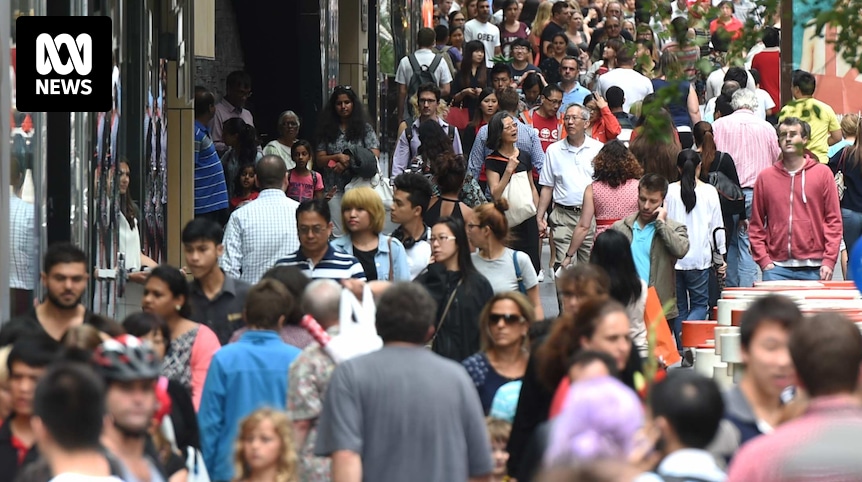
Net overseas migration remained above 300,000 last year, fuelling opposition claims Labor has locked in an unsustainable new normal despite the number of arrivals continuing to fall.
The figures, released on Thursday, showed 301,000 people landed in Australia in 2025, almost unchanged from the previous year’s net migration intake of 306,000.
It is the lowest rate of net overseas migration (NOM) since a peak of 556,000 following the re-opening of borders after the COVID-19 pandemic in 2022.
But migration has consistently remained above the government’s expectations, and still well above the long-term forecast of about 225,000 a year.
Labor is under pressure to reduce migration to Australia, with Pauline Hanson’s One Nation surging in popularity on a campaign of significantly cutting migration rates.
The Coalition is also pushing for cuts, with Shadow Immigration Minister Jonno Duniam saying the government was failing to deliver a meaningful reduction.
Jonno Duniam says migration above 300,000 is unsustainable. (ABC News: Matt Roberts)
“This is not a one-off number. Net overseas migration has now remained above 300,000 for 14 straight quarters,” he said.
“Labor has been told many times that its migration settings have been unsustainable. But it has ignored that advice, lost control of the system, and every new release of data confirms the same problem.”
The data has landed in a politically charged moment with Senator Hanson making immigration a centrepiece of her address at the National Press Club on Wednesday.
Pauline Hanson told the Press Club multiculturalism was a “failed policy”. (ABC News: Adam Kennedy )
Senator Hanson focused on the heightened levels of new arrivals to Australia after the pandemic, which she said was to blame for housing pressures and the degradation of social cohesion. One Nation’s policy is to cap visas at 130,000 a year, and deport some visa overstayers.
The government, while agreeing to reduce migration numbers, is also juggling worker shortages in critical areas where skilled migrants are needed to fill workforce gaps.
Immigration Minister Tony Burke said the government’s approach was “sensible” and “measured” and would continue to prioritise Australia’s need for skilled workers.
Tony Burke insists the government’s approach is sensible. (ABC News: Callum Flinn)
“The numbers of temporary visa holders and international students also continue to fall, as we prioritise the skills that we need to care for our sick and elderly and build homes,” he said.
Treasurer Jim Chalmers defended the figure and said net arrivals had been in decline since the post-pandemic peak.
He said the migration rate had moderated “substantially” and pointed to the decline from the previous quarter.
“It was already down 45 per cent since its peak, and is lower again today,” he said.
“The facts clearly show that Net Overseas Migration is coming down under Labor and Treasury is forecasting it to go even lower in the coming years.”
Government admits migration must consider housing supply
The fall in overseas migration came as the total population increased by 1.5 per cent in 2025, rising by 412,500 people.
The data from the Australian Bureau of Statistics shows international student numbers have declined slightly and the number of people with temporary visas has reduced by 10 per cent over the year.
Last month’s federal budget forecast net overseas migration would increase by just under 1 million people over the next four years, higher than previously expected.
The government also revised up its migration forecasts by 55,000 people across the current and next financial year.
At the time, the treasurer attributed the increase to temporary migrants remaining in Australia for longer, rather than a rise in new arrivals.
Opposition Leader Angus Taylor has foreshadowed sweeping cuts to migration under a Coalition government, arguing population growth should not outpace housing construction.
On Monday, Mr Burke conceded migration must keep pace with housing supply.
“But if you go at migration the wrong way, then you can actually make the housing situation worse,” he told Sky News.
“We need to keep doing what we can to increase housing supply, and we need to make sure migration is tailored to what we can do there.”