



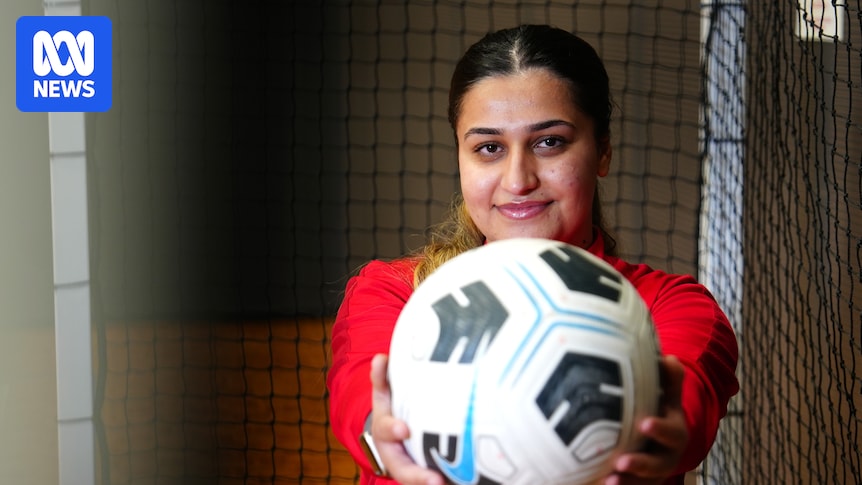
Mayada Ali is passionate about soccer, but her journey to play and coach was not always easy.
Her age, gender, religion and background created barriers to her playing the sport she loves.
“But for me, when you have passion about something, just do it.”
Kurdish woman Mayada Ali spent six years in a refugee camp in northern Iraq before coming to Australia as a refugee. (ABC News: Mya Kordic)
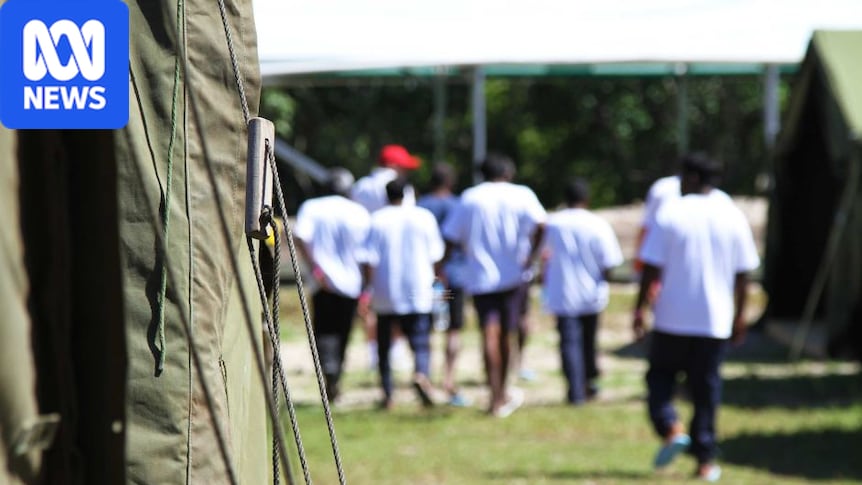
This year is her third time participating in the Freedom Cup, a soccer tournament celebrating Refugee Week.
The competition brings refugee communities together in Perth’s northern suburbs for a friendly football competition, aiming to unite them through sport.
The Freedom Cup and Family Fun Day was held at Mirrabooka in Perth’s north as part of 2026 Refugee Week. (ABC News: Mya Kordic)
Ms Ali said the tournament builds connections and new friendships.
“Soccer always brings all of us together in a field, and everyone is equal, and we all bring our unique ways from different backgrounds,” she said.
“It’s a special thing and it really makes the community grow stronger and stronger and understand each other more.“
Ms Ali, who is Kurdish, lived in a refugee camp in northern Iraq for six years as a child before her family came to Australia in 2019.
“What I’ve been through, it makes me the person who I am today, stronger, have more patience,” she said.
“It was a … really, really hard time and we saw a lot of stuff that the child should not see during the war.”
‘I lost myself’
The 21-year-old’s passion for soccer stemmed from her younger brother’s love for the sport.
His dream was to play in the 2026 World Cup.
Mayada Ali’s love for soccer stemmed from her late brother’s love for the sport. (ABC News: Mya Kordic)
When her brother Salih died from cancer, Ms Ali said she was determined to continue his dream in a different way.
“When he passed away, because our relationship was too close to each other, I lost myself,” she said.
“But I never gave up because I had a vision that I have to continue my brother’s dream, and the way the coaches that time supported me, and they made me love soccer more and more.”
Universal language
Eli Nkindi started playing soccer as a young boy in a refugee camp before coming to Australia at nine years old.
Eli Nkindi says soccer is a big part of his livelihood. (ABC News: Mya Kordic)
He said soccer was universal amongst refugee communities.
“Football is always a way of expressing ourselves through activities and just another way to kind of enjoy being around other people,” he said.
“So it’s been a big part of our livelihood, safe to say, for nearly every refugee, football’s been an important game.”
Eli Nkindi says the tournament brings people together. (ABC News: Mya Kordic)
Coaching the Burundi men’s team, Mr Nkindi says he enjoys seeing his players have fun during the Freedom Cup.
“It’s a good day out for everyone to enjoy the football and meet new people, meet new faces and just connect with everyone and get together,” he said.
A million stories
Minister for Multicultural Interests Tony Buti said the Cup celebrated the contributions refugees have made to WA.
“It’s important because it’s a celebration of diversity, also encouraging and supporting people coming together and that we live in a cohesive, harmonious society,” he said.
Women watch a football match at the Freedom Cup as part of Refugee Week in Mirrabooka. (ABC News: Mya Kordic)
The 2026 theme for Refugee Week is “a million stories”, with 1 million Australian humanitarian visas tallied since World War II.
“The people that come to Western Australia, refugees, asylum seekers, they all have different stories to tell,” he said.
“Some have had long journeys, some very difficult journeys.”
The gathering connects families to honour the resilience and contributions of refugees. (ABC News: Mya Kordic)
As a women’s street soccer coach for the Big Issue team, Ms Ali said her group had become more than a soccer team.
“For me, this team is my second home … I think I grew up with them, I was 18 when I started and I’m 21 now,” she said.
“We are growing up as a family each day.”