








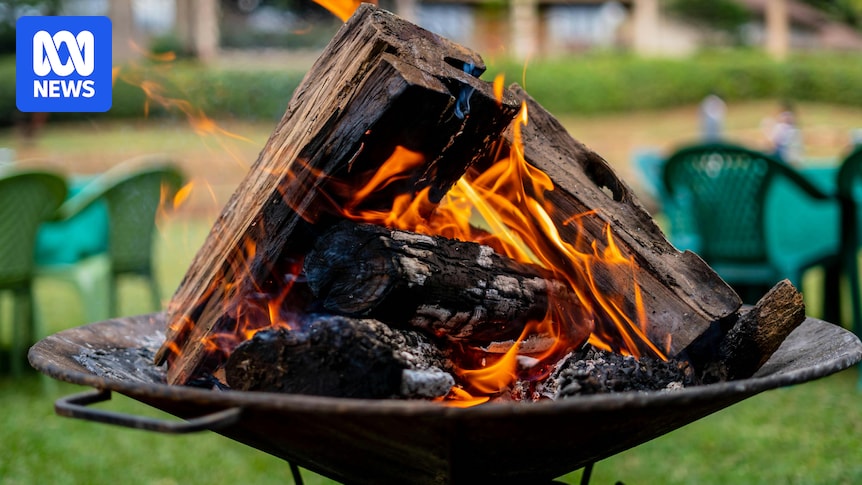
With winter in full swing, a cosy night with friends or family at home around a fire can be a great way to enjoy the colder weather.
But there are some rules when it comes to using fire pits and things to be cautious about, including open-air fires being a nuisance to your neighbours.
We break down some key considerations.
Am I allowed to have a fire pit?
Whether you can have a fire pit in your backyard depends heavily on where you live and current fire restrictions.
Fire departments in each state and territory will have their own fire ban map, or you can contact your local council for information.
Trevor Owen, chief officer at Victoria’s Country Fire Authority, says you cannot have a fire pit on a total fire ban day.
During a fire danger period (when CFA restricts the use of fire in the community), he says there are some conditions on where you can use them.
“The fire danger period is when most people use fire pits, on those semi-warm nights, coming into spring or in autumn.”
Mr Owen says the wind should be no more than 10 kilometres per hour, “only a subtle breeze”.
Other considerations for fire pits, braziers and chimineas from the CFA include:
- If leaves are moving around in the wind, do not light the fire.
- The fire must be lit in a properly built fireplace of stone, metal or concrete. A commercially produced fire pit, chiminea or brazier is considered to be a properly constructed fireplace.
- The fire must be no larger than 1 metre by 1m.
- The area 3m around and above the fire must be clear of anything that can burn. For example, decking, roofing, trees and shrubs.
- Never leave the fire alone. A person who can put out the fire must always stay by the fire.
- The fire must be put out completely using water before you leave.
Outside of fire danger periods, rules fall to municipal by-laws.
For example, Brisbane City Council permits braziers and fire pits in a residential area as long as:
- Smoke doesn’t impact neighbours
- The fire pit sits off the ground
- Fire doesn’t present a safety risk for people or property.
What kind of fire pit can I have?
There are ways you can keep your fire pit safe, and limit smoke being a nuisance to your neighbours. (Pexels: Matheus Bertelli)
Consumer advocacy group CHOICE has compared different types of fire pits.
Cast-iron
A round, rustic-looking pit known to be hard-wearing, durable and long-lasting. They’re heavy and can leave oxidation marks on supporting surfaces.
Steel
One of the cheapest types of fire pit, they’re available at hardware stores. They can be built to look like cast-iron or stainless-steel pits but are prone to rust and deteriorate much quicker than cast iron or stainless steel.
Stainless steel
These work in a similar way to cast-iron fire pit without the rustic vibes. Durable, hard-wearing and not prone to rust, but can be more expensive.
Brick/stone
Brick fire pits are generally built into your yard. You can have a professional install a brick fire pit or do it yourself (note, this might not meet the CFA guidelines of being a properly constructed fireplace).
Smokeless
These fire pits use a secondary combustion system. CHOICE says they work by drawing air from the bottom of the pit up the side walls and then injecting it back through vent holes around the lip of the fire pit, creating jets of fire that burn the smoke before it leaves the pit. Durable, and good for people concerned about smoke inhalation.
How can I make my fire pit safe?
The CFA recommends placing your fire pit on a flat, solid, non-flammable surface such as concrete, dirt, or a paved area.
Mr Owens says you also need to make sure you’re burning safe materials.
“Burn natural wood that you would normally get for the purposes of a campfire, not wood you would use from a building site, for example, where material could be treated.”
Brisbane City Council says safe residential braziers and fire pits should only burn:
- Clean, dry wood
- Gas
- Ethanol
- Charcoal.
Painted or treated wood, plastics or any other rubbish should not be used.
Mr Owens says it’s important to ensure the wood is dry and to be careful of embers flying out from the fire. A spark guard or mesh screen over the fire pit can prevent embers from escaping and landing on nearby items or people.
Mr Owens also recommends removing trip hazards and monitoring drug or alcohol intake around fires to prevent injury or death.
“You can easily trip back or forward into a fire.
“Often there are cases where we attend and unfortunately, we find people are impacted with lifelong injuries.”
To extinguish your fire safely, Brisbane City Council says to use water. Never cover with sand or dirt.
How can I minimise disturbing my neighbours?
Smoke can cause a nuisance to neighbours and, if severe enough, can also be a health risk.
Brisbane City Council says if the smoke impacts your neighbours, you may be directed to put the fire out.
Other advice from the council for being considerate to neighbours includes:
- If you live where neighbouring houses or apartments are very close, fuels such as gas, ethanol and charcoal produce little to no smoke.
- Regularly check if there is smoke from your fire and where your smoke is going. Wind, fog, trees and buildings will all affect this.
- If smoke is going towards your neighbours’ home, put the fire out.
- If you’re planning to use a fire pit, give your neighbours a heads up.
Health considerations
The Victorian government’s Better Health Channel warns that wood smoke contains particles and gases that may affect your health.
“Most healthy people recover quickly from exposure to wood smoke and do not suffer long-term effects, however any exposure to fine particles has the potential to affect health,” it says.
Concerns have previously been raised about the increase of smoke in the atmosphere through recreational fires.
If you’re worried about how using a fire pit may impact your health, experts suggest discussing it with your GP.