









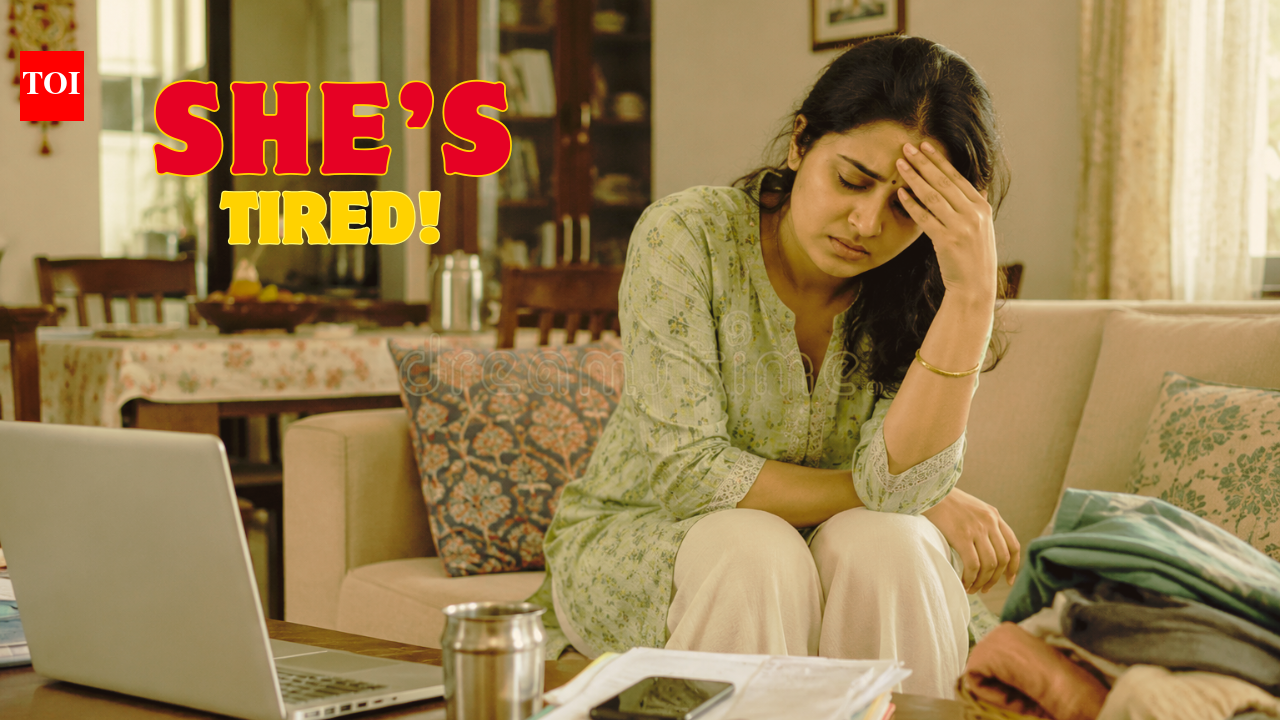
Women today are more empowered than ever. She can study, work, earn, travel, live alone, marry later, become financially independent and decide what kind of life she wants. Compared with previous generations, the choices are real.But there’s a catch! In many Indian homes, a woman has not really exchanged one set of responsibilities for another. She has added to them.
13 Jul 2026 | 13:11
What’s one stereotype about women that you’re tired of hearing?
She works eight or nine hours at an office and comes home for another shift. She may be earning a salary, but she is still expected to know what is being cooked for dinner, whether the child has finished homework, when the in-laws’ medical appointment is, whether the domestic help is coming tomorrow and what needs to be bought for the weekend. Even when somebody else does the actual work, she may still be the person managing it.The modern empowered woman is tired. Literally.
Let’s take a look at some numbers
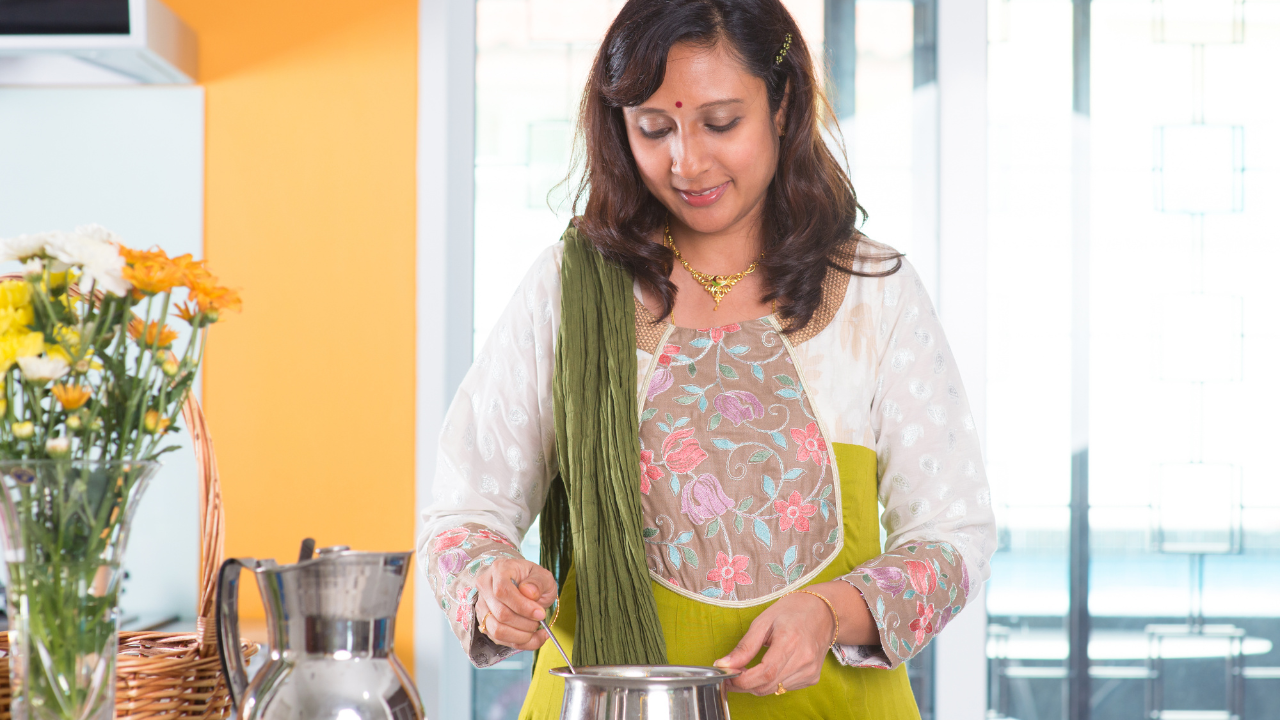
Women spend an average of 289 minutes a day on unpaid domestic services, compared with 88 minutes for men: Survey
India’s latest Time Use Survey makes the imbalance difficult to ignore. Women spend an average of 289 minutes a day on unpaid domestic services, compared with 88 minutes for men. Women also spend 137 minutes a day caring for household members, compared with 75 minutes for men. Among women aged 15-59, 41% participated in caregiving for household members, compared with 21.4% of men.All this along with her office hours. The figures are important because they show that the problem is not simply about whether a woman has a job outside the home.A woman can have a salary, a bank account, a successful career and a supportive husband — and still carry a disproportionate share of the household’s mental and physical workload.In fact, India’s Time Use Survey 2024found that women aged 15-59 spent about 305 minutes a day on unpaid domestic services, compared with substantially less time among men.So the story is not that women have failed to become independent. The story is that independence has often been built on top of an unequal domestic system.
Paid work did not replace unpaid work, it was added to it

File photo
For generations, the expectation was that women looked after the home. Then came education, employment and financial independence. But in many families, the old expectation did not disappear. A new one was simply added.Now she is expected to succeed at work without dropping the responsibilities traditionally assigned to her at home. This creates a different pressure.
- If dinner is late, she feels guilty.
If she leaves work early for a school issue, she worries about her career.
If she stays late at work, she worries about her child.
If she asks for help at home, she may feel she is failing at being a good wife, mother or daughter-in-law.
If she does everything herself, everyone calls her capable.
And capability can become a trap. UNDP has described unpaid care work as one of the persistent barriers to women’s participation and progress in the labour force. Its work in India also points to the need to move beyond simply “helping” women and towards actually redistributing care responsibilities.
A husband “helping” at home is not the same as sharing the home
This is perhaps one of the most important conversations Indian families need to have. A husband who occasionally cooks dinner is helpful. A husband who knows what the children need, checks the school calendar, arranges the doctor’s appointment, buys groceries when they are running out and takes responsibility when the domestic worker does not turn up is sharing the load.If a woman has to tell her partner what needs to be done, remind him when it needs to be done and then check whether it was done, she is still carrying the management of the household. This is why “Just ask for help” is not always useful advice.
The mental load has no clock-out time
The most exhausting part of domestic work is not always the physical work. It is remembering. Remembering that the child needs new shoes. Remembering that the electricity bill is due. Remembering that the mother-in-law needs her test results collected. Remembering to pack snacks. Remembering the birthday. Remembering that the domestic worker is going home for two days next week. Remembering that the child has a school activity on Friday.A woman may spend her day in meetings and still spend her evening mentally running a household. That is not poor time management. It is too much management.
The problem with telling women to “have it all”
The phrase sounds empowering. But it can quietly shift responsibility from society to the individual woman. Work harder. Wake up earlier. Learn to delegate. Use a meal service. Hire help. Take care of yourself. Set boundaries. Ask for flexibility.All of these can be useful. But there is a limit to how much an individual can optimise an unequal system. At some point, the question has to move from:“How can women manage everything better?” to “Why are women expected to manage so much in the first place?”That is where the conversation about empowerment needs to go next. Because women do not need another productivity hack. They need time, reliable childcare, workplaces where caregiving is not treated as a career inconvenience, partners who see domestic work as their responsibility too, families that do not automatically assume the daughter, daughter-in-law or wife will absorb every crisis and they need the freedom to say no without being made to feel selfish.
What can women actually do differently?

File photo
Stop asking for help with tasks you both ownInstead of “Can you help with the children tonight?”, try dividing ownership. One parent owns school communication. The other owns doctors and medicines. One manages groceries. The other manages household bills.Make the invisible workload visibleFor one week, write down every household tasks including the tiny ones. Not just cooking and cleaning. Add appointments, shopping lists, bill payments and managing domestic help.Then look at who actually owns each task. Many couples discover that the imbalance becomes obvious only when it is written down.Do not automatically volunteer when the family has a problemIf the child is sick, the default question should not be, “Can the mother take a leave?” Ask: Who is available? Who can adjust? What can both parents change?That small change challenges the assumption that a woman’s career is the flexible one.Protect blocks of time, not vague “me time”“Take some time for yourself” sounds nice but is difficult to execute. A better arrangement is specific: Tuesday and Thursday evenings belong to one partner; Saturday morning belongs to the other. During that time, the person who is off-duty is genuinely off-duty.At work, ask for structural flexibility rather than personal favoursInstead of quietly struggling with every school closure or caregiving emergency, women can ask for predictable flexibility: fixed work-from-home days where possible, meeting-free hours, reasonable notice for late meetings or clearer backup arrangements.India has made enormous progress in giving women more choices. The next step is to make sure those choices are supported by the homes, workplaces and institutions around them. The modern empowered woman is not tired because she wants too much. She is tired because too much is still expected of her.