








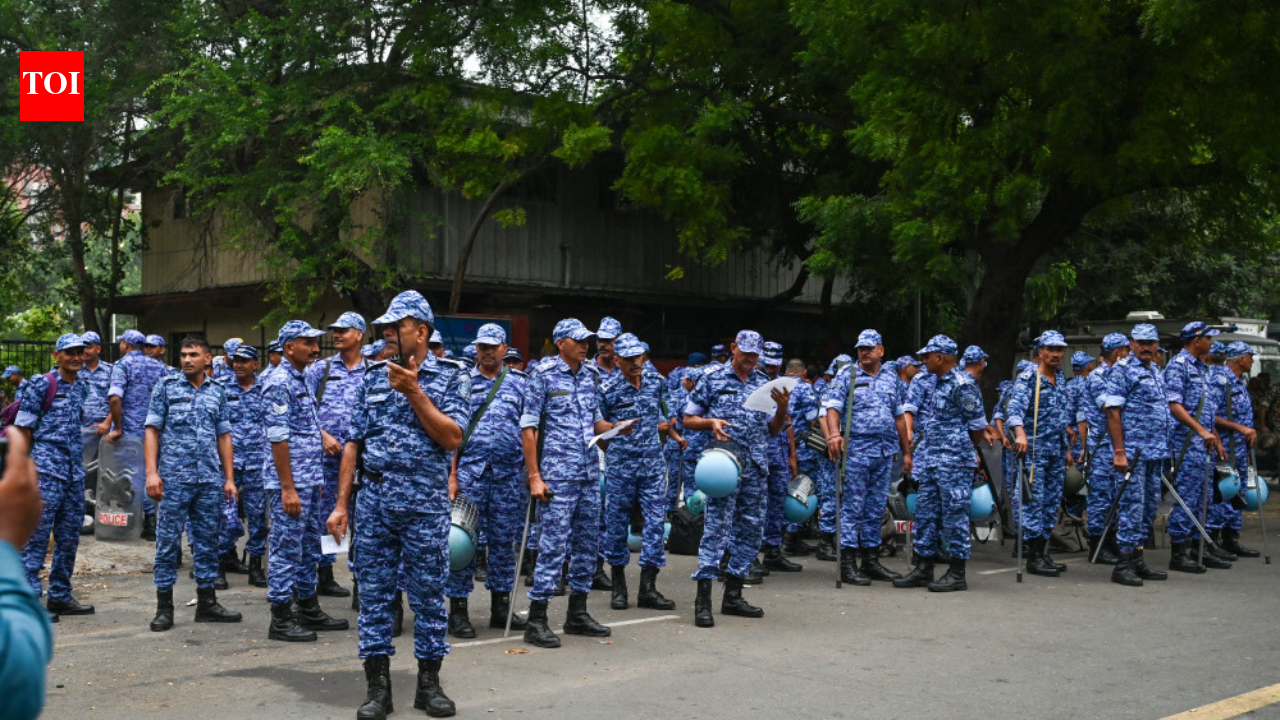
NEW DELHI: Rapid Action Force personnel fired two rounds of non-lethal plastic pellets, along with tear smoke grenades and several other crowd-control munitions, during CJP’s July 20 ‘Sansad Chalo’ march over the NEET-UG paper leak, news agency PTI reported citing official records.The disclosure comes days after Delhi Police described allegations that pellets had been used against “peaceful protestors” as “completely false and misleading”.According to officials, the details of the RAF action were entered in the general diary of Parliament Street police station on July 22, based on information provided by a deputy commandant of the force.The RAF unit was deployed in Zone 1 of the Jantar Mantar area alongside a Delhi Police officer of deputy commissioner of police rank.The police station record states that, acting on the DCP’s directions, RAF personnel fired 55 non-electrical shells, 15 electrical shells, five tear smoke grenades, two rounds from anti-riot guns and two rounds of plastic pellets while controlling the crowd on July 20.According to PTI, officials maintained that the plastic pellets used by the force were non-lethal and different from metal pellets that can penetrate the body. Each round contained four plastic pieces and was not expected to cause significant harm, they said.The use of pellets, however, has emerged as a source of controversy after protesters alleged that several participants suffered serious injuries during the march. The opposition has targeted the government over the police action and demanded a statement from Union home minister Amit Shah in Parliament.The protest was organised by the Cockroach Janta Party, which had been demanding the resignation of Dharmendra Pradhan as education minister over the alleged leak of the NEET-UG question paper. Pradhan resigned on Saturday, following which the month-long agitation was called off.Multiple personnel from Delhi Police, the RAF and the Central Reserve Police Force were also injured during the protests. Several RAF personnel deployed in the Connaught Place area suffered injuries.The CRPF, under which the RAF operates, has now initiated a post-event assessment of the crowd-control operation. The review will examine the sequence of events, the circumstances in which different munitions were fired and whether the use of plastic pellets complied with established protocols.CRPF director General Gyanendra Pratap Singh said the force would arrive at an official view only after completing the assessment.“Now, since agitation has been called off, and assembled people have dispersed, we would make a professional post-event assessment, like we do after every major assignment, and then let you know the view of the Force Hq (headquarters),” Singh said.Conducting such an assessment after a major deployment forms part of the CRPF’s standard operating procedure. Officials said the review would evaluate the RAF’s response as well as the wider operation undertaken to contain the march towards Parliament.A detailed report will be submitted to the force headquarters after the review is completed.Delhi Police and central forces had used tear gas, baton charges and other crowd-control measures after clashes broke out during the march. While several protesters alleged they suffered grievous pellet injuries, the police maintained that force was used to restore order after personnel were attacked.