



After 25 years police are no closer to finding the body of murdered British backpacker Peter Falconio, but an expert in finding homicide victims believes he knows where the 28-year-old’s remains could be.
Mr Falconio and his girlfriend Joanne Lees were road-tripping along the Northern Territory’s Stuart Highway when they were ambushed near Barrow Creek on July 14, 2001.
British couple Joanne Lees and Peter Falconio were ambushed near Barrow Creek in 2001. (Reuters)
Bradley John Murdoch killed Mr Falconio and attempted to kidnap Ms Lees, but she escaped.
The mystery of Mr Falconio’s whereabouts has haunted Australia ever since.
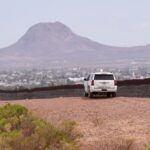
Speaking exclusively to the ABC on the case’s 25th anniversary, search and rescue specialist Jim Whitehead has revealed his research-backed theory: Mr Falconio’s remains could be 70 kilometres from the scene of the crime.
Loading…
“I’m thinking probably east of the Stuart Highway, east of somewhere between Barrow Creek and Tennant Creek,” Dr Whitehead said.
“Immediately [what] comes to mind [are] the mounds of dirt and gravel that councils leave on the side of the roads when they trim the roads and do the table drains.
“I feel like that would be an ideal place to put a body.“
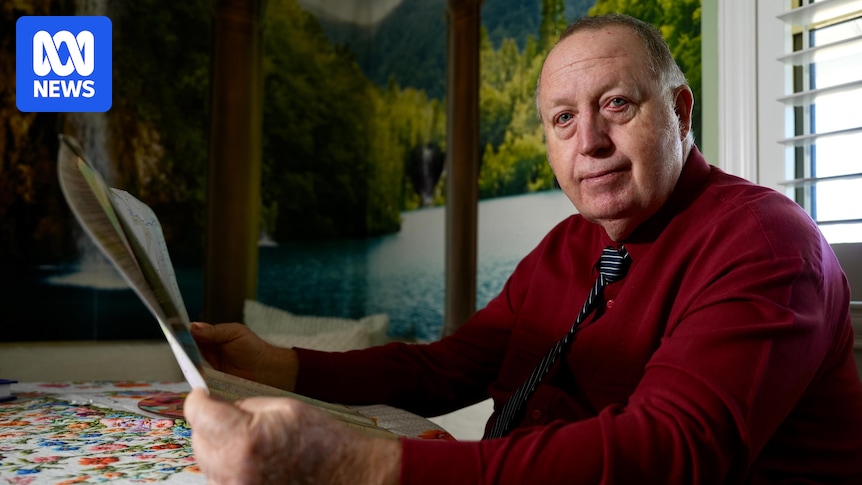
During his almost 40-year career as a Queensland Police officer, Dr Whitehead helped to find some 570 people. He worked on some of the country’s most high-profile cases, including those of Daniel Morcombe and Allison Baden-Clay.
Most recently, he was called in to assist in the search for five-year-old Kumanjayi Little Baby, who was allegedly abducted and murdered in Alice Springs.
Jim Whitehead has already helped track down a number of missing people in Australia. (ABC News: Glen Armstrong)
Since retiring from the service, Dr Whitehead has studied every recorded homicide in Queensland and developed a formula, based on the behaviour of killers, that can predict where bodies may be found.
He says his method has beeen used to 12 times, to his knowledge, and has a 75 per cent success rate at reuniting victims’ remains with their families.
While most cases are still going through the courts, Dr Whitehead can reveal his formula helped authorities find murdered 16-year-old schoolgirl Jayde Kendall in rural Queensland in 2015.
“A Bayesian study basically says that if 100 people do this particular action, then it’s reasonable to suspect that the 101st person would do the same thing,” Dr Whitehead said.
“When I did my study, I broke down body disposal into distances, methods, concealment methods and those sort of things.
“East is the most prevalent direction that deceased people are taken in Australia.”
Jim Whitehead believes Peter Falconio’s remains might not be far from the remote outpost of Barrow Creek. (ABC News: Xavier Martin)
Body could be concealed rather than buried
Based on his formula, Dr Whitehead believes Murdoch most likely “concealed” Mr Falconio’s body with “what was available in the immediate vicinity” — perhaps leaves or broken branches.
“I don’t think it would be a shallow grave and I’m pretty certain he wasn’t interred. That takes considerable effort and would show up quite easily on aerial surveillance,” Dr Whitehead said.
Loading…
Murdoch was known for his drug-running expeditions through Central Australia and Dr Whitehead doubted he had any intention of returning to where he hid Mr Falconio’s body.
Murdoch would have opted against leaving him near the Tanami Road, Dr Whitehead said, as it would have been “very obvious”.
Dr Whitehead said Murdoch may be responsible for other outback murders, but Ms Lees was probably his actual target.
“I would put a little bit of money saying it wasn’t his first time,” he said.
“But having said that, I think he was more a sexual predator as opposed to a murderer, and that might have been the aim originally, and it just got out of hand.”
Bradley John Murdoch may have killed before, Jim Whitehead suspects. (Supplied: NT Police)
Dr Whitehead said he shared his theory with NT Police about 10 years ago but had not heard whether it had been tested.
He believes it would be a “slow and painstaking” process to search the 70-kilometre area and would cost about $500,000.
“It’ll be a needle in a haystack job,” he said.
“You’ll be looking for bones, bleached bones at the very best.
“It would need to be a very close forensic-type search on hands and knees, sifting through the soil.“
NT Police Acting Commander Mark Greive previously said authorities had searched “seriously” for Mr Falconio about six times.
Loading…
Officers scoured for the 28-year-old’s remains near Barrow Creek in July 2025.
Even if Murdoch was able to have drawn a map or walked investigators to where he left Mr Falconio’s body, Dr Whitehead said the vastness of the area would make finding his remains extremely difficult.
While he was still hopeful Mr Falconio would be found, Dr Whitehead said the chances of finding him are slim.
A search in the Barrow Creek area would be a “needle in a haystack job”, Jim Whitehead says. (ABC News: Xavier Martin)
“You can’t really get closure until you have something to mourn over, and even if we only find a bone or a sliver of something, it gives the family something to bury, something to create a grave and a memorial to,” he said.
“Without that, there’s always the never knowing.”
Police seek closure for Falconio’s family
On the 25th anniversary of Mr Falconio’s murder today, NT Police Commissioner Martin Dole said his thoughts are with the Englishman’s loved ones.
“This was a traumatic and horrific event for Ms Lees, and for Peter’s family, who have now gone such a long time without the answers they deserve,” he wrote in a statement.
NT Police have revisited archival photos on the 25th anniversary, including this one of Joanne Lees after she escaped Murdoch. (ABC News: Michael Franchi)
“While a murderer has been held accountable for his crimes, this investigation can never be considered closed until Peter’s remains are found and his family can lay him to rest.“
Police hope they will one day be able to provide closure for Peter Falconio’s parents, Joan and Luciano. (AAP: Paul Benjafield)
Commissioner Dole said it was “deeply regrettable” Murdoch died last year without disclosing the location of Mr Falconio’s body and that authorities were committed to returning his remains to his family.
“His cowardly silence has denied his family, friends and loved ones the closure they deserve,” he said.
“For many investigators, this case has spanned decades of their policing careers.
“Their commitment to finding Peter and delivering answers to his family has never wavered.
“There may still be someone who knows something, whether that be information they have never previously shared with police or something Murdoch said to them.
“No piece of information is too small; what may seem insignificant could prove critical in helping investigators finally resolve this case.”
A $500,000 reward remains in place for information that leads NT Police to the discovery of Mr Falconio’s remains.