






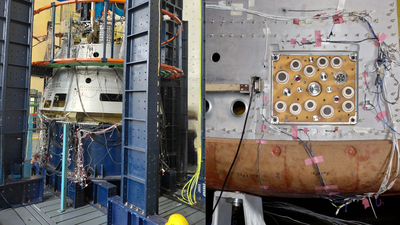
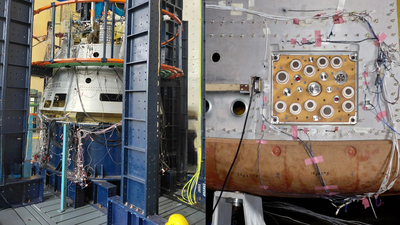
NEW DELHI: With preparations for India’s maiden human spaceflight in full swing, Indian Space Research Organisation (Isro) has successfully accomplished three major qualification tests for crew module (CM) systems for the Gaganyaan mission. Before the final manned mission, Isro will conduct two manned missions, the first one likely to happen by the end of this year or in 2027.The latest trials validated systems for splashdown recovery, module separation and parachute deployment. The latest tests focused on three moments that astronauts cannot control themselves: keeping the capsule upright after landing in the sea, ensuring a clean break from the service module before re-entry, and confirming that the capsule can withstand the forces generated when the parachute cover is blasted away. Together, the tests move Gaganyaan another step closer to its first crewed mission by validating systems that are central to crew safety.The three tests conducted successfully were: float inflation test for crew module up-righting system (CMUS); umbilical separation testing of crew module service module connect & disconnect system (CSCDS); and crew module structure qualification test for apex cover separation loads.Ensuring up-right position for the crew module after splashdown in the sea is one of the important crew safety requirements. A stored cold gas based up-righting system has been developed to meet these requirements. A system level qualification test set-up consisting of all elements of CMUS was realised and successfully conducted inflation tests for the primary inflation module wherein stored gas in the high pressure gas bottle was made to inflate the floatation by operating the control valves. The tests demonstrated the inflation module meeting the functional and performance requirements for deployment of the primary flotation, Isro said.CS-CDS is one of the major systems that serves as an electrical/hydro-pneumatic umbilical link between crew module (CM) and service module (SM). All the electrical communication between CM and SM as well as the fluid communication for environment control and life support systems (ECLSS) takes place through CS-CDS. The mechanism consists of two parts, each located at the crew module side, called CSU-1, and the service module side, called CSU-2. The test demonstrated the clean separation of CSU-2 as well as structural stability of the crew module panel and their interfaces, Isro said.The apex cover of the crew module protects parachutes and associated subsystems during the mission. Before deploying parachutes in sequence to decelerate the crew module, the apex cover is separated at a predetermined altitude operating pyrotechnically actuated thrusters. To validate the structural integrity of the crew module during apex cover separation event, an instrumented test rig along with simulated crew module and associated systems were realised and approximately 1.75 times of estimated reaction loads were applied to the simulated crew module at identified locations, the agency said.