








Labor’s promise to help shield small businesses from the cost of restructuring to avoid its proposed new tax on trusts remains dependent on whether state governments agree to waive stamp duty.
Accounting and industry groups have warned businesses cannot know if they should abandon their discretionary trust until they have clarity on how much states would charge for the transfer of assets into a new structure.
About 210,000 small businesses currently operating through discretionary trusts would be impacted by Labor’s proposed 30 per cent minimum tax on trust distributions.
To help businesses switch out of discretionary trusts, Labor has proposed allowing them to restructure without paying federal income tax or capital gains tax on the transfer of assets.
But the assistance has been deemed insufficient unless states and territories can also be convinced to offer concessions on stamp duty, which would otherwise make restructuring prohibitively expensive for some businesses.
Industry groups have also raised concerns about the lack of financial support for the accounting and legal costs attached to restructuring.
The government last week released a consultation paper seeking feedback on the tax, which would take effect from mid-2028 pending the passage of legislation through parliament.
Stamp duty answers ‘absolutely critical’
Chartered Accountants Australia and New Zealand group executive of policy and international Geraldine Magarey said a “massive conversation” needed to happen at a Commonwealth and state level about the stamp duty impacts.
“To me this is absolutely crucial,” she said.
“Businesses need certainty now … and it plays a very big part in the decision whether to restructure and what form that takes.
“They can’t make that decision without knowing.“
Ms Magarey said the main reasons small businesses have used trusts are for asset protection, succession, and estate planning.
“Trusts also provide small businesses with flexibility regarding timing and distributions, which does mean they can distribute to people who are in a lower tax bracket,” she said.
“That part in particular has taken over the conversation about trusts.”
She said all business operators would have to seek individual advice about whether to remain structured through a discretionary trust or to pursue an alternative like setting up as a company.
Doing this would incur legal costs, accounting and the completion of final tax returns, and for some businesses they may be better off remaining as a discretionary trust even with the new minimum tax rate.
“The numbers involved depend on how complex the trust is,” she said.
Labor ‘keen’ for ideas to minimise restructure hit
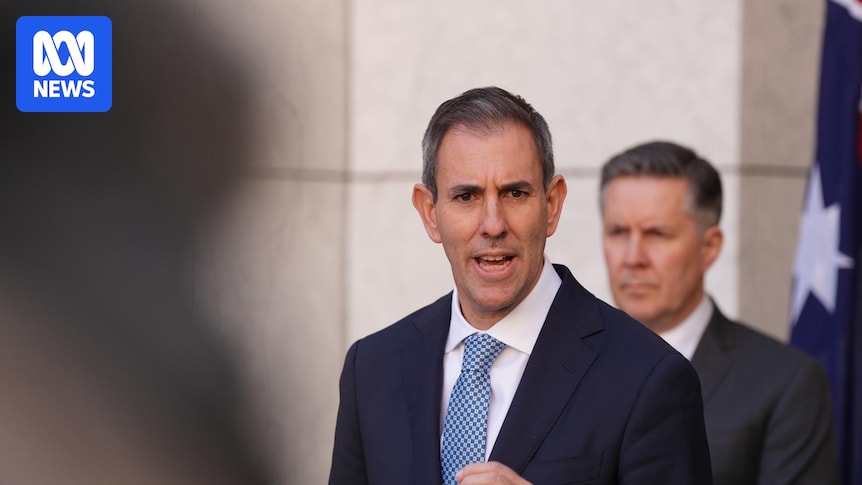
Treasurer Jim Chalmers said more than 90 per cent of small businesses would not be affected by the tax changes and described Labor’s proposed rollover relief for those who wanted to restructure as “generous”.
“We will implement these reforms in an efficient and effective way that minimises cost and disruption to businesses,” he said.
“The consultation paper raises alternative approaches for rollover relief, and we are keen to hear from stakeholders on how these costs can be minimised.”
The government is also consulting on options that could address the issues around stamp duty.
Consultation is open until the end of July, with Labor also emphasising the start date of mid-2028 for the trust changes as a deliberate decision so people and businesses have time to consider their options.
The minimum tax on discretionary trusts is expected to net the federal government about $4.47 billion in revenue in just its first year of operation.
A discretionary trust is a legal structure that lets a trustee decide how income is distributed among beneficiaries, making it a common way small businesses and families manage assets and tax affairs.
The use of this discretion for “income splitting” where trustees allocate all or part of their income to beneficiaries who have a lower marginal income tax rate has been criticised by Labor as unfair.
Mr Chalmers has argued the changes announced at the budget bring the tax on trusts in line with the average rates paid by salary and wage earners on similar income levels.
Primary producers are exempt from the new tax, along with vulnerable people and beneficiaries of testamentary discretionary trusts created through a person’s will.
Businesses face ‘impossible choice’ over new tax
In addition to concerns around stamp duty, Council of Small Business Organisations Australia (COSBOA) chief executive Skye Cappuccio has warned Labor’s proposed rollover relief does not cover accounting and legal costs necessary for any restructure.
“Many small businesses will face an impossible choice between a higher tax burden or a costly restructure,” she said.
Ms Cappuccio said if the government believed there were integrity issues with the trust system, they should be addressed directly rather than through a “broad tax increase on genuine small businesses”.
She also argued the government should not diminish the significance of their tax proposal, noting 10 per cent of the sector equated to about 210,000 small businesses.
Andrew McKellar says the changes will have a significant impact on small businesses. (AAP: Lukas Coch)
Australian Chamber of Commerce and Industry (ACCI) chief executive Andrew McKellar also said Labor’s changes would be costly and complex for small businesses.
“First … they either stay as a trust and pay higher tax or move to a company structure and also pay higher tax,” he said.
“The second hit will be the extensive costs to businesses that are effectively forced to restructure — accountants’ fees, legal advice fees, financial advice — not to mention the serious costs in time and stress.”
Mr McKellar said state governments were also in line for a “windfall gain” from stamp duty.