




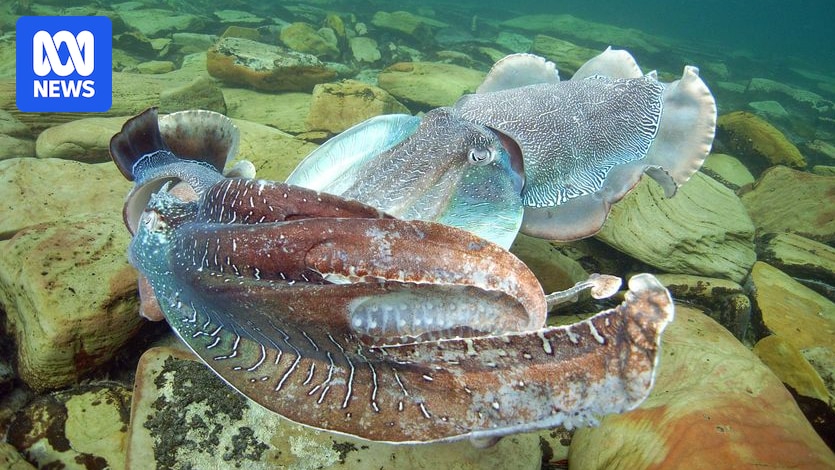
A temporary ban on in-water recreational activities begins in South Australia’s Upper Spencer Gulf tomorrow, in a bid by the state government to protect the breeding site of giant Australian cuttlefish which have arrived in “significantly low” numbers this year.
From Wednesday, a 90-day ban will begin at the cuttlefish sanctuary zone between Black Point and Stony Point in the state’s Upper Spencer Gulf.
At this time of year, the waters off Whyalla are usually teeming with tens of thousands of iridescent cuttlefish as they make the annual migration to breed but some boat operators have had to cancel tours due to the low numbers.
Environment Minister Emily Bourke said the latest survey showed “significantly low” numbers this year.
“This is the area where we predominantly see the eggs being laid, where we see breeding happening between our cuttlefish and that’s why it’s important we minimise the impact on our cuttlefish in this area,” she said.
Tour operators will be banned from the area, along with activities such as swimming, snorkelling, diving and vessel anchoring.
She said tours could operate at Point Lowly.
Emily Bourke says the temporary restriction aims to protect the giant Australian cuttlefish. (ABC News)
The minister warned anyone caught breaching the zone could face heavy penalties.
“If people accidentally find themselves in this temporary restriction area, it could range from a warning, if people proceed to operate in this area, there could be fines of up to $100,000,” Ms Bourke said.
Ms Bourke said the decision to impose a ban was made after speaking with local tour operators, divers and the Whyalla City Council.
She said the temporary ban could be lifted at any time if the cuttlefish numbers improved.
She said impacted cuttlefish tour operators would be able to apply for the government’s algal bloom support grant for small businesses.
Mike Steer, executive director of South Australian Research and Development Institute (SARDI), said that while “slightly elevated” water temperatures in the area meant the cuttlefish could still turn up, the latest count found “significantly reduced numbers”.
“What we want to do is to encourage the small amount of spawning that’s happening there at the moment,” he said.
“Plus, we want to encourage the successful eggs and hatching, so the best thing we can do is leave them undisturbed, and that is the reason why this management strategy is put in.”
The green shaded area marks the temporary exclusion zone for in-water recreational activities. (Supplied: SA Government)
Professor Steer said several factors, including the algal bloom, could have caused reduced cuttlefish arrivals.
He said cuttlefish hatchlings usually swim towards the northern part of the gulf at the end of the breeding season, but the algal bloom was present in those waters during late December and January.
“So there may be a link there,” he said.
“But we also know that temperature and food availability drive cephalopod population and that includes cuttlefish, calamari, octopus so there could be a number of other environmental drivers that are also helping to shape that population strength.”
Professor Steer said not all hope was lost, pointing to the cuttlefish population bouncing back within three years after historic low numbers were recorded in 2013.
“We do see the capacity for cuttlefish population to respond really quick to favourable environmental conditions,” he said.