






Australia’s world-leading social media ban for young people will be beefed up under new laws proposed by the federal government.
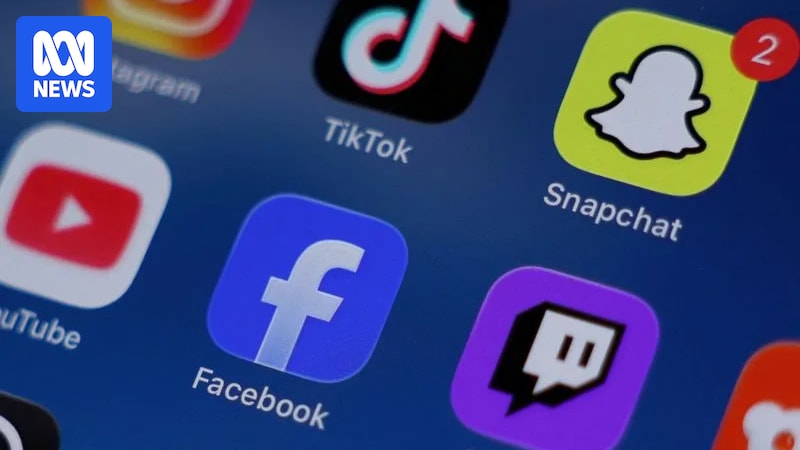
Since December, popular social media platforms including TikTok, Facebook, YouTube, and Snapchat have been legally required to take reasonable steps to prevent under-16s from signing up or keeping an account.
But Prime Minister Anthony Albanese said he believed big tech companies were not “doing enough to comply with the law”.
“There are still too many children on social media,” Mr Albanese said in a statement on Saturday evening.
A young girl browses the social media apps available on a phone. (Unsplash: Sanket Mishra)
Under the planned changes, maximum penalties for companies that fail to prevent under-16s from accessing their platforms will double from $49.5 million to $99 million.
The eSafety Commissioner, Julie Inman Grant, will receive strengthened powers to force companies to provide evidence of what they have done to stop young people from getting an account on their platforms.
Third parties, including those providing age verification technology to platforms, will also be compelled to provide information to Ms Inman Grant.
“These changes reflect the seriousness with which we take any failure by social media companies to comply with our world-leading law,” Mr Albanese said.
Ms Inman Grant recently expressed frustration in the Sydney Morning Herald, and said that the current social media age restriction legislation did not provide her with “potent powers”.
“What I would say is a regulator is only as good as the tools and the resources that they’re given,” she told the newspaper on June 2.
According to the government, more than five million under-16s accounts have been removed, deactivated, or restricted since the ban began.
Five platforms are currently being investigated by eSafety for potential non-compliance.
Communications Minister Anika Wells said the 10 social media platforms currently subject to the ban were using “tricks straight out of the big tech playbook” to do the “bare minimum to get by”.
“Social media platforms are some of the richest and most powerful companies in the world, and we’re serious about holding them to account,” Ms Wells said.
“These tough new penalties and powers show we will not back down. Instead, we are doubling down on our efforts to hold big tech to account.”
It is understood Labor plans to legislate the measures before parliament rises for the winter break on July 2.
During Question Time last week, Mr Albanese said “further strengthening the social media ban” was a “priority”.
Study finds ‘limited early impact’ of social media minimum age laws
This week, a University of Newcastle study published in the British Medical Journal found Australia’s age restrictions have had limited early impact.
The study observed 408 adolescents aged 12–17 before and three months after the social media ban began.
Researchers found more than 85 per cent of the cohort under 16 years old continued to use restricted social media platforms, and around two-thirds encountered age verification measures.
“The most common form of age verification was self-declared age. There was also clear evidence of circumvention, for example, using fake accounts or accounts belonging to friends or family,” lead investigator Courtney Barnes said in a statement.
The study recognised that following the start of Australia’s social media restrictions for children, “international momentum” for similar reform had been building.
“Despite this rapid policy diffusion, the evidence base remains uncertain, and debate continues about the potential benefits, unintended consequences, and practical feasibility of enforcement of such strategies,” Dr Barnes said.
This month, the United Kingdom unveiled plans for its own social media ban for under-16s, and several other countries across the world have, or are seeking to, implement age restrictions on social media for children.