






A dedicated NSW registry will be established to track the diagnosis, location and occupations of those with motor neurone disease (MND).
Health Minister Ryan Park today announced the MND — an incurable and progressive neurological condition that can affect a person’s ability to move, speak, breathe and swallow — would become a ‘notifiable disease’ in the state.
That means any cases detected must be reported to health authorities.
“This will give researchers and clinicians in this space a clearer picture about where cases are being identified, whether there are environmental factors, or other factors that play a role,” Mr Park said.
MND hotspot
The decision was welcomed by Michelle Vearing, who lives in Griffith, a city in the state’s south-west, which has been identified as a hotspot for the disease.
Three generations of her family have been affected by MND.
She said the classification was recognition of its immense impact.
“Without knowing the numbers, the researchers can’t narrow in their research,” Ms Vearing said.
“Making it notifiable allows governments, authorities, doctors and nurses [to be] aware of how significant this disease is in the community, compared to a lot of other illnesses.”
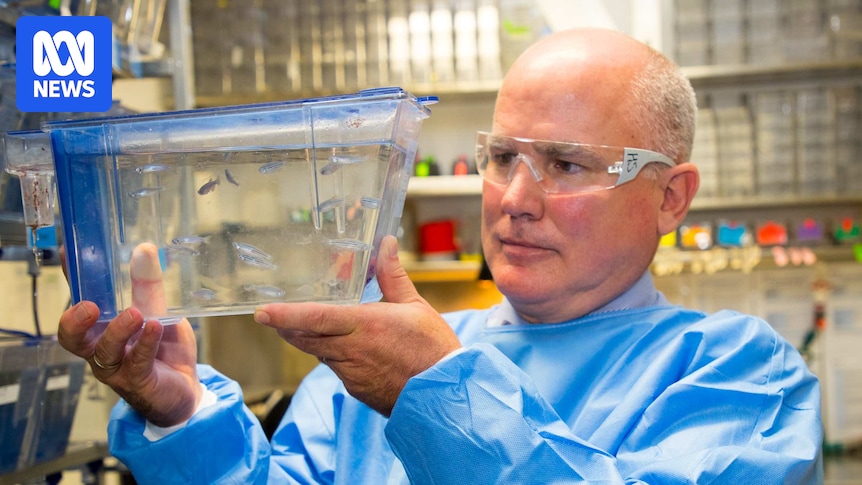
Dominic Rowe says the registry could be a first step in finding a treatment for MND. (ABC News: Ben Deacon)
Neurologist Dominic Rowe, who heads up the Motor Neurone Disease Centre at Macquarie University, said MND would kill around 250 people this year in NSW alone.
‘Some motor neurone disease is genetic, but 90 per cent is sporadic, and it’s our contention that [it] is an environmental and occupational disease,” he said.
“Up until now there’s been no systematic acquisition of who has the disease, where they live and what’s caused it.
“If we don’t understand what causes motor neurone disease, we can’t develop mechanistic therapies that slow it and stop it.”
Praise for advocacy
Premier Chris Minns visited Lake Wyangan in Griffith, NSW, alongside local MP Helen Dalton in 2023.
(Conor Burke)
Mr Park today praised the prolonged advocacy of the independent Member for Murray, Helen Dalton.
Ms Dalton used her maiden speech to parliament in 2019 to voice concerns regarding potential links between blue-green algae and the incidence of MND in her electorate.
In 2023, the state government committed $2 million to investigate an MND cluster in Griffith.
“This has been a long burn and for sufferers and their families, so this is a great day for all of us,”
Ms Dalton said.
“We need to understand what’s happening.”