



The US claims “great progress” has been made with Iran during the first substantial talks to take place under the new deal to pause the war.
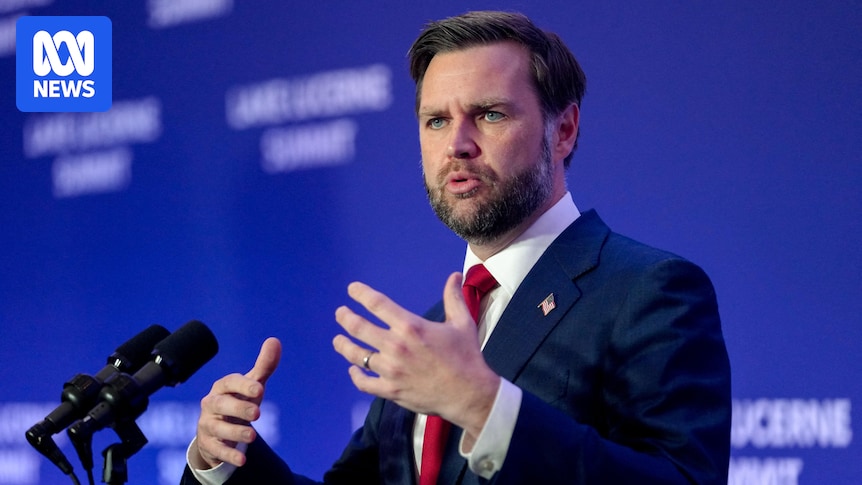
US Vice-President JD Vance has talked up several outcomes from the high-level talks, though there are already conflicting messages from Iran.
Here’s what we know about the early results of the talks, which have been taking place in Switzerland.
What has been agreed?
Mr Vance told a press conference that four objectives had been achieved during the talks he attended.
So far, not many specific details have been released about any of them.
But this is what the US vice-president says has been agreed to:
1. A mechanism for keeping the Strait of Hormuz open
Mr Vance said this would involve coordinating efforts to de-mine the strait, “so that when there are conflicts that inevitably come up, we can make sure we work through them rather than that leading to escalation”.
2. A ‘de-confliction’ mechanism to maintain the ceasefire
“As the president of the United States has himself said, sometimes these ceasefires just mean you’re shooting a little bit less,” Mr Vance said.
“But we wanted to make sure that we had the proper coordination set up so that if there is shooting, if Hezbollah fires at Israel or if Israel responds, if there are other conflicts that arise in the region, we’re actually talking to each other and figuring out how to stop the shooting.”
3. Iran allowing nuclear inspectors back into the country
Nuclear inspections were a key part of the 2015 Obama-era nuclear deal that Mr Trump terminated in 2018.
Since then, Iran has restricted the access granted to inspectors from the International Atomic Energy Agency. It all but ended inspections last year, after US-Israeli strikes on its nuclear sites.
Mr Vance said Iran had agreed to allow them to restart.
This represented “the first step in permanently denuclearising or permanently ending a nuclear weapons program in Iran”, and “is probably what we’re most excited about as Americans,” he said.
But Iran’s foreign ministry spokesman, Esmaeil Baghaei, told Iranian state media that no new commitment had been made.
4. A process for ongoing technical negotiations
“As much as this place is very beautiful, I can’t stay here for the next 60 days,” Mr Vance said.
“But the technical teams are going to be working, with proper oversight, to make sure that we’re accomplishing the objectives that matter for everybody.“
What about Lebanon?
The ceasefire in Lebanon is seen as an especially fragile part of this peace process. Tensions over Israeli attacks in Lebanon have threatened to derail the negotiations.
Lebanese officials said fighting had calmed since Saturday night, local time.
Hassan Wazni, a hospital director in the southern city of Nabatieh, said it was the first two full days of calm since the war began. He told the Reuters news agency by phone:
“I’m monitoring the situation day by day, and most of the time I’m sleeping in the hospital. This is the longest a ceasefire has held.“
But Iran maintains Israel must pull its forces out of Lebanon, while Israeli Prime Minister Benjamin Netanyahu is insisting they will stay.
“The directive from me and the minister of defence to the IDF [Israel Defense Forces] is clear and has not changed,” he said.
“Our fighters in southern Lebanon have full freedom of action to thwart any direct or emerging threat against them or against the residents of the north [of Israel].
“The IDF has no restrictions in this matter. I stand behind them, the entire nation stands behind them.”
More than a million Lebanese people have been displaced by the war. Some are now starting to return to their homes.
The office of Lebanese president Joseph Aoun said he had spoken to Mr Vance and others on the phone about how to maintain the ceasefire and prevent Israeli military escalation.
What has the US given Iran?
The US has confirmed it is waiving sanctions on Iranian sales of oil and related products.
The waiver will stay in place until August 21, the US Treasury announced.
Iran’s foreign minister, Abbas Araghchi, had earlier announced on X that the US had also agreed to unfreeze some of Iran’s frozen assets.
Without naming Mr Araghchi, Mr Vance said there had been “social media reporting that gets this wrong”.
He said “if” the US was to unfreeze Iranian funds, it would involve establishing a system that meant Iran would spend the money on American food products, including soy, corn and wheat.
Qatar would oversee the system and approve the spending.
The idea was put forward by US envoy Jared Kushner, Mr Trump’s son-in-law, Mr Vance said.
He described it as “a classic Trump deal where if Iranian assets are ever unfrozen, they’re going to go to make American farmers richer and to feed the Iranian people”.
What happens next?
The technical talks are expected to continue in Switzerland through the rest of this week.
US Secretary of State Marco Rubio will meanwhile spend most of the week visiting some of America’s Gulf allies, including the United Arab Emirates, Kuwait and Bahrain.
He will also meet representatives from Saudi Arabia, Qatar and Oman to discuss the interim peace deal and “efforts to secure full and free safe transit through the Strait of Hormuz”, the State Department says.
Some of Iran’s top negotiators are also planning to head to Oman for separate talks about the future of the strait.
They include Mohammad Baqer Qalibaf, who was instrumental in negotiating the interim peace deal, and Mr Araghchi.
Iranian leaders have previously told the ABC and others that Iran was not planning to introduce “tolls”, but fees would be charged to cover the costs of managing the strait.
ABC/wires