






A West Australian vet who chanced upon a sick bird since confirmed to have Australia’s first known case of the deadly H5 variant of bird flu says she had no idea of the significance of her find.
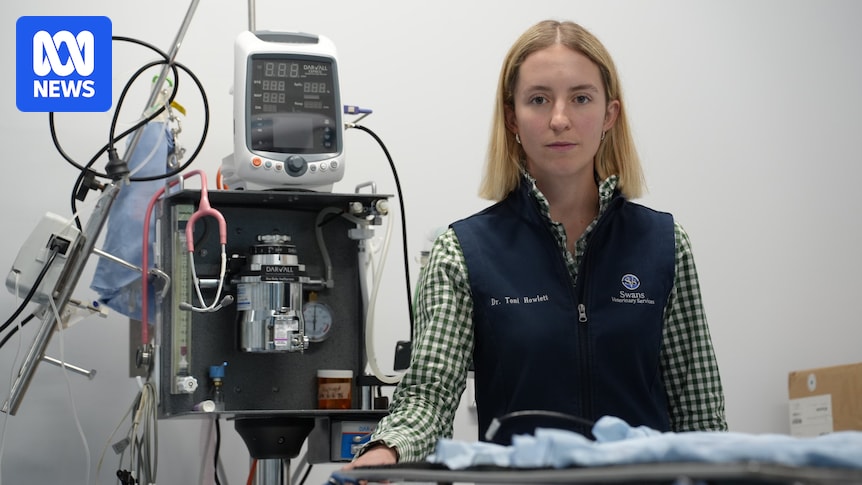
Vet Toni Howlett was walking along a beach near Esperance with a friend last Sunday, when she saw a bird unwell in the seaweed.
“I established that he was a little bit dehydrated and pretty skinny and thought it would be good to get him into care,” she said.
The subantarctic bird, known as a brown skua, has now been confirmed to have Australia’s first case of the highly infectious H5 bird flu.
Dr Howlett said she never expected to come across a bird with the H5 bird flu. (ABC News: Andrew Chounding)
Dr Howlett said avian influenza had not crossed her mind when she found the bird.
“We see a fair bit of kind of botulism in our sea life down here, so I thought it was more likely to be that,” she said.
The bird was taken on a two-kilometre journey by Dr Howlett from the beach to her car and then to local wildlife carer Lori-Ann Shibish, who contacted DPIRD for testing.
Dr Howlett said she never expected to come across a bird with the variant at the beach and urged the public to leave any birds alone.
“Just leave it on the beach, take a picture, if you’re in mobile service you can contact the animal emergency disease hotline,” she said.
The bird was taken on a 2-kilometre journey from the beach to the vet’s car and then to a local wildlife carer. (ABC News: Andrew Chounding)
Five days after the first discovery, Dr Howlett’s partner and Swans Vets Associate Vet Dr Alex Hockton tested a Giant Northern Petrel bird, which is now positive for avian influenza.
“We didn’t have results or actually at that stage know that the other bird had died of avian influenza, so the testing decision was made based on the nature of the illness in that second bird,” he said.
Dr Hockton said the clinic had been anticipating a H5 case and received training from DPIRD.
“We’re talking about [it] a lot in the last 24 hours, but for vets we’ve been talking about it a lot for two years,” he said.
“We’ve always thought Esperance might be a location that could crop up with a first case or one of, and that’s been the case in this instance, I think because of our location on the south coast.”
Dr Hockton says vets like himself have been talking about the potential of an H5 case for about two years. (ABC News: Andrew Chounding)
Relationships between the vets, DPIRD and the local community were important in managing bird flu Dr Hockton said.
“Often these sorts of things are picked up by the community and wildlife carers play a really important role as we’ve seen in this instance,” he said.
Public advice issued
Dr Hockton said having the two sick birds identified quickly meant the public will be more prepared to handle any further incidences.
“It’s really important to mitigate the risk of the virus spreading and to keep the public safe, if more sick or dead birds are washing up,” he said.
Dr Hockton said it was reasonable to expect further cases and if more birds came into the clinic, every precaution and surveillance testing would be performed.
“We are advising members of the public that are finding sick or dead birds to use the emergency animal disease hotline and contact DPIRD,” he said.
Collaboration ‘critical’ in response
Swans Vets owner Dr Enoch Bergman said he was proud of his two vets’ work in identifying the sick birds.
“Toni and Alex, both of them independently of one another, essentially led to the diagnosis of this index case of avian influenza, which is just phenomenal,” he said.
Dr Bergman said surveillance work of exotic diseases by regional vets was critical.
“It’s about early recognition, relevant response with the appropriate personnel and all that’s underpinned by communities supporting their local vet clinic,” he said.
Owner Enoch Bergman says he was proud of his two vets’ work in identifying the sick birds. (ABC News: Andrew Chounding)
Dr Bergman said the case highlighted the importance of collaboration between DPIRD, vets and the community, in recognising threats that could impact industry and livelihoods.
Speaking on Saturday, the state’s Agriculture Minister Jackie Jarvis said funding in 2023 provided training to a network of private vets across regional WA, to assist in an animal biosecurity response.
“We are activating these networks as part of the efforts,” she said.
“We’ve been preparing for the arrival of bird flu for some time, I want to take this opportunity to thank the wildlife carer in Esperance who followed the protocols and reported the two cases.”