






Data obtained by CBC News reveals multiple people were left in life-threatening condition, hospitalized or requiring other medical intervention after donating plasma over the past decade.
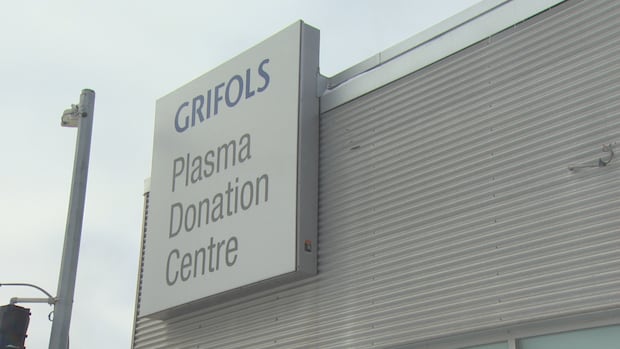
This comes in the wake of three previously reported deaths that all occurred in Manitoba. Two of the deaths happened at Grifols locations in October 2025 and January 2026. A third person died in June 2018 after donating at Prometic Plasma Resources, which has since been acquired by Grifols.
The federal government’s blood regulations say an adverse reaction is considered serious if it results in death, significant disability or a life-threatening condition. In-patient hospitalization and medical or surgical intervention to prevent significant disability or incapacity are also considered adverse reactions.
Heart attacks, blood clotting, destruction of red blood cells and loss of consciousness were included in the list of 27 total reported serious adverse reactions, obtained via an access to information request, between Jan. 1, 2016 and April 2, 2026.
The data listed the reported reactions by date, seriousness and type of reaction. The donation centre names and locations were redacted.
Of the 27 serious reactions, 25 were reported by establishments currently owned and operated by Grifols, Health Canada said in an emailed response. Grifols is a Spain-based for-profit company that specializes in producing plasma medicines.
The other two reactions were reported by Héma-Québec, a non-profit organization, the regulator said. Héma-Québec told CBC it actually reported three during this period.
Health Canada provided a list of reported serious adverse reactions by year, including the donation centre names and cities. CBC cross-referenced this with the data obtained via the access to information request.
Canadian Blood Services announced in September 2022 it had signed an agreement to allow Grifols to open paid plasma collection centres in this country.
CBC asked Grifols for comment on why more than 90 per cent of all serious adverse reactions were reported by centres it runs, and for the total number of donations its centres collect per year.
“Grifols is committed to the highest standards of donor safety, patient care, and regulatory compliance,” a spokesperson said in an emailed response.
- Do you have a tip you want to share? Send your tips in confidence to iteam@cbc.ca or call us at 204-788-3744.
Over 90 per cent of serious adverse reaction reports coming from paid plasma centres is deeply concerning, said Andrew Longhurst, a senior researcher at the Canadian Centre for Policy Alternatives.
He’s calling for an independent review of Canada’s plasma system to identify why paid centres are reporting that many serious adverse reactions to what experts say is an incredibly safe procedure.
“I don’t think for a second that we can continue on without a full and thorough independent analysis,” Longhurst, who specializes in health policy, said.
CBC requested comment from Health Canada but did not hear back by publication time. In a previous response, a spokesperson said these reactions represent “an extremely small proportion of all donations.”
“While reports notify Health Canada that a reaction has occurred, the reaction may or may not have been linked to the plasma donation,” spokesperson Mark Johnson wrote in an emailed statement on May 6.
Out of all the publicly listed inspections of licensed blood establishments, only a handful have ever been rated “non compliant.” Grifols has received more non-complaint ratings than all other establishments combined.

“Following recent inspections, we submitted detailed action plans to Health Canada and began implementation immediately, with a focus on preventing recurrence and strengthening compliance across all centres,” the company’s emailed statement said.
On average, Grifols-run centres in Winnipeg often went over a year without a blood inspection recorded in the database.
Two compliance verification reports written after the recent Manitoba deaths revealed Health Canada found multiple deficiencies at the two Grifols locations in Winnipeg, located on Innovation Drive and Taylor Avenue. That included issues with training, proper procedures not being followed and incomplete record-keeping.

Documents show that before Rodiyat Alabede, a 22-year-old Winnipeg woman, died last year, the machine collecting her plasma issued a series of alerts, one of which required Grifols staff to terminate the procedure.
It’s been nearly three years since the Grifols on Taylor had its last recorded inspection in this database. The Taylor centre is where 22-year-old Rodiyat Alabede had a fatal cardiac arrest last October.
Another donor is suing the same centre for an alleged kidney injury after an equipment failure in 2023.
Health Canada information also reveals that in July 2025, the centre reported another donor hospitalized. It said the person lost consciousness for a prolonged period, sustained a phlebotomy-related injury and had a complicated hematoma.
Adverse reaction data should be public: researcher
Longhurst said these deaths and serious adverse reactions deserve an investigation similar to the 1993 inquiry led by Justice Horace Krever into the tainted blood crisis in the 1980s, when more than 30,000 Canadians were infected with HIV or hepatitis C from poorly screened blood products. It recommended against paid blood donation.
“We keep seeing alarm bells ringing … and yet, we keep seeing a reaction that seems more like a desire to move on, to ignore it, to cover it up. And I think that, to me, speaks to the inadequacy of the regulatory approach, but also more broadly the much deeper problems with a for-profit paid plasma model,” Longhurst said.
The deaths and reported serious adverse reactions were not publicly known until CBC first reported on the issue in March 2026. Media, advocates and Alabede’s family have continued to fight to obtain more information about how and why donors died.
Documents obtained by CBC on Thursday included reports from Grifols’ internal investigation into Alabede’s death. They reveal Grifols did not disclose the five alerts that occurred during her donation process in its initial report to Health Canada.

When asked, Grifols did provide an answer as to why this occurred.
Data on plasma donor serious adverse reactions should be more easily accessible to the public, Longhurst says.
While blood establishments are required to report serious adverse reactions to Health Canada, Longhurst says info about serious adverse reactions should be shared publicly in a way that doesn’t identify the donors.
“We have a federal government incredibly reluctant to address issues when they involve a large private for-profit multinational, and so I think moving forward, we need to see proactive disclosure so that there is complete transparency involving issues that arise in this very vulnerable sector,” he said.