





Two First Nations in northwestern Ontario are allowing a mining project to move forward after completing what they say is the province’s first Anishinaabe-led impact assessment (ALIA) — but they aren’t supporting or opposing the development.
Cat Lake First Nation and Lac Seul First Nation began the ALIA with First Mining Gold in 2023. Their assessment prioritized Indigenous knowledge over traditional Western-based science when looking at the project’s potential consequences.
The Springpole Gold Project consists of an open-pit gold and silver mine as well as an on-site metal mill about 110 kilometres northeast of Red Lake.
According to the Impact Assessment Agency of Canada (IAAC), the project would see an ore production capacity of 65,000 tonnes a day over 10 years.
The First Nations say they’ve authorized the project, but only if First Mining Gold meets 35 terms and conditions.
Now, they’re calling on the Ontario government to help with those negotiations.

“What we’d like [the province] to do is to change their approach on their critical metal strategy from confrontational to one of investment,” Wesley told CBC News Tuesday. “They’re confrontational with their policy — it’s this way or no way.”
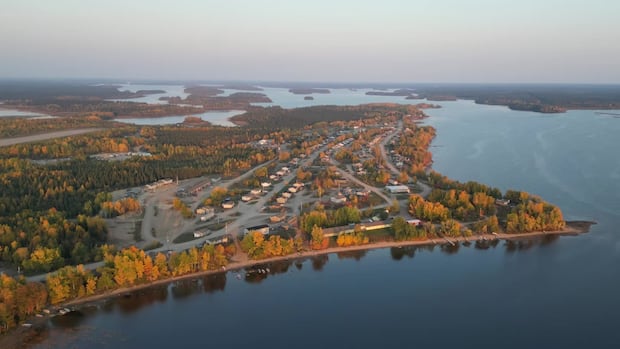
About 650 people live in Cat Lake and more than 900 people live in Lac Seul.
The First Nations say regardless of whether they agree or disagree with the project, they feel the province is going to approve it regardless.
8:41Cat Lake and Lac Seul First Nations authorize – but do not approve – nearby god mining project
That’s why they’ve taken a stance of “non-objection” to the Springpole Gold Project, in hopes of securing a benefits agreement as well as $7.5 million collectively from First Mining Gold and IAAC.
“This project is not supported because of the environmental concerns,” Wesley said. “But that’s not to say that those concerns can’t be mitigated.”
CBC News has reached out to the Ontario government for comment and is awaiting a response.

However, when asked by CBC News during a press conference in Thunder Bay Tuesday about the province’s approach to development with First Nations — and his response to criticism from First Nation leaders about measures to fast-track approvals through Bill 5 — Premier Doug Ford said “we will always consult with First Nations communities.”
“They want their communities to be better, they want their kids to have a future. They want their kids not to be living on gas and natural gas. They want electricity transmission lines,” Ford said.
“No matter what we do, they should be partners — and their lives are getting better because we’re stepping up to the plate.”
‘This is where it gets really tricky’
Cat Lake and Lac Seul’s main concerns with the Springpole Gold Project involve ensuring environmental and water protections, cultural and socio-economic safeguards, economic participation and community healing.
“Together, we found that this project will interfere with our rights, laws, objectives, and sacred responsibilities to the land and water, sacred sites, and our non-human relatives,” Lac Seul First Nation said in a statement Tuesday.

That said, if the First Nations formally opposed the project, they fear they’d miss out on benefits and protection measures they’ve spent years advocating for.
Dan Wilton, chief executive officer of First Mining Gold, said in a statement Tuesday that the company is grateful for the work Cat Lake and Lac Seul put into the ALIA.
“We are proud to have supported this ground-breaking work and have truly valued the opportunity to collaborate and learn from the process. We look forward to continuing our journey together,” Wilton said.

In March 2024, Cat Lake was granted a court injunction to pause First Mining Gold’s construction of a temporary winter road leading to an exploration camp. The First Nation said it wasn’t consulted before the province issued road construction permits.
The First Nation declared a moratorium on mining exploration and related road construction in December 2022, which Wesley said was only put in place to give First Nation leadership time “to consult our people properly.”
When asked how he’d characterize his community’s relationship with the company today, Wesley said “this is where it gets really tricky.”
“Industry has always been a willing partner — whether forestry, whether it’s mining — they’ve always been a willing partner because they’re forced into that situation, because the provincial government is too lazy to do their own consultation processes,” he said.
“If they just took the time to come and talk to us, we could find a way, a resolution that meets the needs of both parties.”
Funding for all-access road, support services
As part of First Mining Gold’s corporate responsibility, it’s committed $4 million to help develop an all-season access road between Cat Lake First Nation and Sioux Lookout via the Vermilion River Road, using a mixture of existing forestry roads and new construction.
Cat Lake currently relies on a seasonal winter ice road, which has become less reliable due to climate change. Lac Seul already has all-season road access.

Wesley said an all-season road has been identified as a key priority for his community long before the mining company got involved.
“Lower cost of goods, access for a very young population — they have a different social and economic environment, different needs,” he said of the road’s benefits. “Because of the younger population, we need to generate our own economy.”
The money will go toward road permitting, right-of-way clearing, geotechnical fieldwork, and detailed engineering design to start this summer.
As well, First Mining Gold and the IAAC have committed $3.5 million for mental health and addictions support in the community.
Regardless of whether his First Nation supports the mine in the future, Wesley said he hopes his community can benefit from the mining company’s presence and address what he estimates is a $230 million gap in infrastructure and social services.
“That’s all we ever wanted was to be able to be self-sustaining, and then work with the provincial and industrial partners in an environmentally-sustainable manner according to our traditional and natural laws,” Wesley said.